Zebedee Wood [9/250]
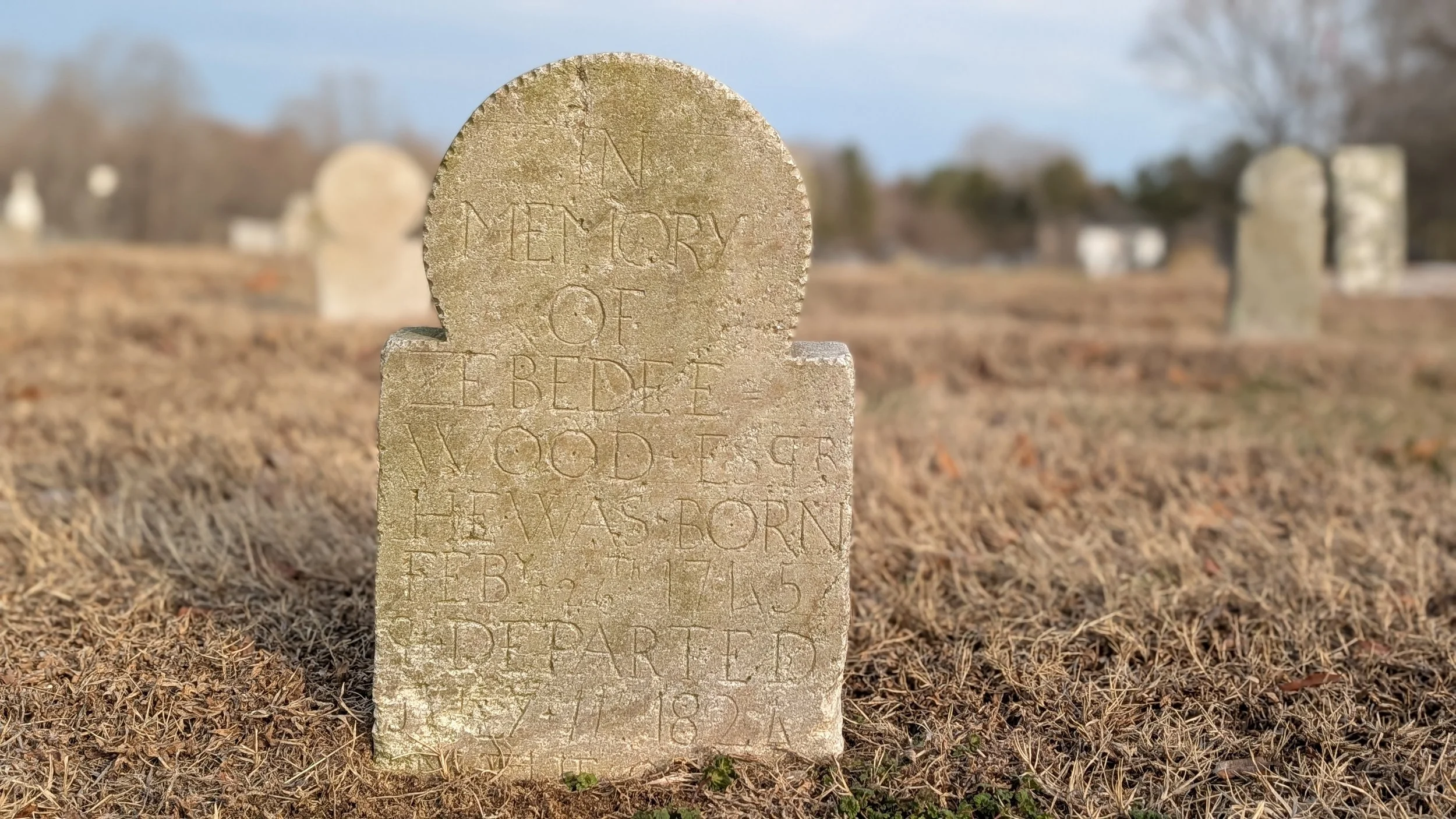
Zebedee Wood (1745-1824)
Buried at Shiloh Methodist Church | Liberty, Randolph County, North Carolina
You've probably never heard the name Zebedee Wood, but he played an important part in the American Revolution, and I think his story is worth sharing. He was born in Massachusetts, married in New Jersey, and buried in North Carolina. By the time he died in 1824 at nearly eighty years old, Zebedee Wood had outlived a king's rule, a revolution, and the founding of the republic he had helped defend.
His is grave 9 of 250 for the 250 Graves Project, celebrating America's 250th birthday by sharing the stories of the people who built and defended it.
A Massachusetts Beginning
Zebedee Wood was born on February 14, 1745, in Berkley, Bristol County, Massachusetts. His father, John Wood, was a native of Middleborough, Massachusetts, and his mother was Sarah Clements of Freetown. But the family did not stay put. Sometime after Zebedee's birth, John Wood uprooted his household and moved to the town of Mendham in Morris County, New Jersey. There, Sarah passed away, possibly in childbirth, leaving John with several young children. He remarried a woman named Sybil Wilborne and fathered more children, including a son named Reuben, born around 1755. Reuben and his half-brother, Zebedee, became close partners in Randolph County, NC, politics and law.
By the late 1750s, John Wood was on the move again, this time south. Another son, David, was born in North Carolina around 1759, which tells us the family had crossed the colonial frontier into the Carolina Piedmont by then, following the great Wagon Road that carried thousands of settlers from Pennsylvania and New Jersey down into the backcountry.
Marriage and the Road South
On December 20, 1764, Zebedee Wood, nineteen years old, married Mary Carson in Morristown, Morris County, New Jersey. Whether Zebedee had accompanied his father south and returned north for the marriage, or whether he had remained in New Jersey while his father moved ahead, isn't clear. What is clear is that within a decade, he and Mary had followed the family to the Carolina frontier. They would go on to have at least eleven children together (seven sons and four daughters), building a family in North Carolina.
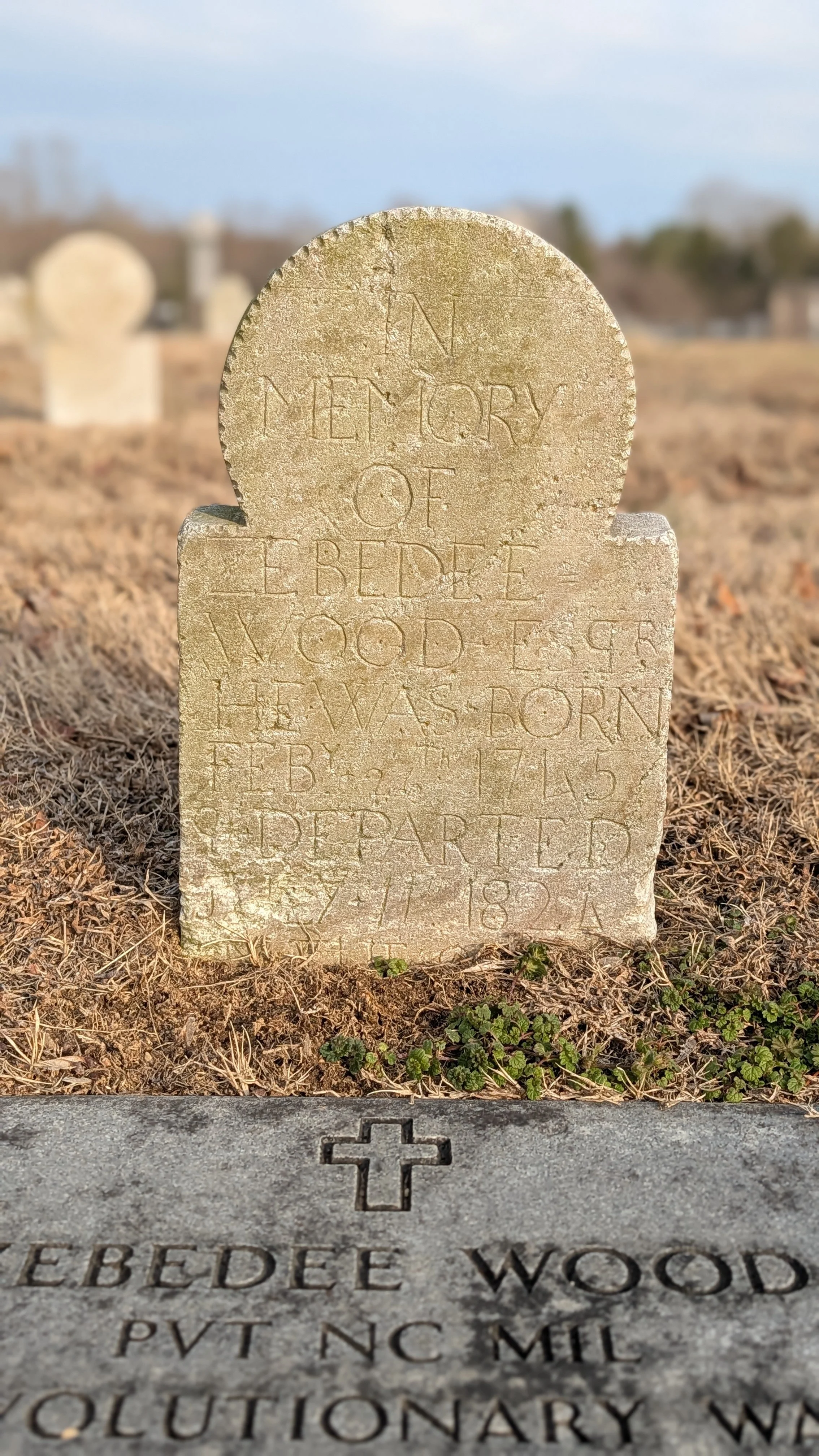
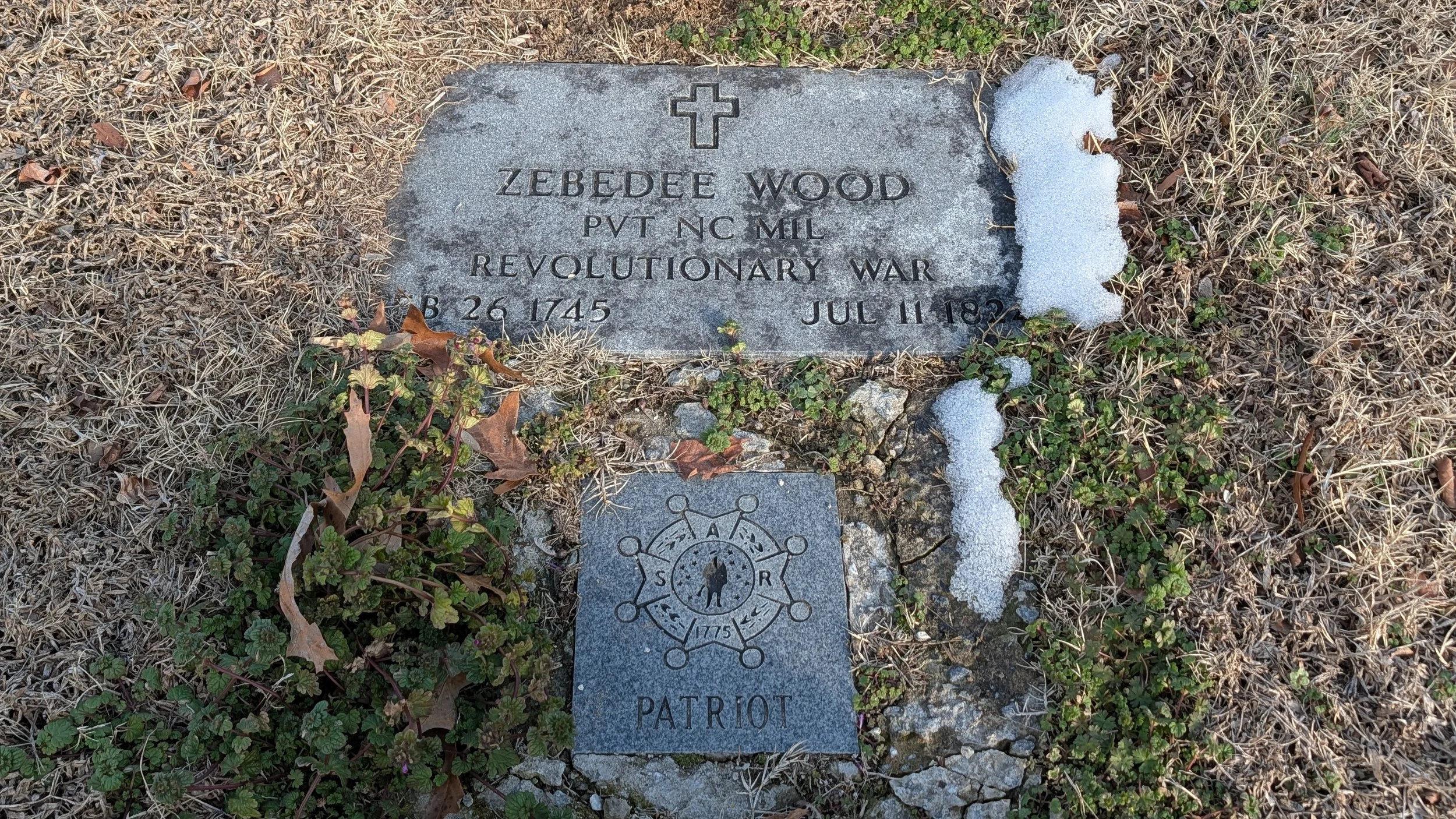
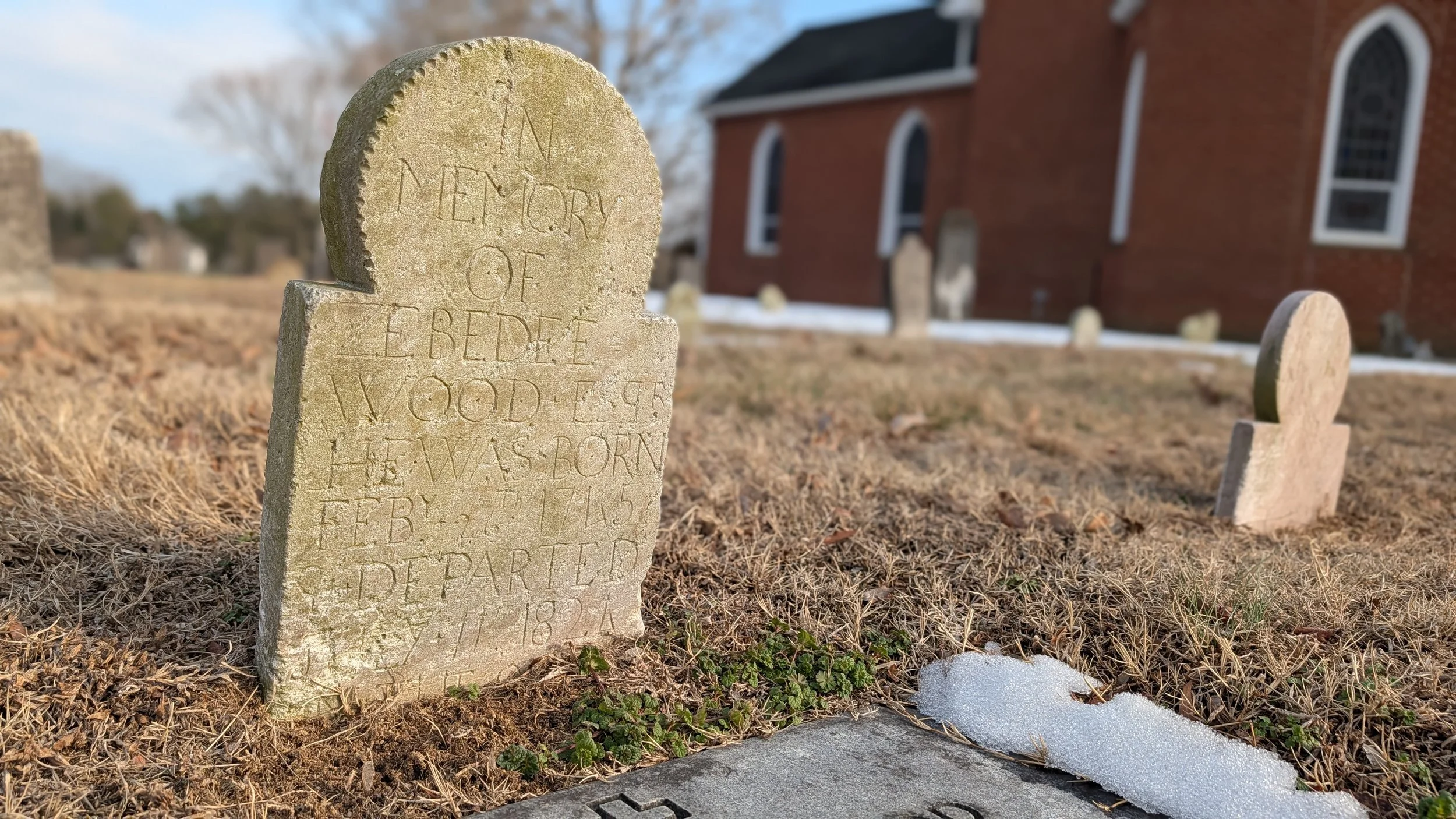
On Zebedee Wood's grave, there are two markers: the hand carved one that was made shortly after his death and the VA marker, installed years later.
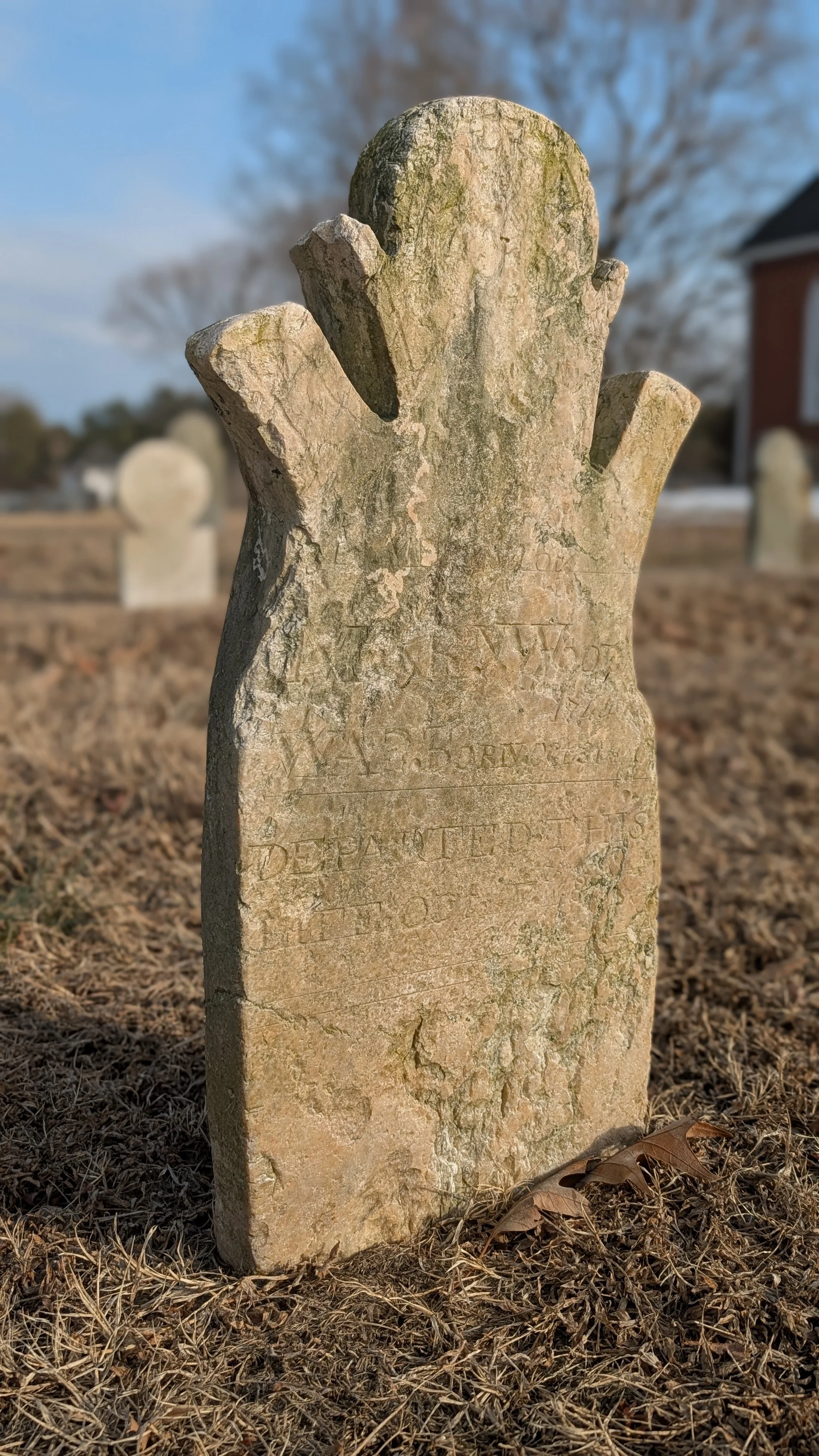
The grave of Mary Carson Wood, Zebedee's wife, which is next to his grave at Shiloh Methodist Church cemetery in Liberty, NC.
Putting Down Roots in Guilford County
When the Woods arrived in North Carolina, they settled in Guilford County, a sprawling region in the Piedmont. Zebedee's first recorded land purchase in North Carolina was 100 acres on Sandy Creek in Guilford County, recorded on April 6, 1774, land that had previously belonged to Herman Husbands, the leader of the Regulator movement that had gripped the colony just a few years earlier.
The Regulator War (1768-1771), a violent uprising of backcountry farmers against corrupt colonial officials, had left deep scars on the Piedmont. Zebedee arrived in the immediate aftermath, purchasing land from a man who had fled after the Regulators' defeat at the Battle of Alamance. It was a region still raw with grievance, and one that would soon be swept up in an even larger conflict.
It was in Guilford County that Zebedee entered public life. He sat as a Justice of the Peace, a role that placed him at the center of local governance. His headstone lists ESQ (for esquire), so he has sometimes been described as an attorney, but research suggests the "Esquire" title attached to his name was used at that time to describe anyone holding civic office, such as a Justice of the Peace, rather than a license to practice law. Under North Carolina law at the time, a man holding a Justice of the Peace commission could not simultaneously practice as a licensed attorney, a distinction that would matter when his brother Reuben later became the county's State's Attorney.
Zebedee also served as a Member of the House of Commons during the Revolution, North Carolina's lower legislative house, representing his county at a moment when the colony was transforming itself into a state.
The Revolution: Militia Captain on the Carolina Frontier
When war came, Zebedee Wood was ready. He registered for military service in 1777, and as the new county of Randolph was organized out of Guilford in 1779, he became one of its first militia captains.
This was no ceremonial role. In the Revolutionary-era South, the militia captain's district was the fundamental unit of local governance, responsible for organizing men, collecting taxes, and maintaining order on a frontier where Patriot and Loyalist neighbors often lived side by side. County court minutes from 1779, 1780, and 1781 repeatedly reference "Capt. Wood's tax district," and in September 1781, a constable was formally appointed for "Capt. Zebedee Wood's dist.", evidence that his authority extended through some of the war's most difficult years in the Carolina backcountry.
Those years were brutal in Randolph and Guilford counties. The region was a hotbed of Loyalist activity, and Tory guerrillas, most notoriously Colonel David Fanning, terrorized Patriot families across the Piedmont. Serving as a militia captain meant navigating not just the threat of British regulars, but the constant danger of neighbor turning against neighbor in a vicious civil war within the larger Revolution.
Zebedee's Revolutionary service was recognized by both the Daughters of the American Revolution (DAR Ancestor #A128279) and the Sons of the American Revolution (NSSAR Ancestor #P-323840), under the category of Patriotic Service.
Building Randolph County
At the close of the war came the work of building institutions. In 1787, Zebedee Wood was appointed to a committee tasked with formally organizing Randolph County out of Guilford and establishing a county seat. The committee selected Johnsonville as that seat, the first capital of the new county.
It was at Johnsonville, on December 11, 1787, that one of the more remarkable moments of Zebedee's life took place. A young lawyer rode into town seeking admission to the Randolph County bar. The court record reads:
"Andrew Jackson, Esquire, produced a license from the Honorable the Judges of the Superior Court of Law and Equity Authorizing him to practice as an Attorney in the Several County Courts. Took the Oath prescribed and proceeded to practice in said Court."
Sitting on the bench that day as a Justice of the Peace was Zebedee Wood, one of four justices who granted Andrew Jackson his license. The future president of the United States, then twenty years old and freshly trained in the law offices of Salisbury, had his career formally launched in part by a Massachusetts-born militia captain turned frontier magistrate.
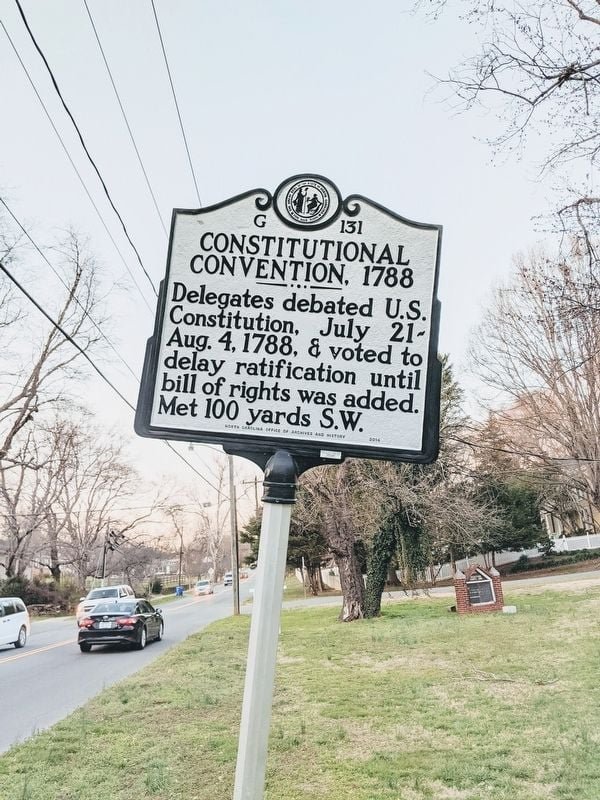
Photograph courtesy of Michael Buckner.
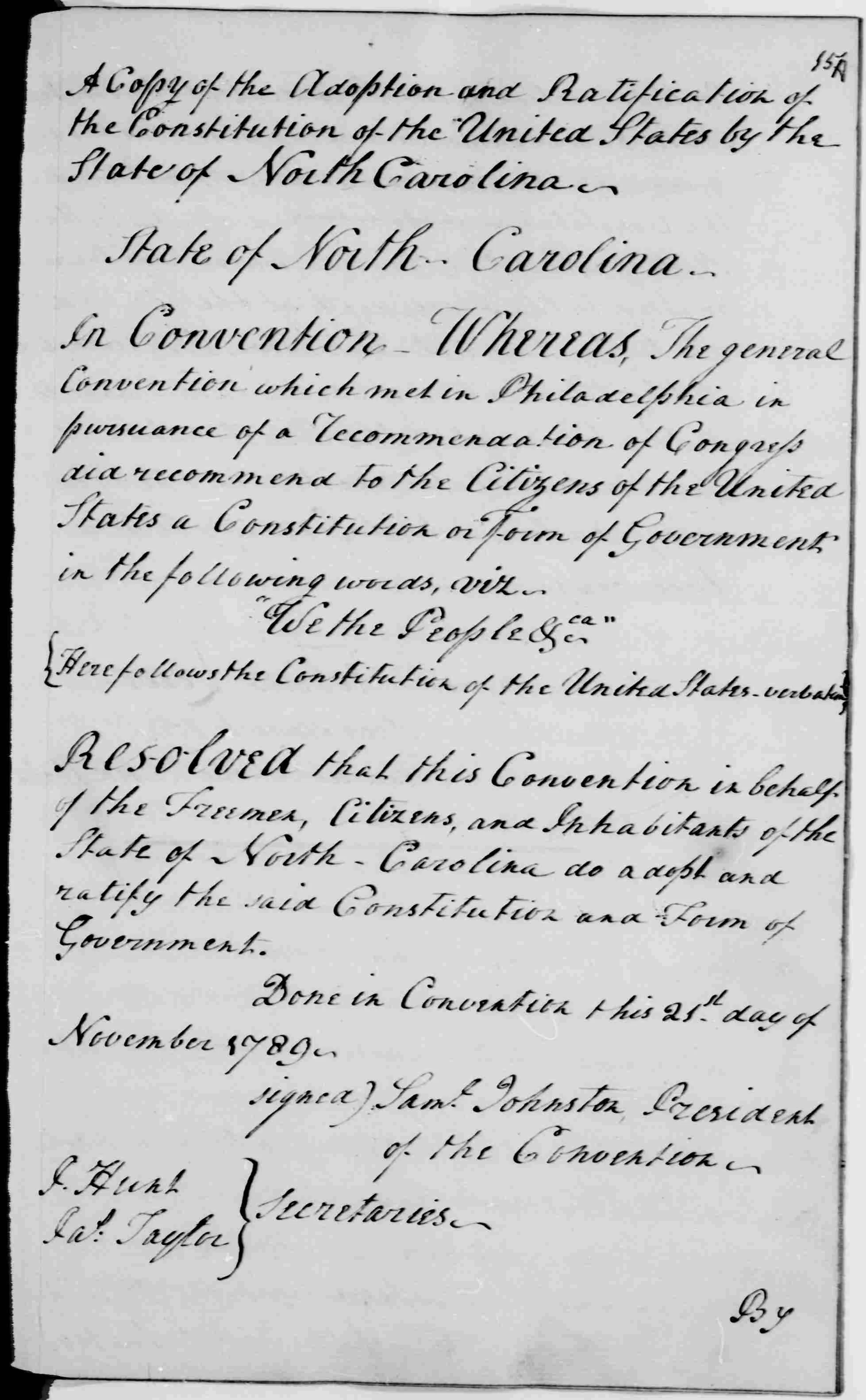
A copy of the Adoption and Ratification of the U.S. Constitution by the State of North Carolina. From the George Washington Papers, Library of Congress.
The Constitutional Conventions: An Anti-Federalist to the End
The late 1780s brought another test of public life. North Carolina was called upon to ratify the new United States Constitution, and Zebedee Wood was among Randolph County's delegates to both state constitutional conventions.
At the first convention, held in Hillsborough in 1788, the Anti-Federalist majority, fearing a powerful central government without any guarantee of individual rights, overwhelmingly rejected the Constitution by a vote of 184-84. Randolph County's delegation voted unanimously to reject. Zebedee Wood was among them.
The second convention met in Fayetteville in 1789, after the promise of a Bill of Rights had softened resistance. This time, ratification passed 194-77. But Zebedee Wood voted with the losing minority, the Anti-Federalists who wanted strict limits on federal power over the states, even as his brother Reuben voted with the majority. Zebedee was a man of deep conviction on this question, and he did not change his position simply because the tide had turned. North Carolina ratified the Constitution on November 21, 1789, the last of the original states to do so.
A Life in Law and Community
Through the 1790s and into the new century, Zebedee continued in public service, sitting as a judge of the county court. The title "Judge" that appears in later records reflects this role, not a superior court appointment, but the Justice of the Peace bench that governed everyday life on the frontier.
His brother Reuben practiced law alongside him in the county courts until Reuben's death in July 1812. Together, the two Wood brothers had been at the center of Randolph County's founding generation, one as a politician and magistrate, the other as an attorney and State's Attorney. Their careers were intertwined with the county's earliest decades.
The Will: A Family Portrait
Zebedee Wood wrote his last will and testament on June 2, 1824. He was nearly eighty years old. He left his entire estate to his wife Mary for her lifetime. After her death, the estate was to be divided into ten equal shares, one each to his children Zebedee Jr., Joseph, Mary Lane, John, Robert, Nancy Elliott, Samuel, Ibby Doake, and Sarah Kirkman. The tenth share was set aside differently: one hundred dollars per year was to be paid to his daughter Mary Lane for each year of her care for his oldest son, Clement Wood, who was, in Zebedee's own words, "helpless and crippled."
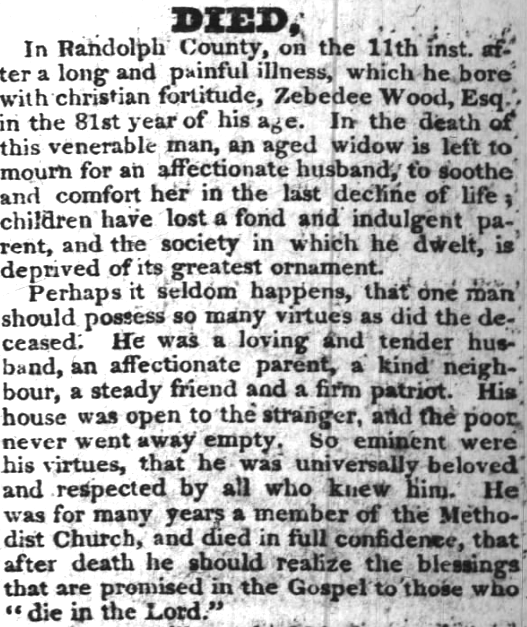
The Death Notice
Zebedee Wood died on July 11, 1824, in Liberty, Randolph County, North Carolina. He was seventy-nine years old. The Raleigh Register carried the notice in its edition of July 20, 1824. He was buried at Shiloh United Methodist Church in Liberty, North Carolina.
Why This Grave Matters
Zebedee Wood's story is the story of colonial American mobility, a Massachusetts boy who became a Carolina frontiersman. He arrived in the Piedmont just as it was transforming from backcountry wilderness into something resembling settled society, and he helped do the transforming: as a militia captain holding the line during the Revolution, as a committeeman drawing the boundaries of a new county, as a magistrate who sat on the bench the day Andrew Jackson got his law license, as an Anti-Federalist delegate who voted his conscience even in defeat.
He was not a famous man. He does not appear in the grand narratives of the Revolution. But the republic was built by men like Zebedee Wood, so I believe his grave in Liberty, North Carolina, is worth sharing.
This project is made possible by readers like you.
Your support helps to pay for website costs, gas to travel to these sites, and cleaning supplies for the veteran stones that I’m working to restore.
If you believe this work is important, your support is so appreciated!
Citations
Randolph County Historical Research, courtesy of McKay Whatley: https://randolphhistory.wordpress.com/tag/zebedee-wood/
WikiTree profile Wood-3558;
Abstracts of Vital Records From Raleigh, North Carolina Newspapers, 1820–1829;
Randolph County Genealogical Journal, Vol. IV, #2 (Winter 1980);
North Carolina Probate Records, FamilySearch;
DAR Genealogical Research Databases
NSSAR Patriot Ancestor records.