Dr. Peter Fayssoux [10/250]
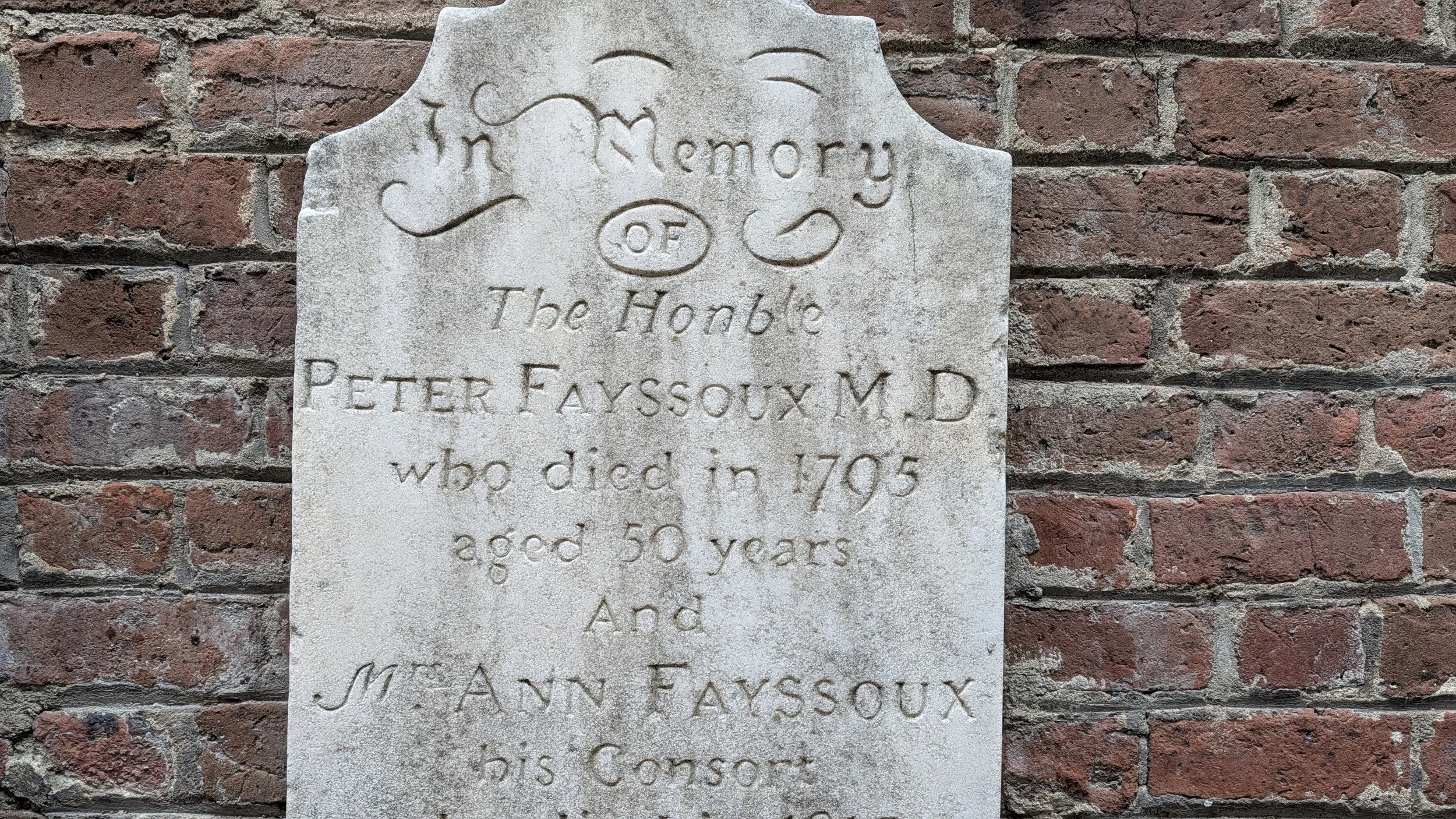
Dr. Peter Fayssoux (1740-1795 )
Buried at First Scots Presbyterian Churchyard, Charleston, South Carolina
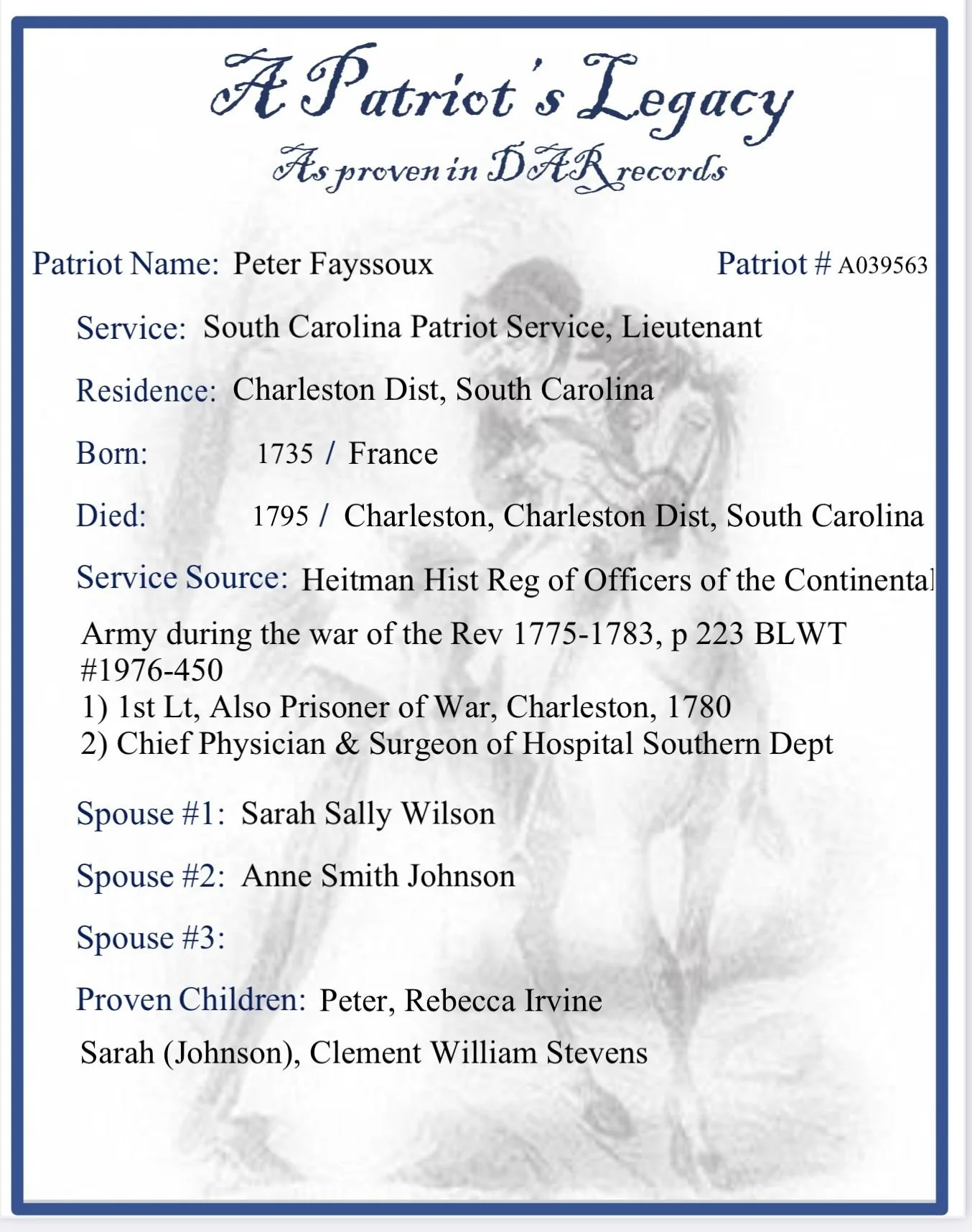
When we think of the American Revolution, we often picture soldiers and statesmen- the men who fired muskets and signed declarations. But behind every army, tending to the sick and wounded under impossible conditions, were doctors. In South Carolina, no physician played a more vital role in that struggle than Dr. Peter Fayssoux of Charleston, SC, surgeon general, civic leader, and one of the founding fathers of American medicine. His is grave 10 of 250 for the 250 Graves Project in recognition of America's 250th Birthday.
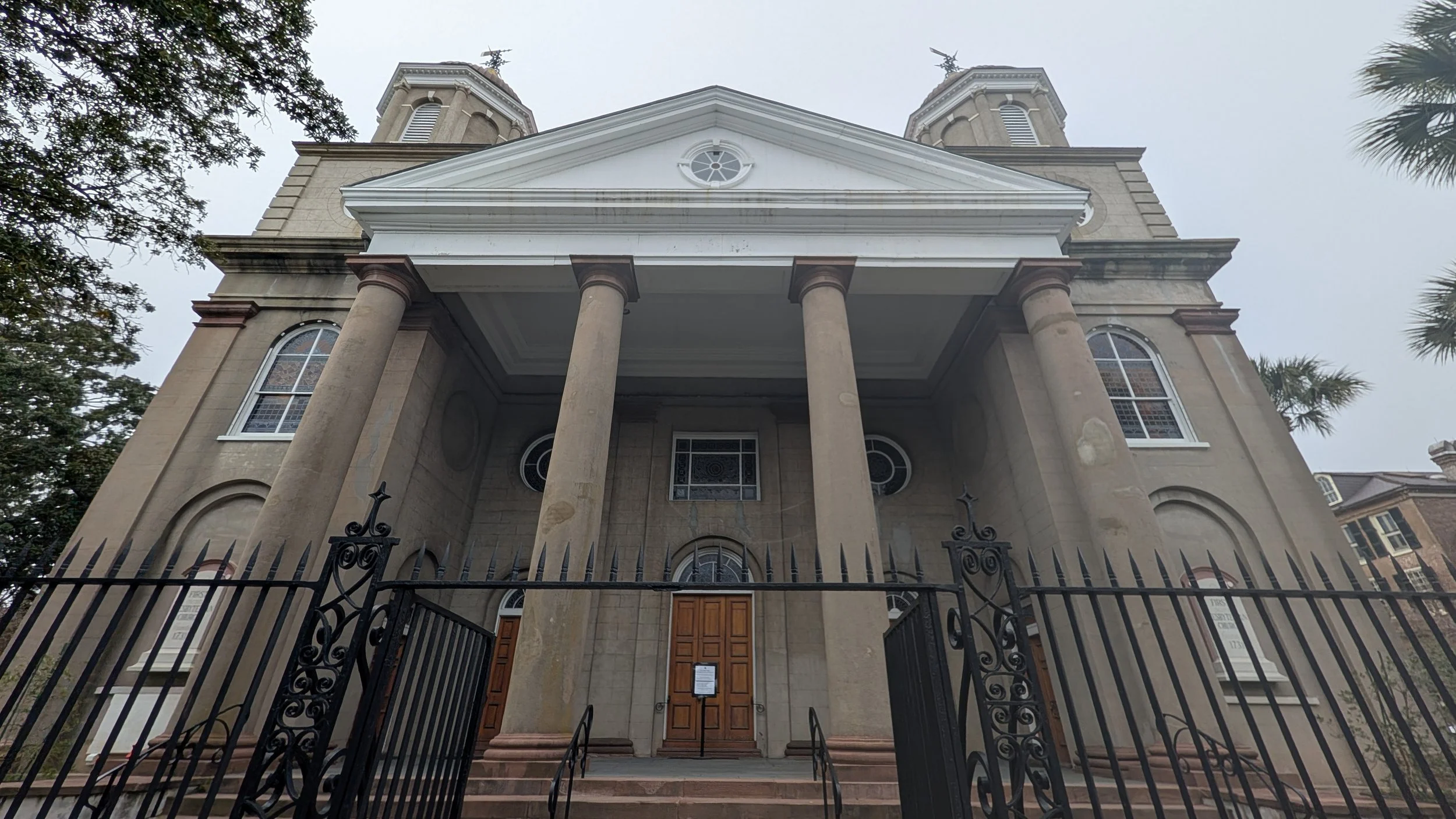
First Scots Presbyterian Church, where Dr. Peter Fassyoux is buried.
A Huguenot Legacy in Charles Town
Peter Fayssoux was born around 1745 in France, the son of Daniel Fayssoux, a French Huguenot, and his wife, Frances Bocquet. Peter's father died in France the year that he was born, and his mother brought Peter and his older sister, Mary, to settle in Charleston, South Carolina with the French Huguenot migration. Huguenots were French Protestants who had fled religious persecution in France, and they had been a cornerstone of Charleston society since the late 17th century. Families like the Fayssoux family brought with them a spirit of industry, education, and civic duty that would shape the city for generations. Peter's mother remarried James Hunter in Charleston, and Peter went on to become well-educated as a physician.
In 1766, young Peter Fassyoux sailed from Charleston to Scotland to attend medical school at the University of Edinburgh, which was one of the finest medical institutions in the world. There, he studied alongside a fellow student who would become one of the most celebrated physicians and patriots in American history: Benjamin Rush, a future signer of the Declaration of Independence.
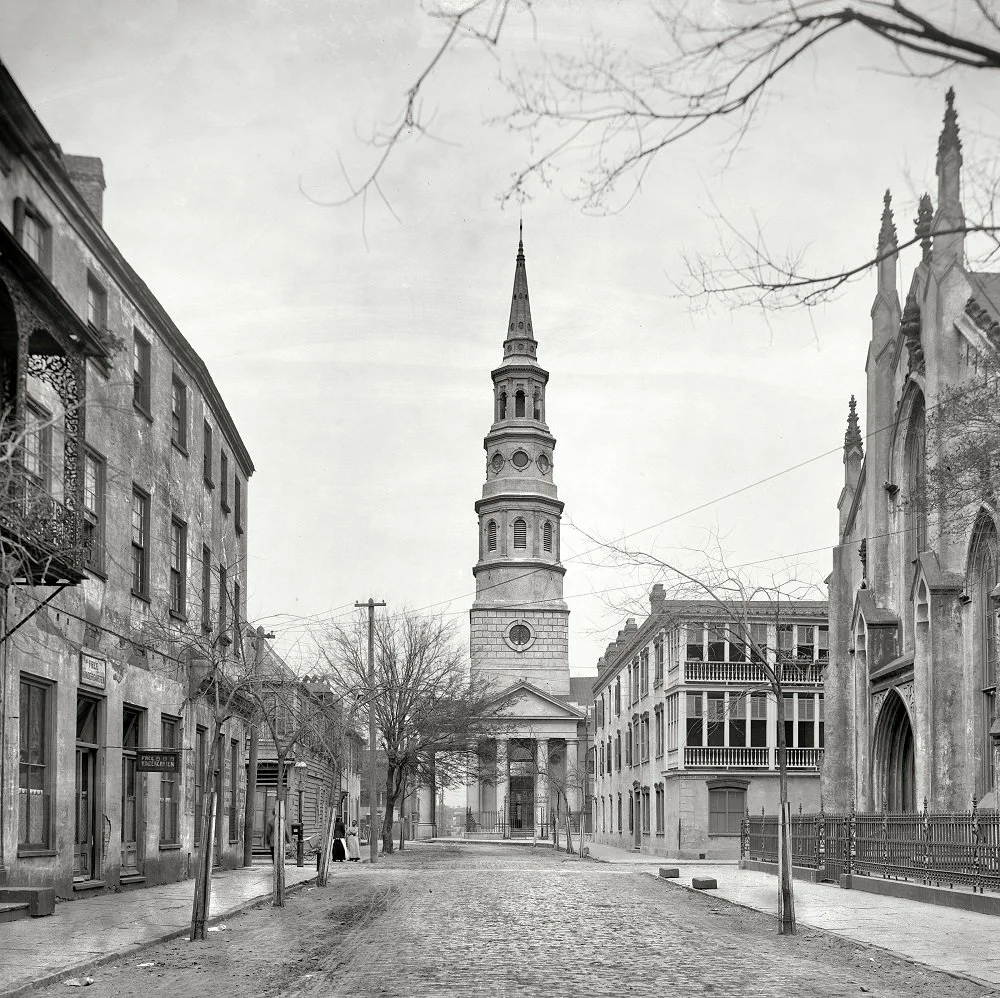
Photo of Charleston, c. 1910.
Coming Home to "Quacks"
When Fayssoux returned to South Carolina in 1769, he was dismayed by what he found. The colony's medical scene was, in his eyes, an embarrassment. As he complained in a letter to his old classmate Benjamin Rush: "It is sufficient for a man to call himself a Doctor, & he immediately becomes one, & finds fools to employ him."
It was a frustration that would fuel his lifelong mission, not just to practice medicine himself, but to elevate the entire profession in his home state. His ambitions in that regard would far outlast the war ahead.
A Life Interrupted by Revolution
Fayssoux married his first wife, Sarah "Sally" Wilson (b. 1753), on January 29, 1772. Tragically, Sally died in 1776. The following year, on March 29, 1777, he married Ann Smith Johnston (1758-1810). Between his two marriages, Fayssoux fathered thirteen children, though six of them died in infancy or early childhood, a heartbreaking but all-too-common reality of 18th-century life.
By the time the Revolutionary War ignited, Dr. Fayssoux was already deeply embedded in the Patriot cause. In the early years of the war, he attended to the sick on James Island and, in a telling example of a physician's broader usefulness, even offered advice on extracting salt from seawater, a vital resource for preserving food and treating wounds.
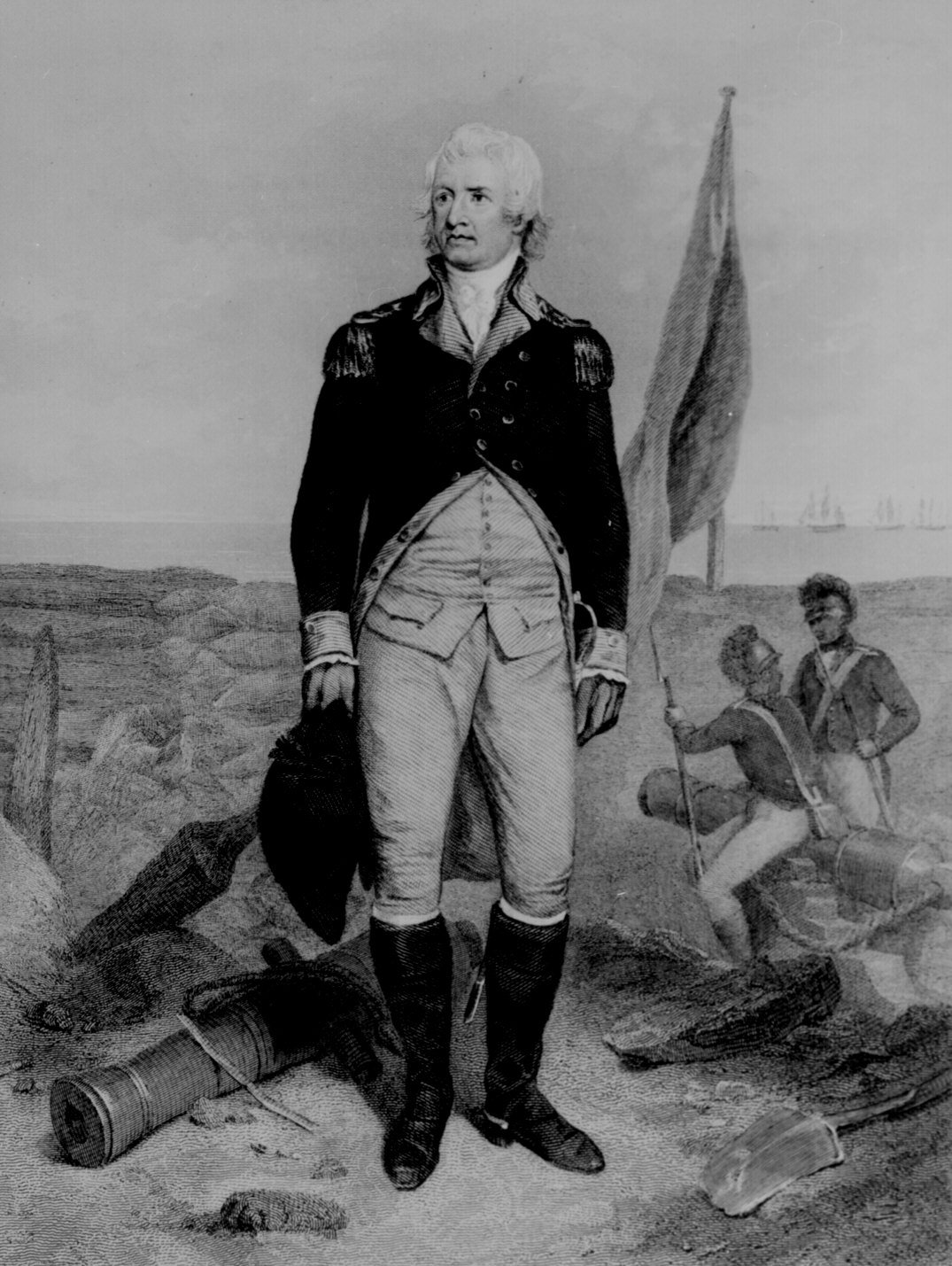
Colonel William Moultrie
At the Side of General Moultrie
One of the most storied moments of Dr. Fayssoux's wartime service came on June 28, 1776, when he stood with Colonel William Moultrie at the Battle of Sullivan's Island, a clash that would become one of the most celebrated Patriot victories of the entire Revolution.
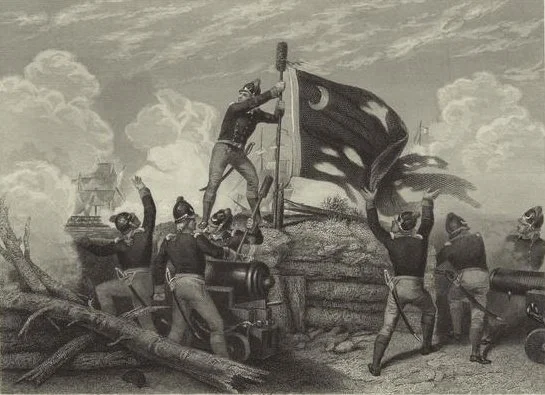
A painting of the raising of the battle flag of the colonial forces over present-day Fort Moultrie on June 28, 1776, during the Battle of Sullivan's Island.
The British fleet, under Commodore Sir Peter Parker, launched a massive naval assault on Fort Sullivan, a small, unfinished fort at the mouth of Charleston Harbor constructed from palmetto logs. General Lee famously dismissed it as a "slaughter pen," convinced it would crumble under British cannon fire. He was wrong. The spongy palmetto logs absorbed the cannonballs rather than shattering, robbing the British broadsides of their destructive force. Moultrie's men held the fort, repelling nine British warships and forcing the fleet's humiliating withdrawal. The palmetto tree, symbol of that improbable victory, became the emblem of South Carolina's state flag, even to this day.
Dr. Fayssoux was there, ensuring the wounded were cared for amid the smoke and thunder of the cannons.
Rising to the Top
By 1778, Fayssoux had been appointed Senior Physician of the South Carolina branch of the Continental Army, placed in that role by Dr. David Oliphant, director of the hospital. His service continued through some of the most difficult fighting of the Southern Campaign.
In 1779, when General Moultrie repulsed a British force threatening Beaufort, Fayssoux was tasked with staying behind with the sick and wounded until Moultrie could arrange carriages to safely transport them, which was a dangerous assignment that reflected both his courage and the trust his commanding officers placed in him.
Then, in 1780, came his highest appointment: Physician and Surgeon General of the Southern Department. It was the top medical post in the entire Southern theater of the war.
Captured But Still Serving His Post
The fall of Charleston on May 12, 1780, was one of the most devastating defeats of the Revolution. Fayssoux was among those captured when the city surrendered to British forces. But even as a prisoner, he was too valuable and too dedicated to sit idle. The British released him to tend to the sick and wounded in the city, a remarkable testament to the fact that even an enemy recognized the importance of his work.
After the bloody Battle of Eutaw Springs on September 8, 1781, one of the last major engagements of the war in the South, the enormous burden of caring for the battle's many casualties fell squarely on Fayssoux's shoulders. He remained at his post until March 1782, treating patients as far away as Camden, South Carolina, before the guns of the Revolution finally fell silent.
Champion of Better Medicine
The end of the war did not mean the end of Fayssoux's labor. If anything, peace gave him the freedom to pursue the work he had dreamed of since coming home from Edinburgh: organizing medicine in South Carolina into a respectable, professional discipline.
He became a member of the Faculty of Physic in Charleston, which was the first sign of organized medicine in the state. Along with Dr. Alexander Baron and historian-physician Dr. David Ramsay, Fayssoux formed an organizing committee to improve what they called "the Science of Medicine…amongst the Practitioners in this City."
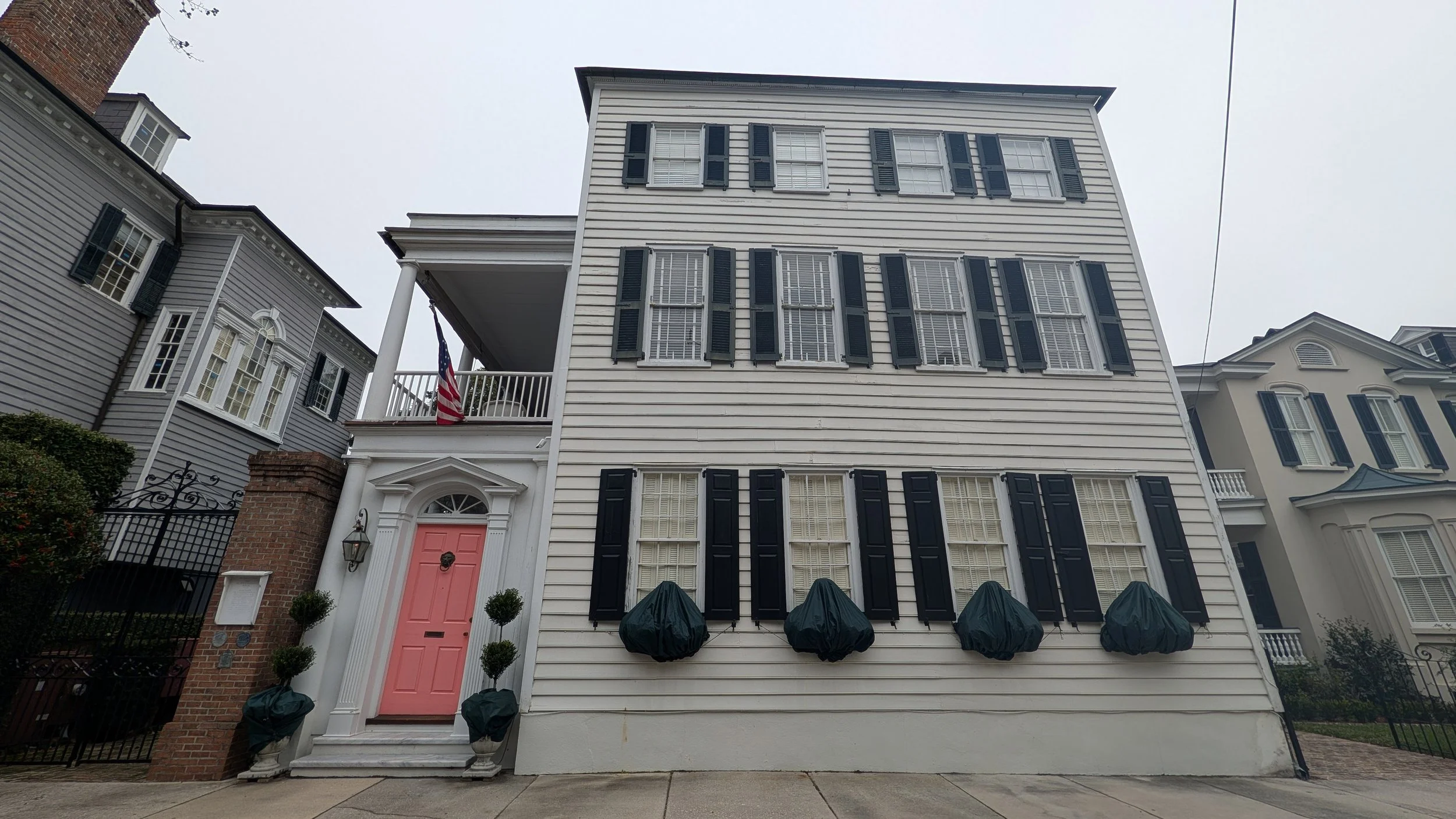
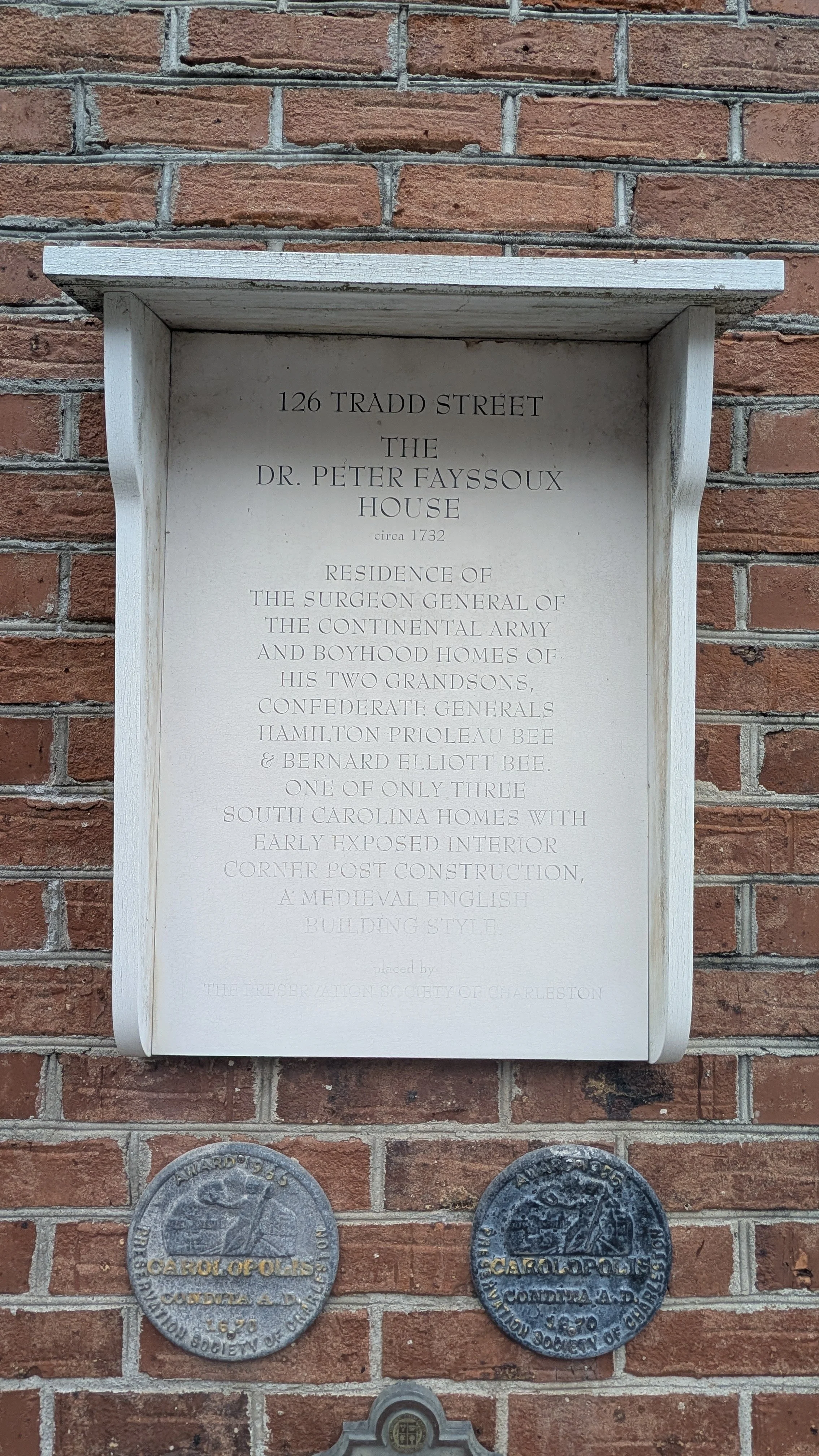
Dr. Peter Fassyoux's house on Tradd Street in Charleston, SC.
That effort culminated in a landmark moment: on December 24, 1789, the Medical Society of South Carolina held its very first meeting- in Fayssoux's own home on Tradd Street. He was elected its founding president, a fitting honor for a man who had spent his career trying to bring order and standards to his profession.
His peers described him as "possessed of a clear discriminating judgment" and praised his skill in "the Healing Art." Though he left behind no major medical writings, his leadership and his Revolution-era service placed him, in the words of historians, among the major medical figures of his era.
Statesman and Civic Pillar
Dr. Fayssoux's contributions extended well beyond medicine. In 1786, he was elected to the South Carolina General Assembly, where he represented St. John's Berkeley Parish until 1790. He voted against ratification of the federal Constitution in 1788, though he later accepted the new government amicably. This nuance speaks to the complexity of political opinion in post-Revolutionary South Carolina.
He was also a founding member of the Society of the Cincinnati- the fraternal organization formed by officers of the Continental Army, as well as a curator of the Charleston Museum, a member of the Charleston Library Society, and a participant in the St. Cecilia Society, one of Charleston's oldest and most prestigious cultural institutions.
After the war, Dr. Fayssoux and his family made their home at 126 Tradd Street, a handsome pre-Revolutionary Georgian house that had been built around 1732 for Alexander Smith. The house still stands today.
A Legacy Carved in Stone
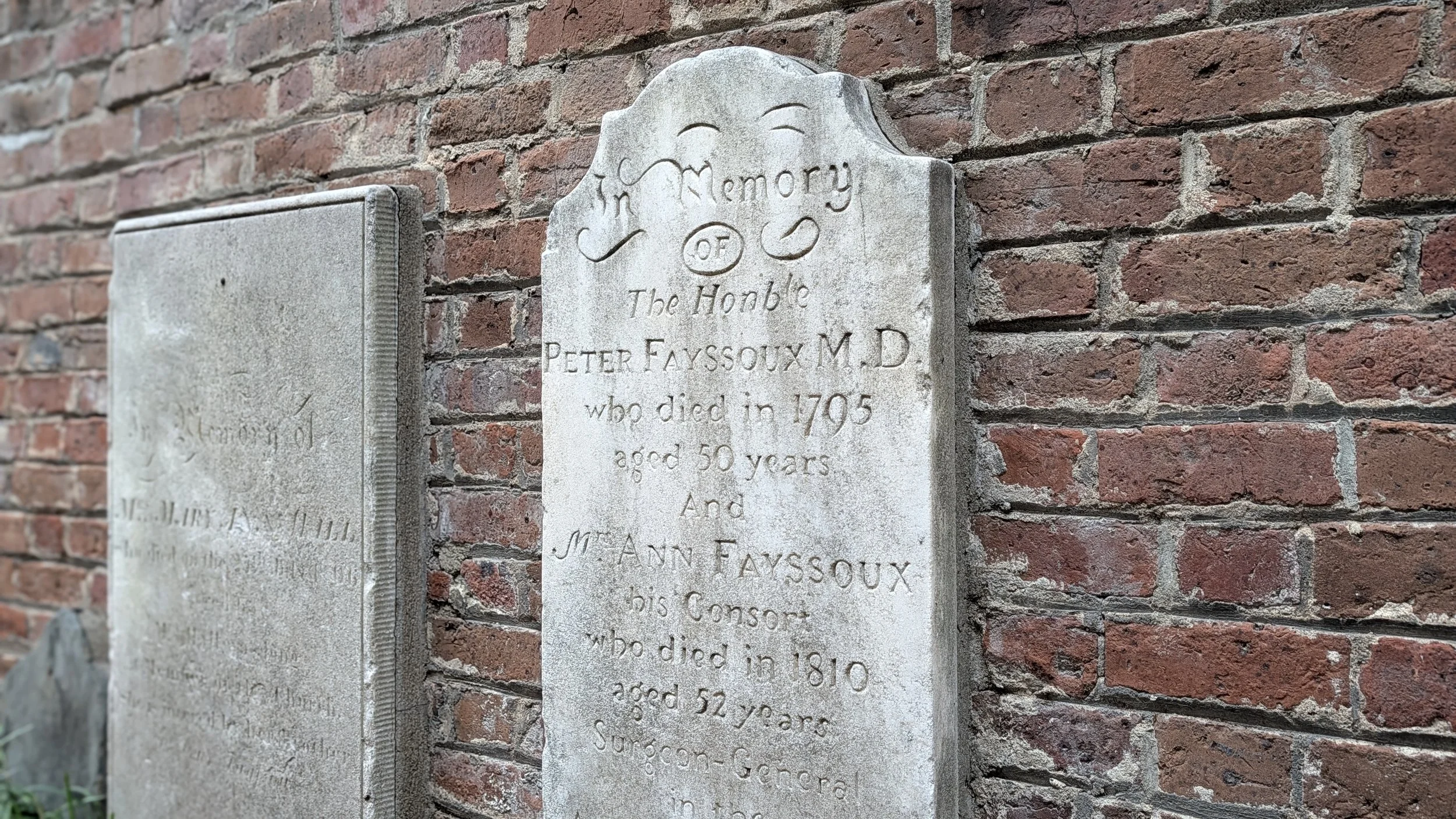
Dr. Peter Fayssoux died on February 1, 1795, of an apoplectic stroke. He was just 50 years old. He was laid to rest in the churchyard of First (Scots) Presbyterian Church in Charleston. His wife, Ann, survived him by fifteen years, passing away in 1810 at the age of 52.
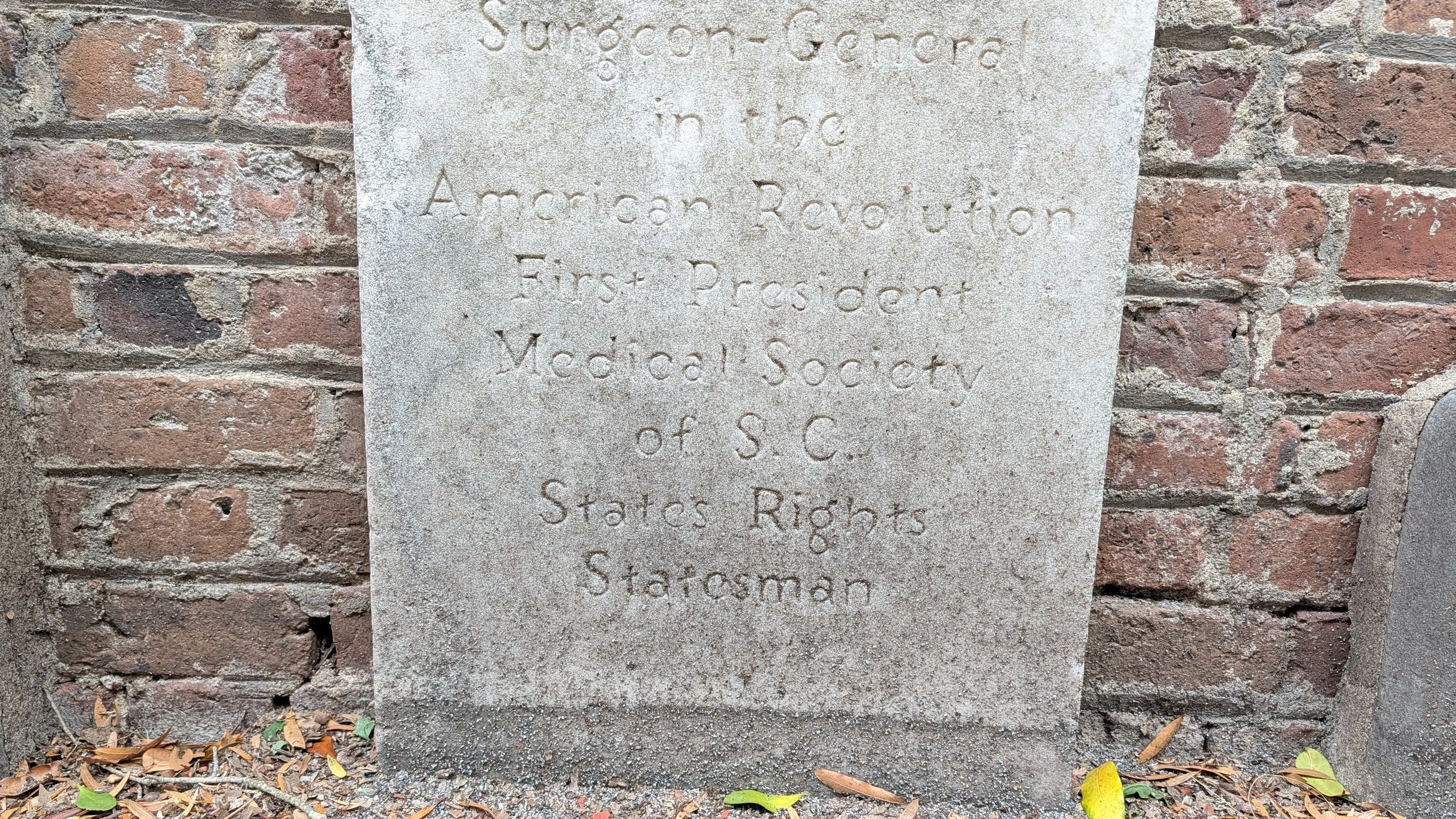
His headstone sums up the man with admirable economy:
"Surgeon-General in the American Revolution. First President Medical Society of S.C. States Rights Statesman.
A biography published in 1950 by Chalmers G. Davidson captured his spirit in its title: "Friend of the People: The Life of Dr. Peter Fayssoux of Charleston, South Carolina." It is a title he earned many times over: on the battlefields of Sullivan's Island and Eutaw Springs, in the sick wards of captured Charleston, and in the parlors and meeting rooms where he worked to build a healthier, more professional future for medicine in his state.
In an age that celebrated generals and politicians, Peter Fayssoux reminds us that the Revolution was also won and survived by the men and women who provided care for the wounded and sick.
Dr. Peter Fayssoux's home at 126 Tradd Street, Charleston, is listed on the National Register of Historic Places. He is buried at First (Scots) Presbyterian Church, 53 Meeting Street, Charleston, South Carolina.
This project is made possible by readers like you.
Your support helps to pay for website costs, gas to travel to these sites, and cleaning supplies for the veteran stones that I’m working to restore.
If you believe this work is important, your support is so appreciated!
Citations
"Fayssoux, Peter." South Carolina Encyclopedia. University of South Carolina, Institute for Southern Studies. https://www.scencyclopedia.org/sce/entries/fayssoux-peter/
"Peter Fayssoux." StudySC. South Carolina State Library. https://studysc.org/sc-people/peter-fayssoux
"Dr. Peter Dott Fayssoux (1745–1795)." Find a Grave. Memorial ID 23939264. First Scots Presbyterian Church Cemetery, Charleston, South Carolina. https://www.findagrave.com/memorial/23939264/fayssoux
"Medicine." South Carolina Encyclopedia. University of South Carolina, Institute for Southern Studies. Last updated August 15, 2022. https://www.scencyclopedia.org/sce/entries/medicine/
Davidson, Chalmers G. Friend of the People: The Life of Dr. Peter Fayssoux of Charleston, South Carolina. Columbia: Medical Association of South Carolina, 1950.
"Peter Fayssoux and the Liberty Tree." Medical Society of South Carolina. https://www.medsocietysc.com/blog/peter-fayssoux-and-the-liberty-tree/