William Strayhorn [1/250]
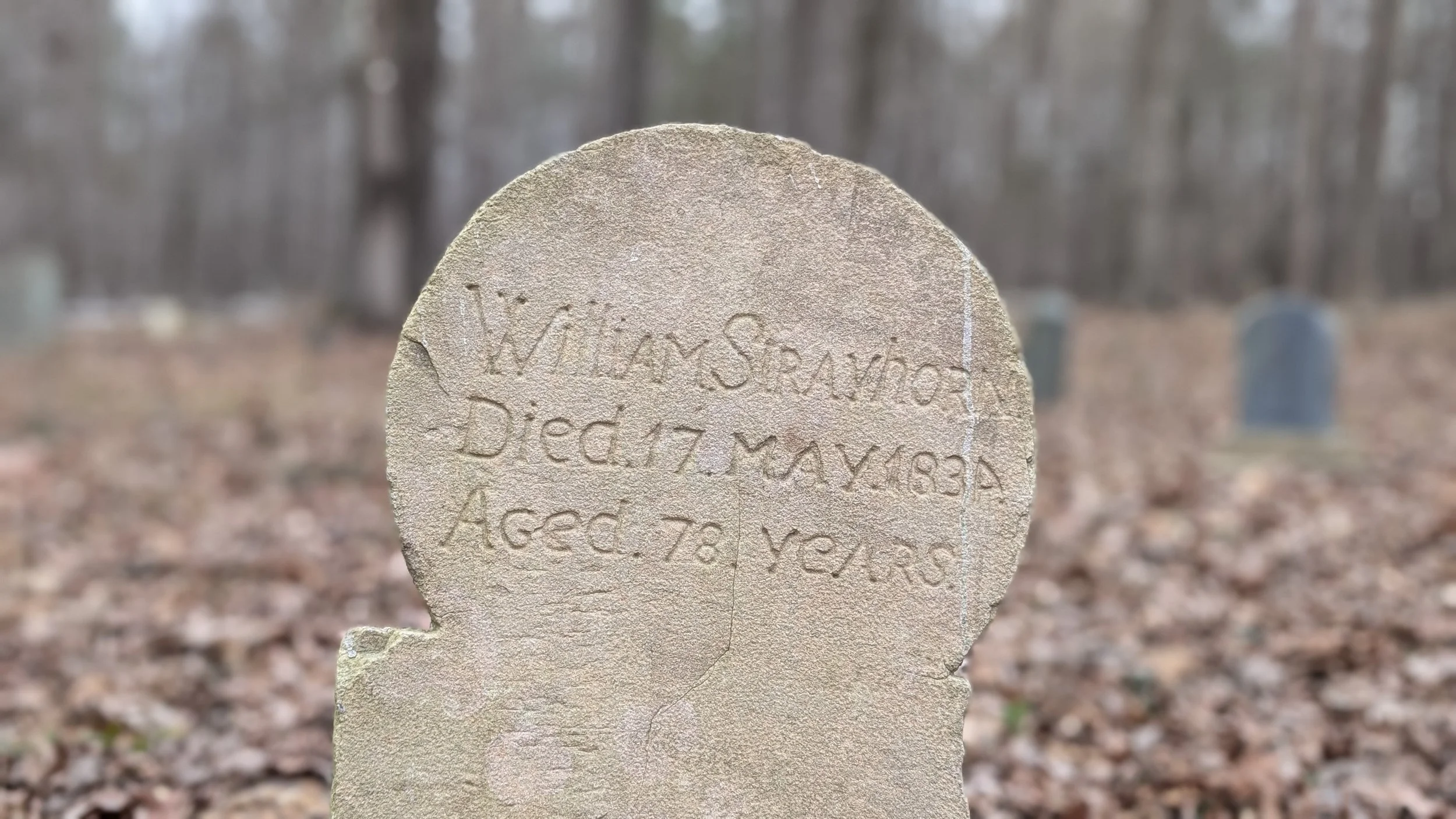
William Strayhorn, Sr. 1756-1834
Buried at New Hope Presbyterian Church Cemetery in Orange County, North Carolina
In the spring of 1778, William Strayhorn left Orange County, North Carolina, marching south with other local men as the American Revolution spread into the Carolinas. He traveled through Salisbury and Charlotte, entered South Carolina, and fought at the Battle of Stono Rebellion near Charleston. Years later, he would face Loyalist forces much closer to home, be wounded in battle, and survive a war that tore apart families and communities. William Strayhorn was not a general or a statesman. He was a private soldier, a farmer, a husband, and a father. Yet like thousands of others, his service helped shape the course of a nation.
Roots in the Carolina Backcountry
William Strayhorn was born around 1756 in Orange County, North Carolina. He was the second son of Gilbert Strayhorn and Nancy Margaret Roan Strayhorn, members of a Scots-Irish Presbyterian family who migrated south from Pennsylvania along the Great Wagon Road during the mid-18th century. Like many families seeking religious freedom and affordable land, the Strayhorns first settled in Pennsylvania before moving into the Carolina backcountry.
William’s father, Gilbert Strayhorn, was not merely an early settler. According to a late-19th-century history of the congregation, he was one of the original founders and first elders of Old New Hope Presbyterian Church, and he purchased the land on which the church and its earliest graveyard were built. Over time, the Strayhorn family and their neighbors- Craigs, Tates, Kirklands, Freelands, and others- formed a tightly knit community bound by land, faith, and kinship. William was born into the second generation of that settlement, raised in a world where church, family, and survival were deeply intertwined.
Answering the Call to War
When the American Revolution reached North Carolina, William was in his early twenties. In 1778, he entered service in Orange County, North Carolina under Captain James Carrington for a six-month tour, serving as a substitute for his brother John, who had been drafted. The company marched south from Hillsborough, NC in the spring of that year, eventually joining Patriot forces in South Carolina under General Benjamin Lincoln.
On June 20, 1779, William fought in the Battle of Stono Ferry, serving under General Butler. This engagement was part of the broader southern campaign and represented William’s first experience of organized warfare far from home. When his six-month term ended, he returned to Orange County, resuming life among the same fields and families he had left behind.
War Comes Home: Allen’s Company and Kirk’s Farm
The Revolution did not remain distant. Like many men of the Carolina backcountry, William volunteered again, this time for a three-month tour under Captain Abraham Allen, with Lieutenant Joseph Young. This service, aimed at suppressing Loyalist activity, placed him in the midst of the internal violence that defined the later years of the war in North Carolina.
On September 12, 1781, William’s company engaged Loyalist forces at Lewis Kirk’s farm near Hillsborough. The skirmish ended badly for the Patriot militia. William was wounded in the face and in several places on his body. Captain Allen was wounded, and Lieutenant Young was killed. The fighting at Kirk’s Farm was not a famous battle, but it was typical of the Revolution in the Carolinas, where neighbors fought neighbors, as war unfolded at the edges of everyday life.
William later served once more under Captain William Douglass, fighting Loyalist troops led by Colonel David Fanning. During this final tour, he took part in a severe skirmish at Cox’s Mill on Deep River in June 1781.
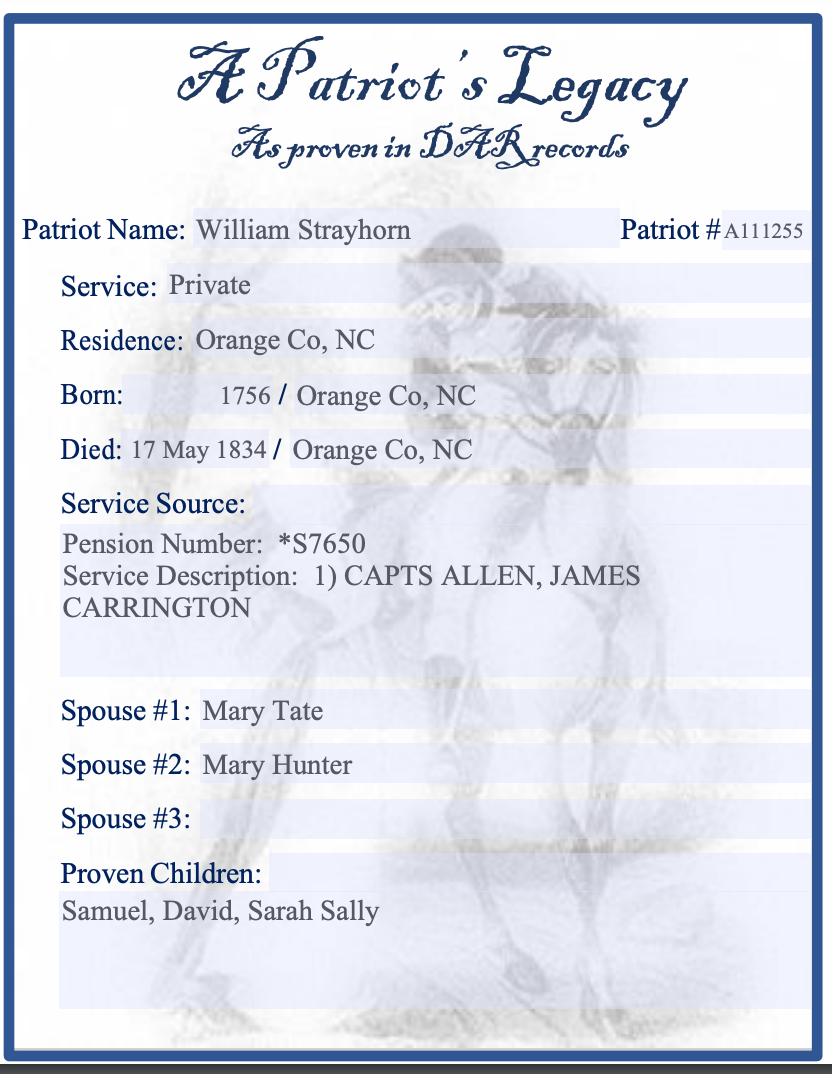
William Strayhorn’s Daughters of the American Revolution (DAR) Service Record
Family Life and the Long Memory of War
William married twice and raised a large family in Orange County. With his first wife, Mary Tate, he had three children. After her death, he married Mary “Polly” Hunter, daughter of James Hunter Sr. and Mary Walker Hunter, and together they had seven more children. Through these marriages, the Strayhorn family became further interwoven with the Tates, Hunters, Craigs, and Faucett families- names that are still common to this day around Orange County, North Carolina.
In 1831, nearly 50 years after the Revolution, William applied for and received a federal pension for his service. He was awarded $26.66 per year, beginning March 5, 1831, for eight months of service as a private in the North Carolina militia. His testimony, given in old age, preserved the details of his service long after the war itself had passed into memory.
Death, Burial, and Legacy
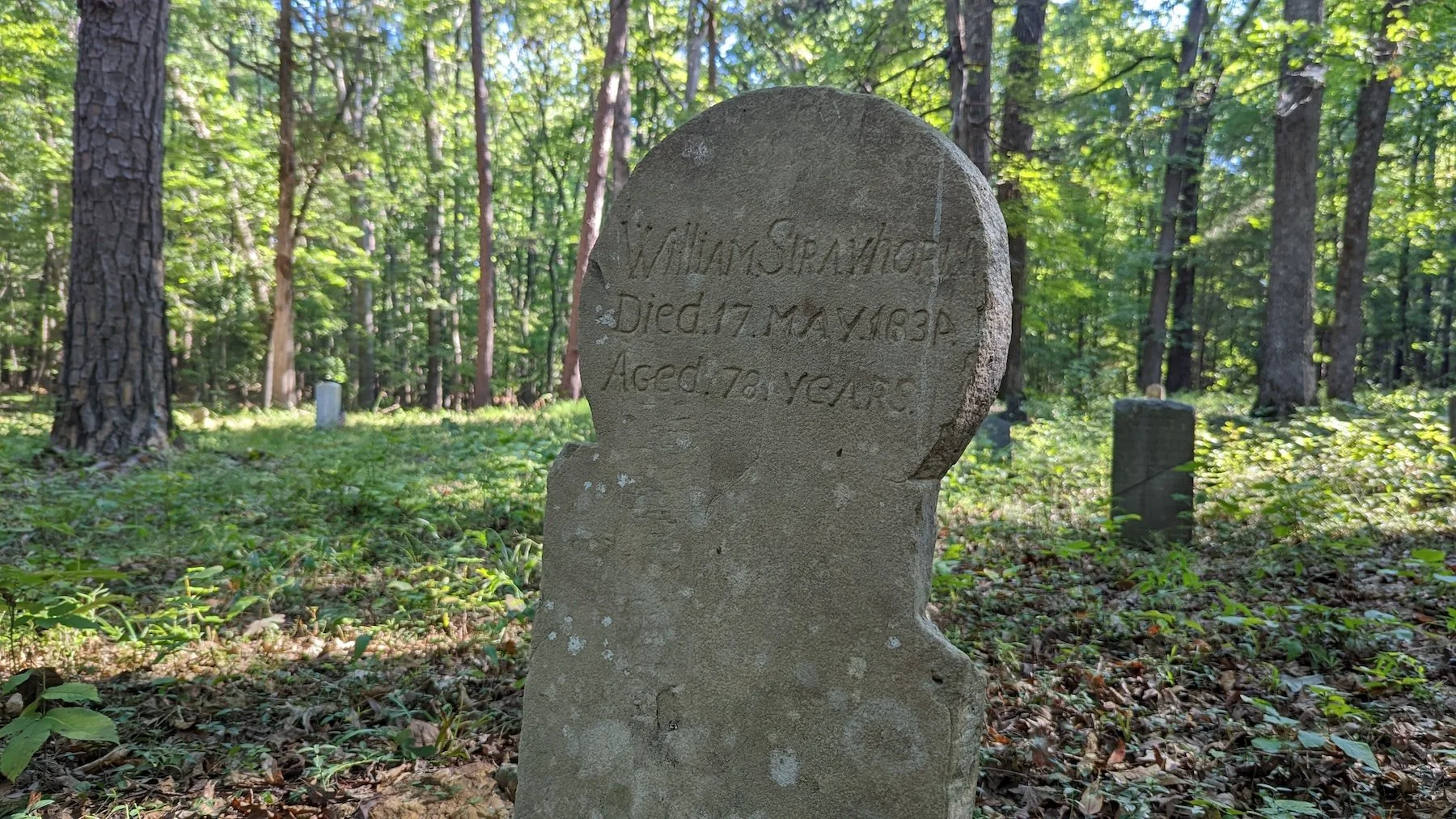
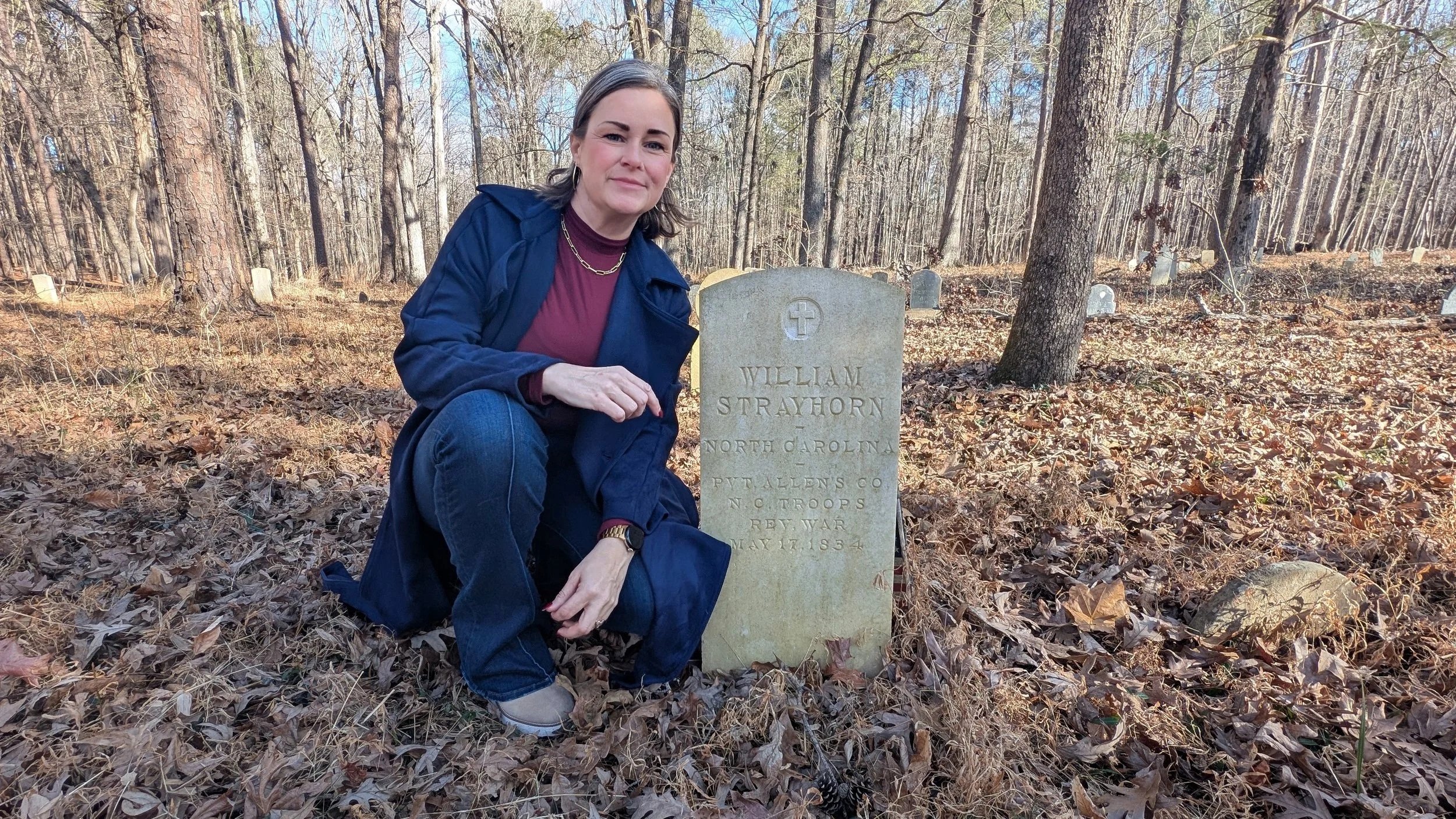
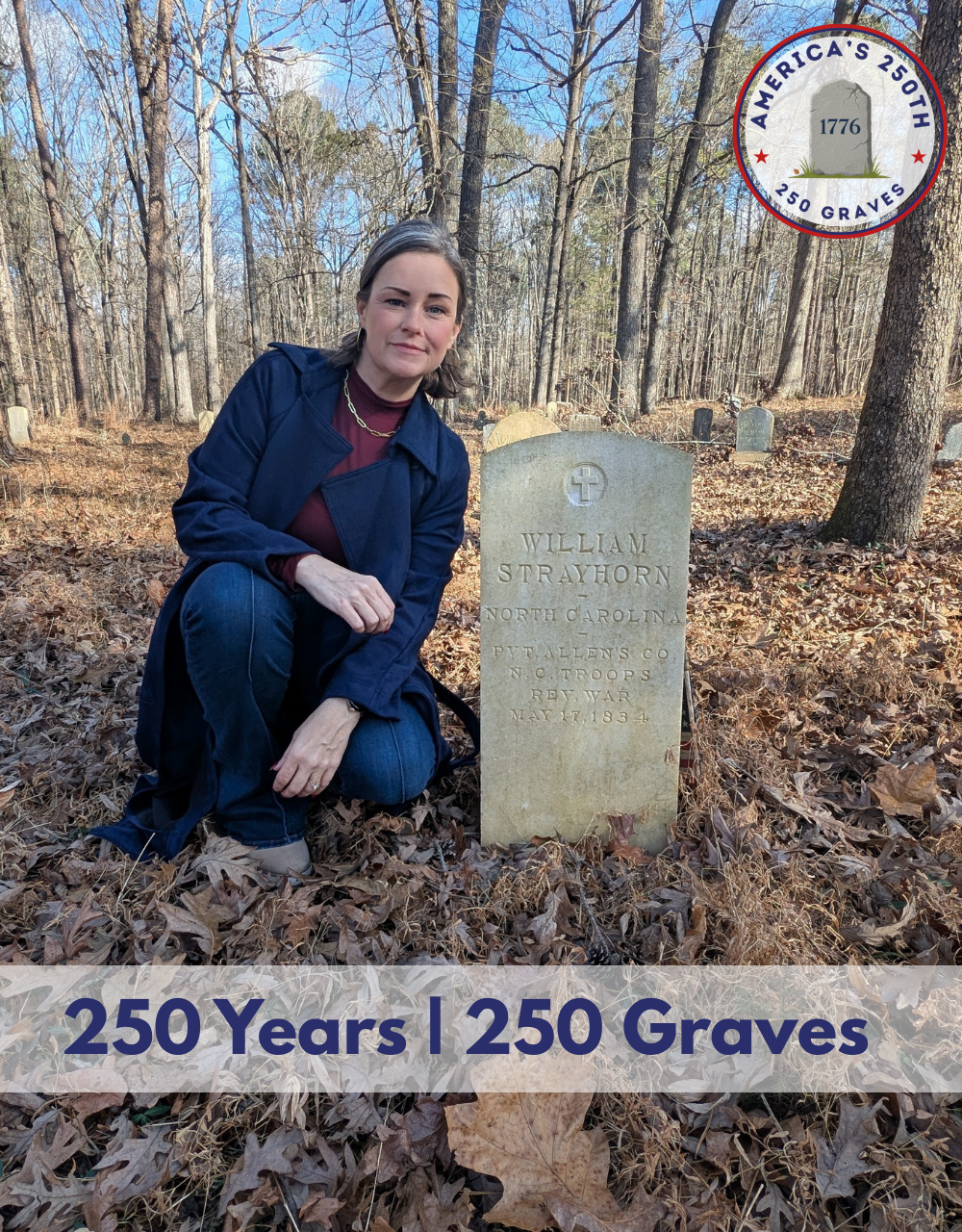
William Strayhorn died on May 17, 1834, at the age of 78. He was buried at Old New Hope Presbyterian Church, on land once owned by his father and among the same community that had shaped his entire life. His original gravestone was hand-carved and placed shortly after his death in 1834. This original marker simply reads:
William Strayhorn
Died 17 May, 1834
Aged 78 Years
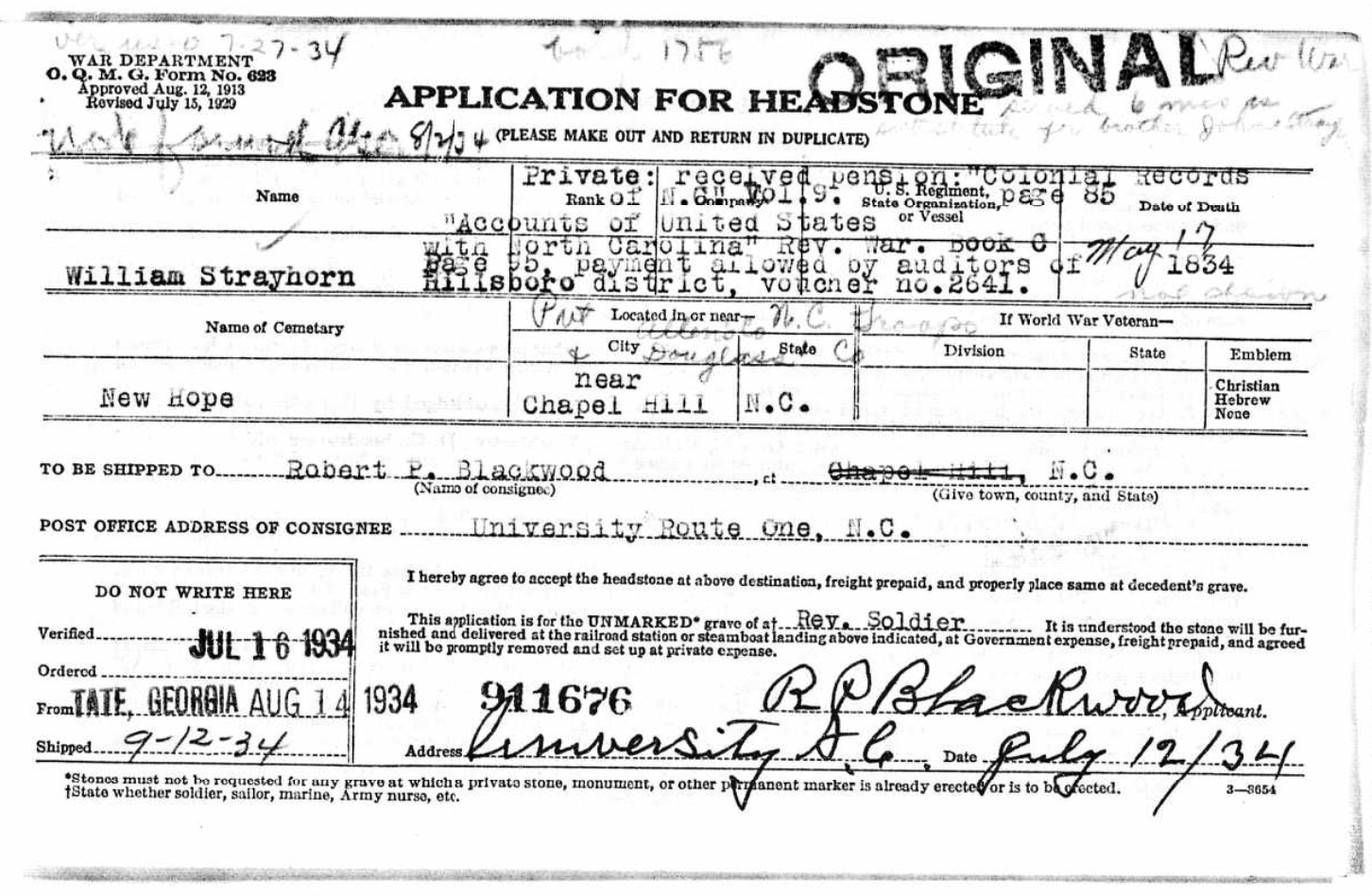
The 1934 application for William Strayhorn’s veteran marker, which was placed at the foot of his grave, leaving the original hand-carved marker at the head of his grave.
In 1934, a descendant of William applied to the Veterans Affairs Administration for a Veterans marker, which was placed at the approximate site of his grave, near his original hand-carved headstone. The Veterans Administration marker identifies him as a private in Captain Allen’s Company during the Revolutionary War.
William Strayhorn was not famous in his lifetime, and his name rarely appears in history books. But independence was secured by men like him, who stepped forward when the call came.
This project is made possible by readers like you.
Your support helps to pay for website costs, gas to travel to these sites, and cleaning supplies for the veteran stones that I’m working to restore.
If you believe this work is important, your support is so appreciated!
Citations
Revolutionary War Pension Application of William Strayhorn, National Archives and Records Administration (NARA), Washington, D.C.
A Historical Sketch of New Hope Church, Orange County, North Carolina, by Rev. David Irvin Craig. Revised Edition, 1891.
American Patriot Database, Sons of the American Revolution.
Biographical research on William Strayhorn Sr. (1756–1834), by descendant, Strain Hilton Armstrong.