Thomas & John Woodward [3&4/250]
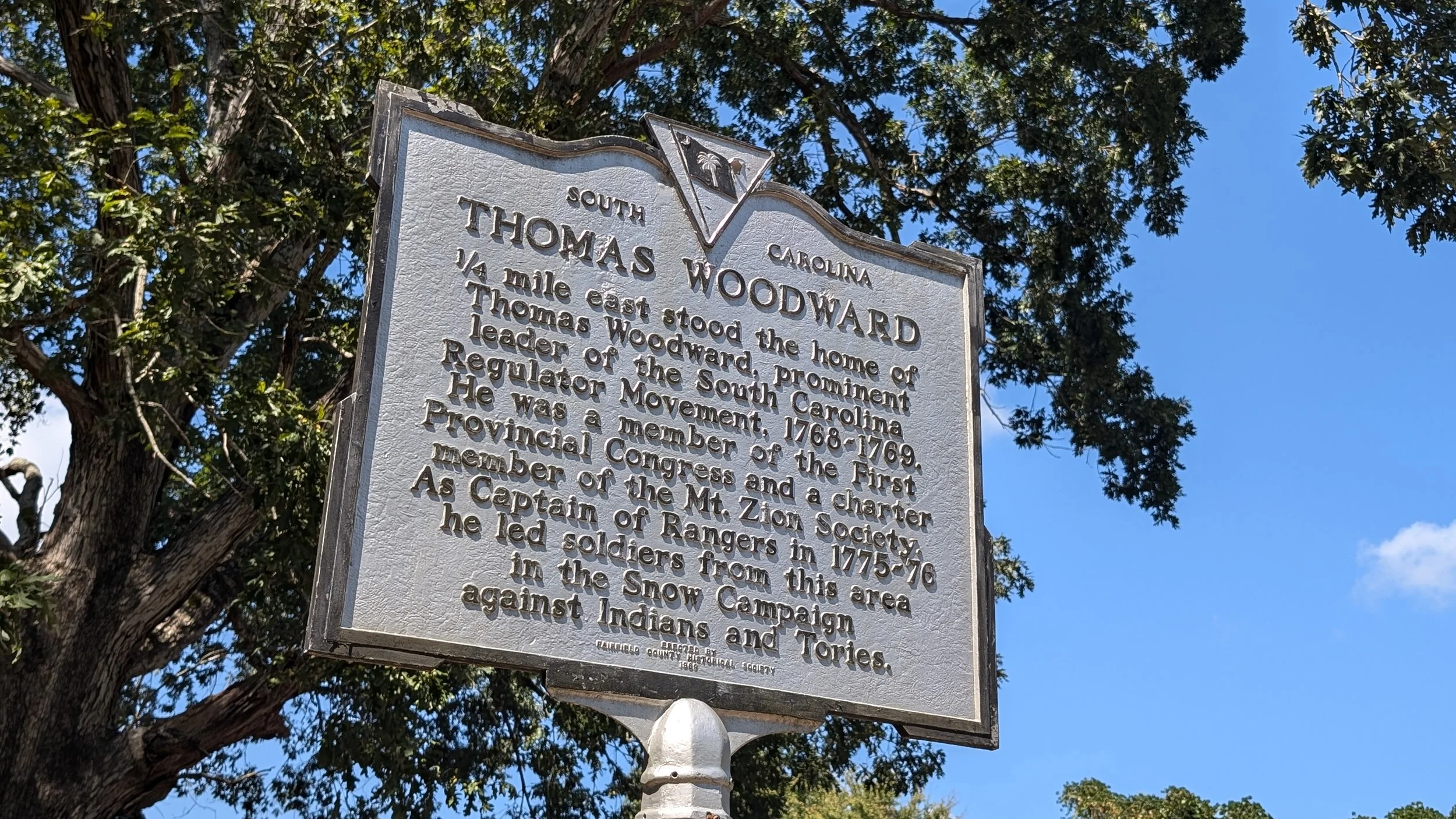
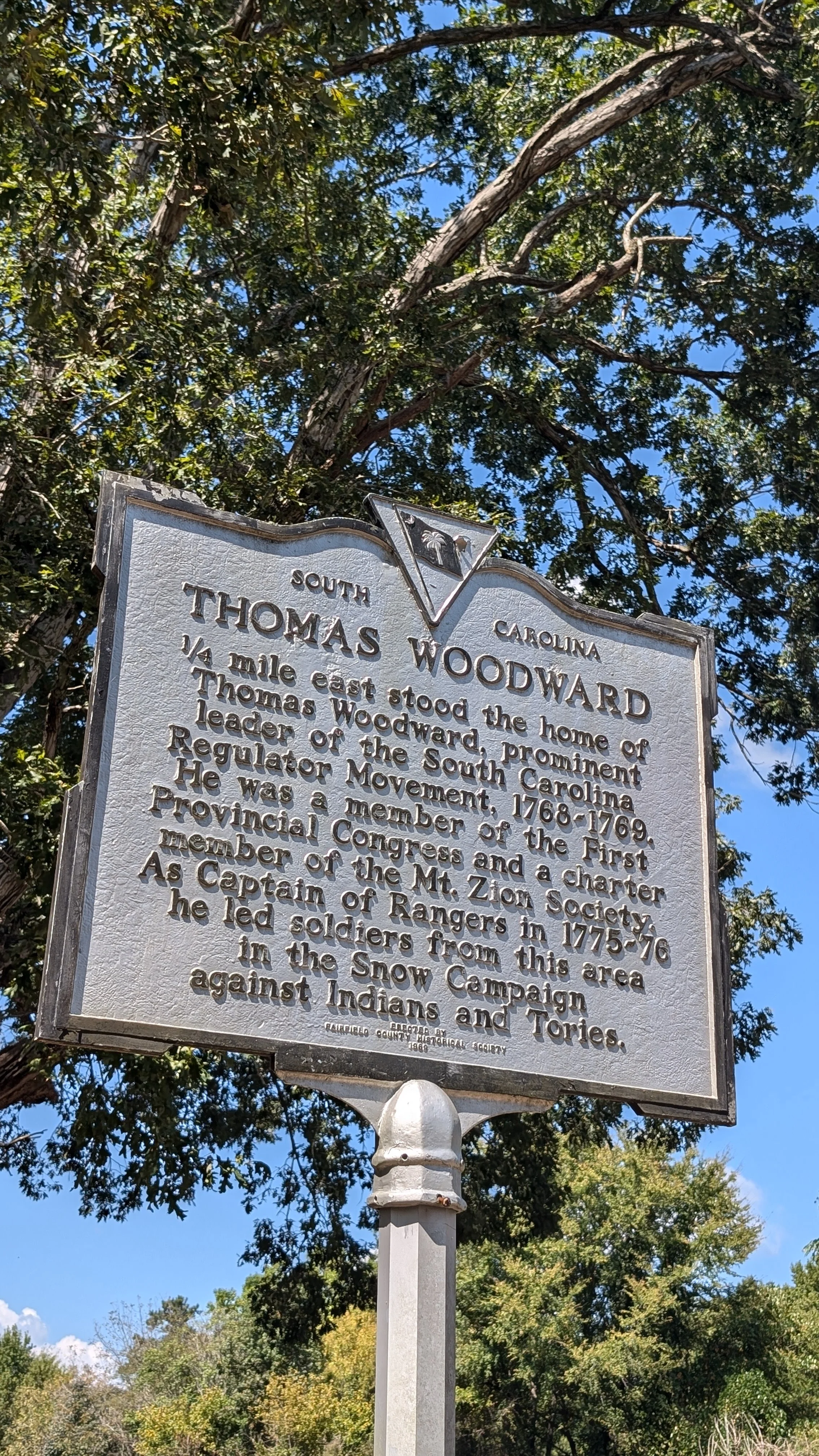
Thomas "The Regulator" Woodward (1729-1779) & his son, John Woodward (1747-1817)
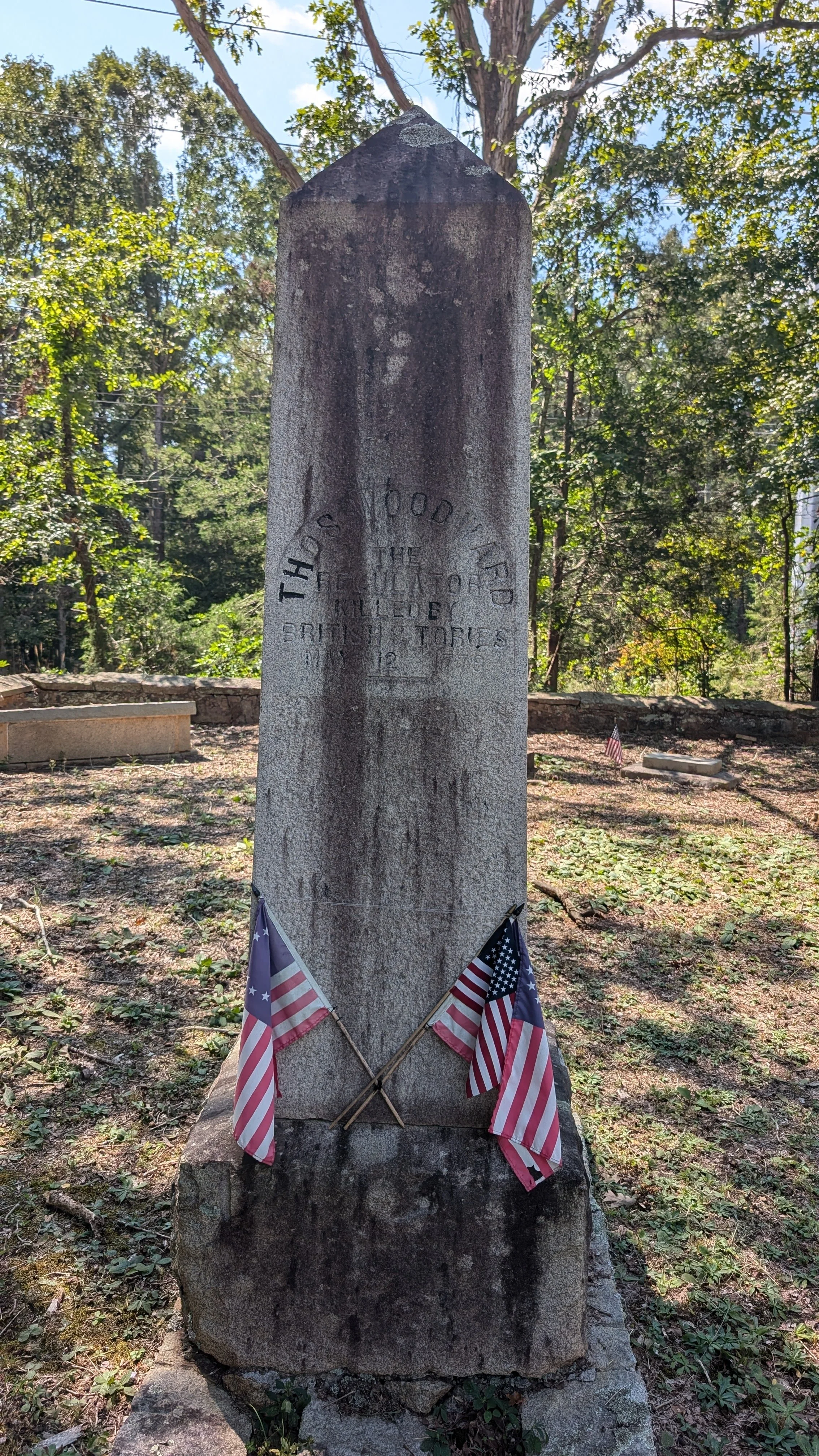
Buried at the Woodward Family Cemetery, outside Winnsboro, South Carolina
Before the American Revolution became a war against Britain, it was often a fight for survival in the Carolina backcountry. Long before declarations and flags, settlers in the interior of South Carolina lived far from the reach of courts, sheriffs, or effective government. In this fractured landscape, justice was uncertain, and danger was constant. It was here that Thomas Woodward became one of the men people turned to when law and order failed.
Lawlessness on the Frontier
By the 1760s, the interior of South Carolina was plagued by organized bands of horse thieves, raiders, and outlaws who operated across colonial boundaries. These groups maintained networks stretching into North Carolina and Virginia, stealing livestock in one colony and selling it in another. Roads were rough, distances were long, and criminal trials were held in Charleston, which was weeks away by horseback or wagon. For many backcountry families, appealing to formal authority was simply impossible.
Out of desperation, respected landowners and small farmers organized what became known as the Regulator Movement. Their goal was not rebellion, but protection. Regulators sought to suppress crime, recover stolen property, and bring order to communities abandoned by the colonial justice system.
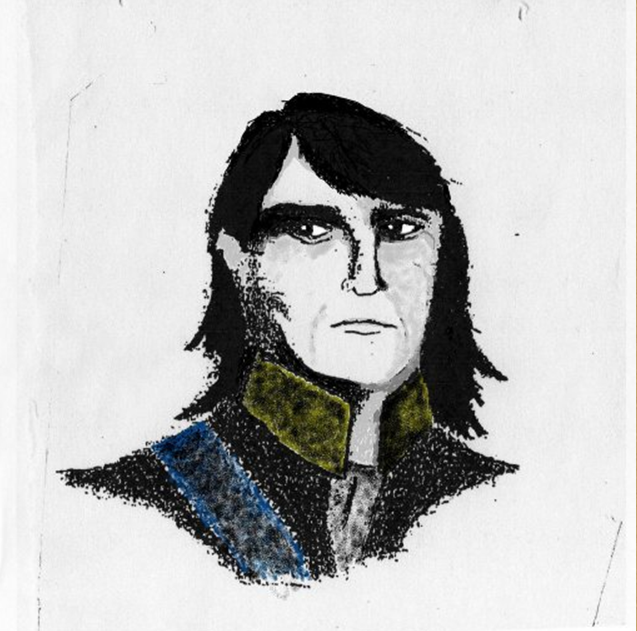
Portrait of Thomas “The Regulator” Woodward
A Champion of Order
Thomas Woodward emerged as one of the most formidable Regulators in the region between the Broad and Catawba Rivers. Contemporary accounts describe him as a large man of commanding presence, known for his physical strength, fearlessness, and relentless pursuit of criminals. He led mounted ranger patrols across hundreds of miles, tracking thieves across colony lines, escorting prisoners to Charleston, and dismantling outlaw networks that terrorized the backcountry.
Stories of Woodward’s daring spread quickly. He was known to ride hard and fast, leading small bands of Regulators on grueling pursuits that lasted weeks at a time. His reputation alone was often enough to strike fear into those who preyed on frontier families.
From Regulator to Revolutionary
When resistance to British authority began to spread in the 1770s, Woodward did not step away from conflict- he stepped forward again.
In 1775, he helped rally Patriot forces in Fairfield County and became a captain of Rangers under Colonel William Thompson. His men participated in the Snow Campaign against Loyalists, a brutal winter effort aimed at suppressing Tory resistance in the Carolina backcountry. Woodward’s Rangers later served in actions tied to the defense of South Carolina, including the fight surrounding the Battle of Sullivan’s Island, where Patriot forces under William Moultrie famously repelled a British assault on Charleston in June 1776.
Though Woodward later resigned his formal commission, he continued to lead volunteer forces against Loyalists and hostile groups, serving as both a military leader and a local justice of the peace. His authority rested not only on rank, but on the trust of his neighbors. One contemporary wrote that “the dry bones of Tories shook at the very name of Woodward.”
Death on the Back Roads
In May 1779, Thomas Woodward was once again in pursuit of Loyalists, riding at the head of his men as he always had. Near Little Dutchman’s Creek in Fairfield County, a Tory turned in his saddle and fired. The shot struck Woodward in the chest, killing him instantly.
He died as he had lived. At the front of the line, enforcing order in a violent civil war that pitted neighbor against neighbor across the Southern backcountry.
A Grave and a Legacy
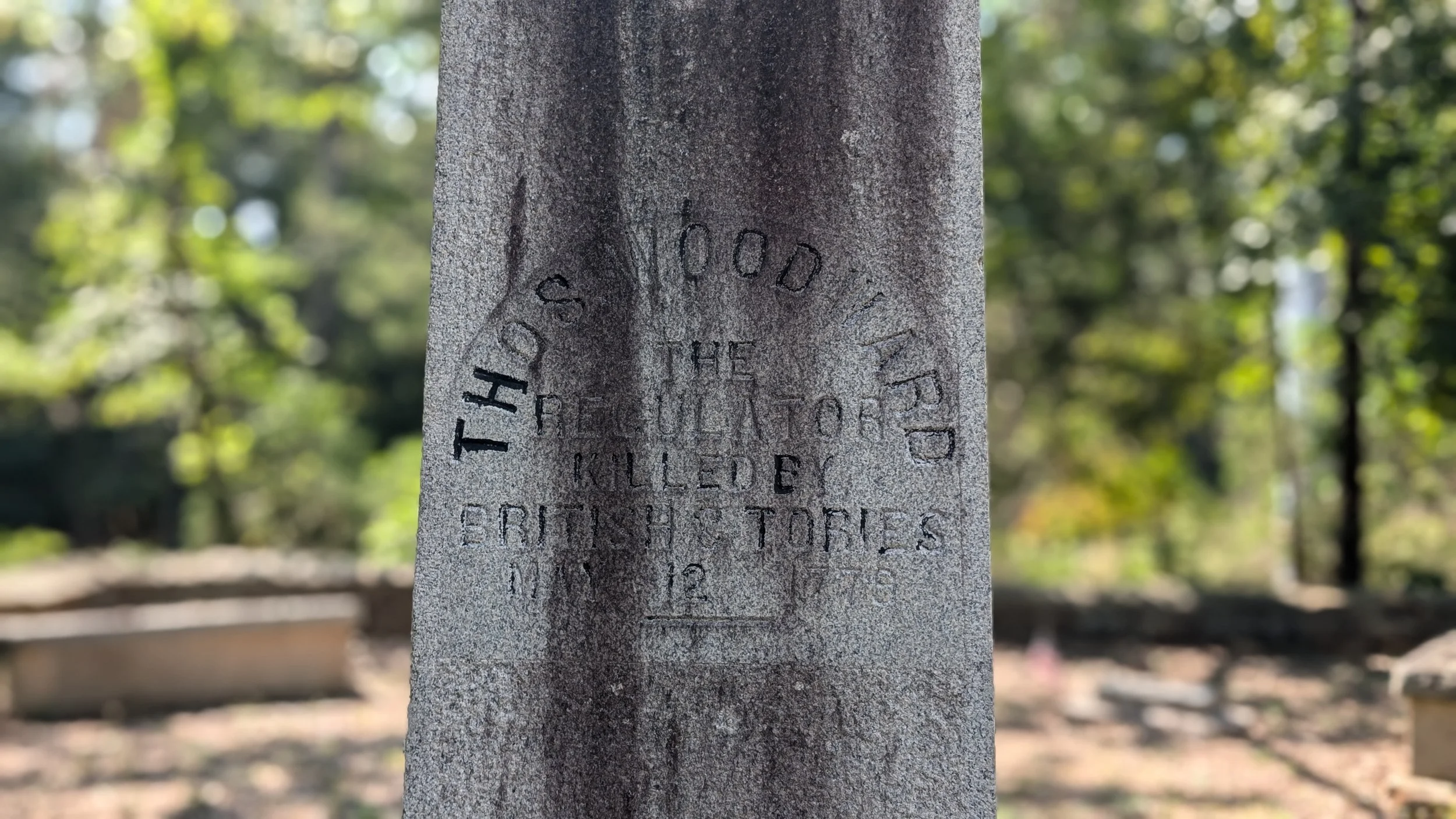
Thomas Woodward’s grave lies near Winnsboro in Fairfield County, South Carolina. His headstone bears a simple but powerful inscription: "Thomas Woodward, the Regulator, killed by Tories, May 12, 1779.” Woodward’s story reminds us that the American Revolution was not only fought on famous battlefields or in grand halls of government. It was fought along back roads, creek crossings, and frontier cabins by men who believed justice was worth risking everything for.
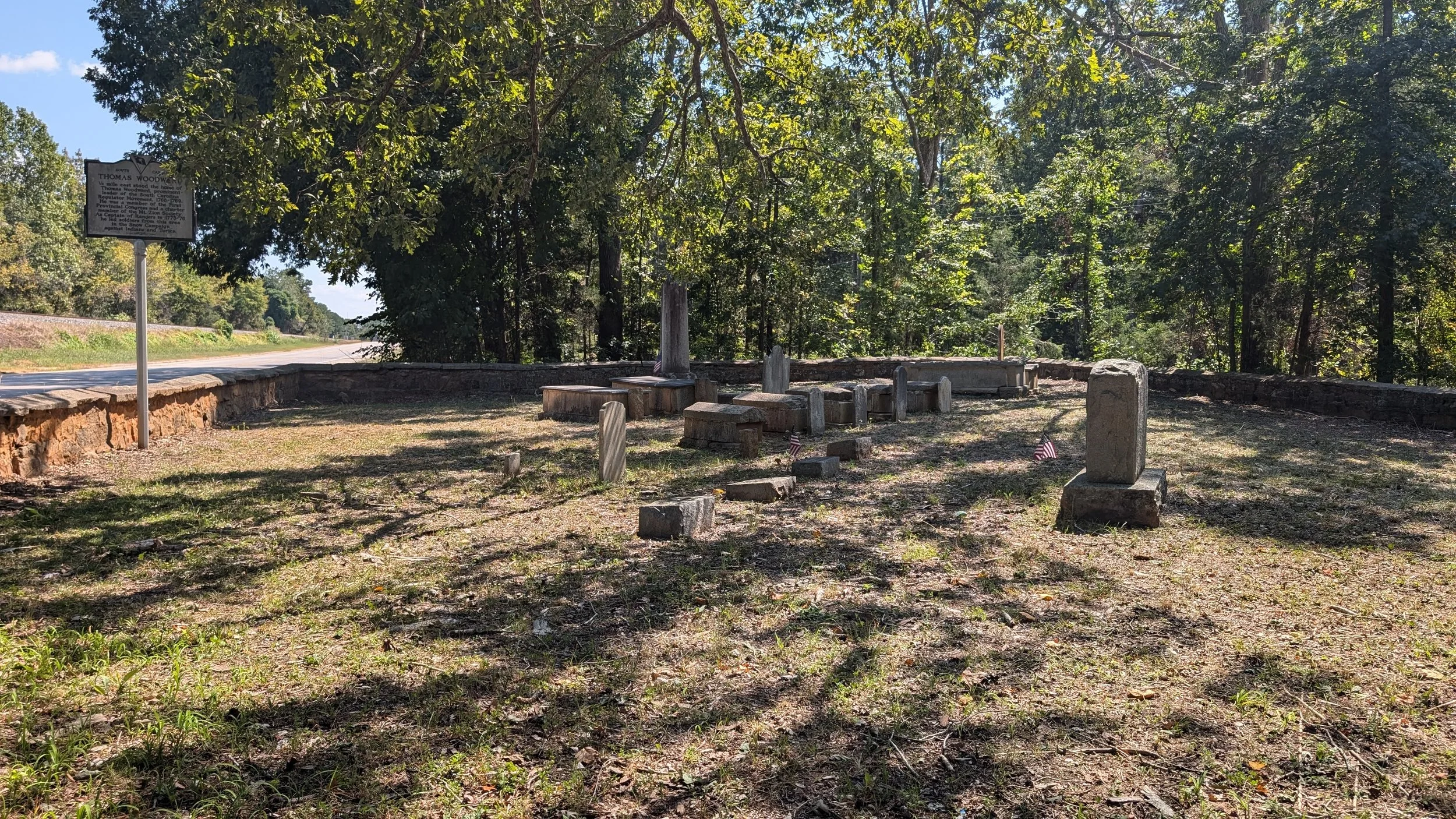
Thomas Woodward did not stand alone in service to the Patriot cause. He rests today in the Woodward family cemetery alongside his sons, John (1747-1817 and William Woodward (1762-1820), both of whom continued the fight for American independence.
After Thomas was killed in 1779, John Woodward assumed command of his father’s unit, carrying forward the leadership and responsibility his family had shouldered in the backcountry. His brother William also distinguished himself as a soldier, and his contemporaries referred to him as "the boldest fighter of the Revolution." Together, the Woodwards represent a multi-generational commitment to defending their community and fighting in the struggle for independence.
Thomas Woodward and his son, John Woodward's, graves are #3 and #4 of 250 graves I will be featuring in a yearlong project to document and honor 250 individuals whose lives helped to shape American independence, in recognition of America's 250th birthday.
This project is made possible by readers like you.
Your support helps to pay for website costs, gas to travel to these sites, and cleaning supplies for the veteran stones that I’m working to restore.
If you believe this work is important, your support is so appreciated!
Citations
Daughters of the American Revolution (DAR) and Sons of the American Revolution (SAR), Patriot service records for Thomas Woodward, compiled Revolutionary War service documentation confirming rank and participation.
Donny Krun, “Thomas Woodward,” RootsWeb genealogy page, https://freepages.rootsweb.com/~donnykrun/genealogy/Thomas_Woodward.htm (accessed [insert date]).
Find a Grave, “Thomas Woodward (1729–1779),” memorial no. 23144062, https://www.findagrave.com/memorial/23144062/thomas-woodward (accessed [insert date]).
Simpson History Project, “Thomas Woodward Jr.,” background notes and regional historical context related to the Woodward family of Fairfield County, South Carolina, https://simpsonhistory.com/notes/thomaswoodwardjr.html
Carolana: Exploring South Carolina History, “Captain Thomas Woodward,” overview of Revolutionary War service and Patriot leadership in South Carolina, https://www.carolana.com/SC/Revolution/patriots_sc_capt_thomas_woodward.html