William & Anne Clarke Hooper [18&19/250]
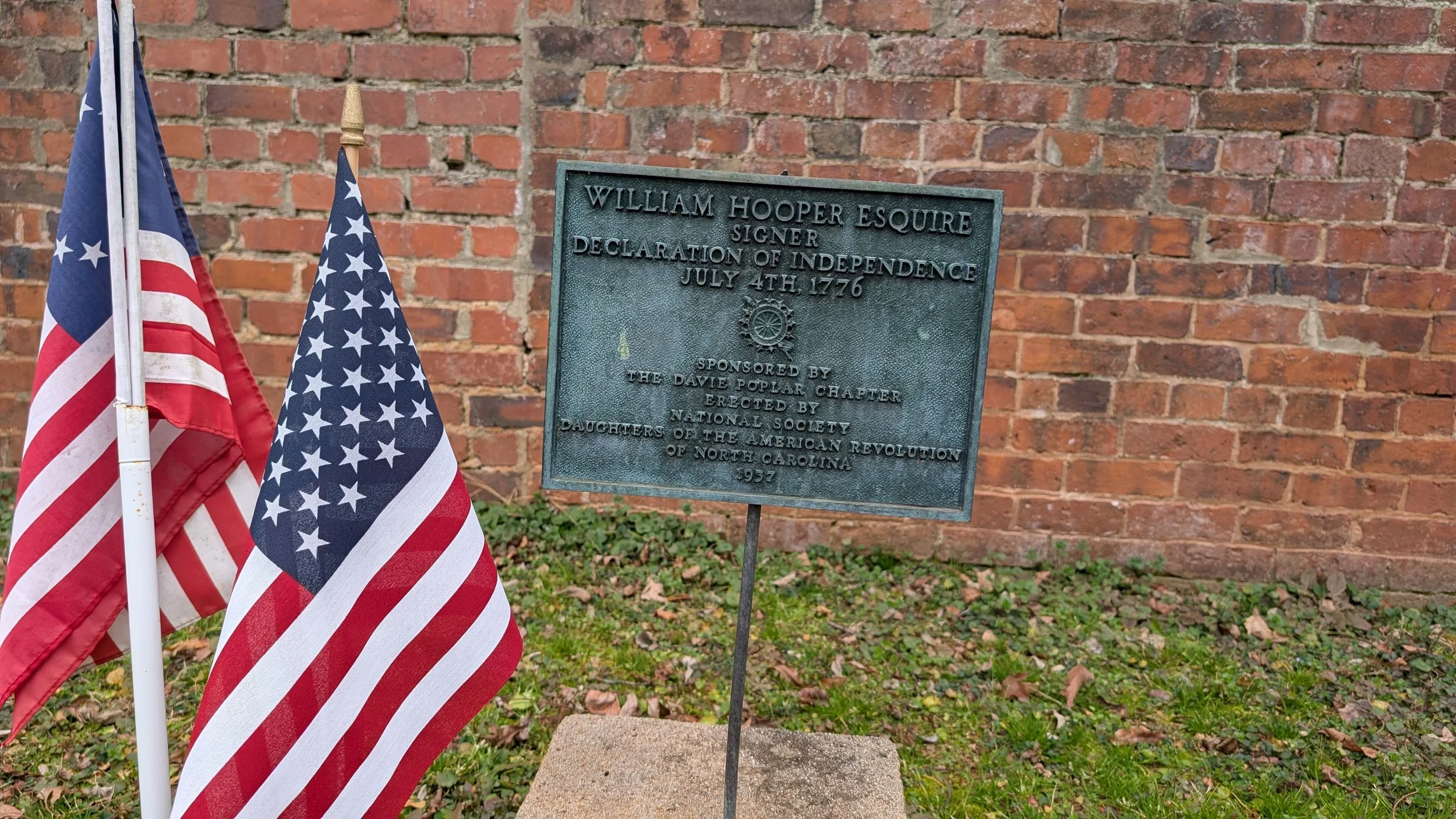
William Hooper, Signer of the Declaration of Independence (1742-1790) & Anne Clarke Hooper (1743-1795)
Buried at Old Town Cemetery, Hillsborough, Orange County, NC
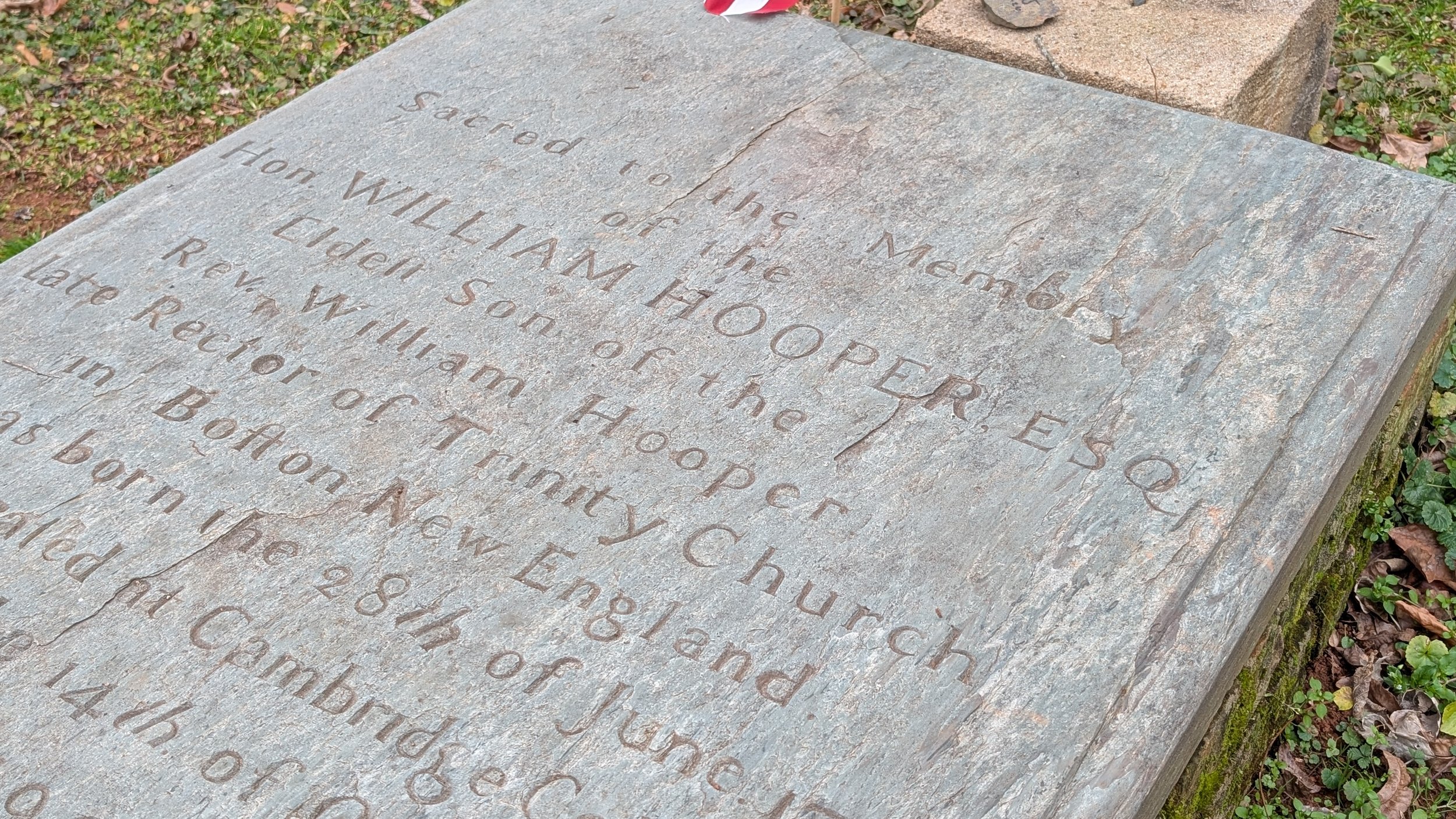
His grave marker is easy to miss. It sits hidden in a brick-walled family plot at the southern edge of Old Town Cemetery in Hillsborough, North Carolina, worn smooth by two and a half centuries of Carolina weather. Much of the original inscription has faded away, but the most important words are still legible, chiseled in by someone else long after the original stone was laid: Signer of the Declaration of Independence. Six words that carry a lot of weight.
Beneath this stone lie the remains (or a portion of at least) of William Hooper, one of North Carolina's three signers of the Declaration of Independence. I say portion of deliberately, because whether the man himself is actually here or in Greensboro is a question historians have been arguing about for well over a century, but I will get to that later on. What I can say with certainty is that this is where his story ended, in this small Piedmont town of Hillsborough, in October of 1790. When he died, Hooper was forty-eight years old, broke, ill, and largely forgotten by the political world he had helped create.
That ending is hard to square with the rest of his story. William Hooper predicted American independence before most colonists dared speak the thought out loud. He gave his fortune, his health, and his peace of mind to a revolution he had once actively opposed. He earned the nickname the 'Prophet of Independence.' But just years before, he was dragged through the streets of this very town by colonists who were furious at him for being on the wrong side of the aisle. And then he changed sides completely, signed the Declaration, lost nearly everything because of it, and came back to Hillsborough to die.
So what changed his mind? What stories made this man? I will do my best to answer those questions here, though I will say upfront that this particular life could fill a whole book. What follows is my attempt to tell as much of it as best I can.
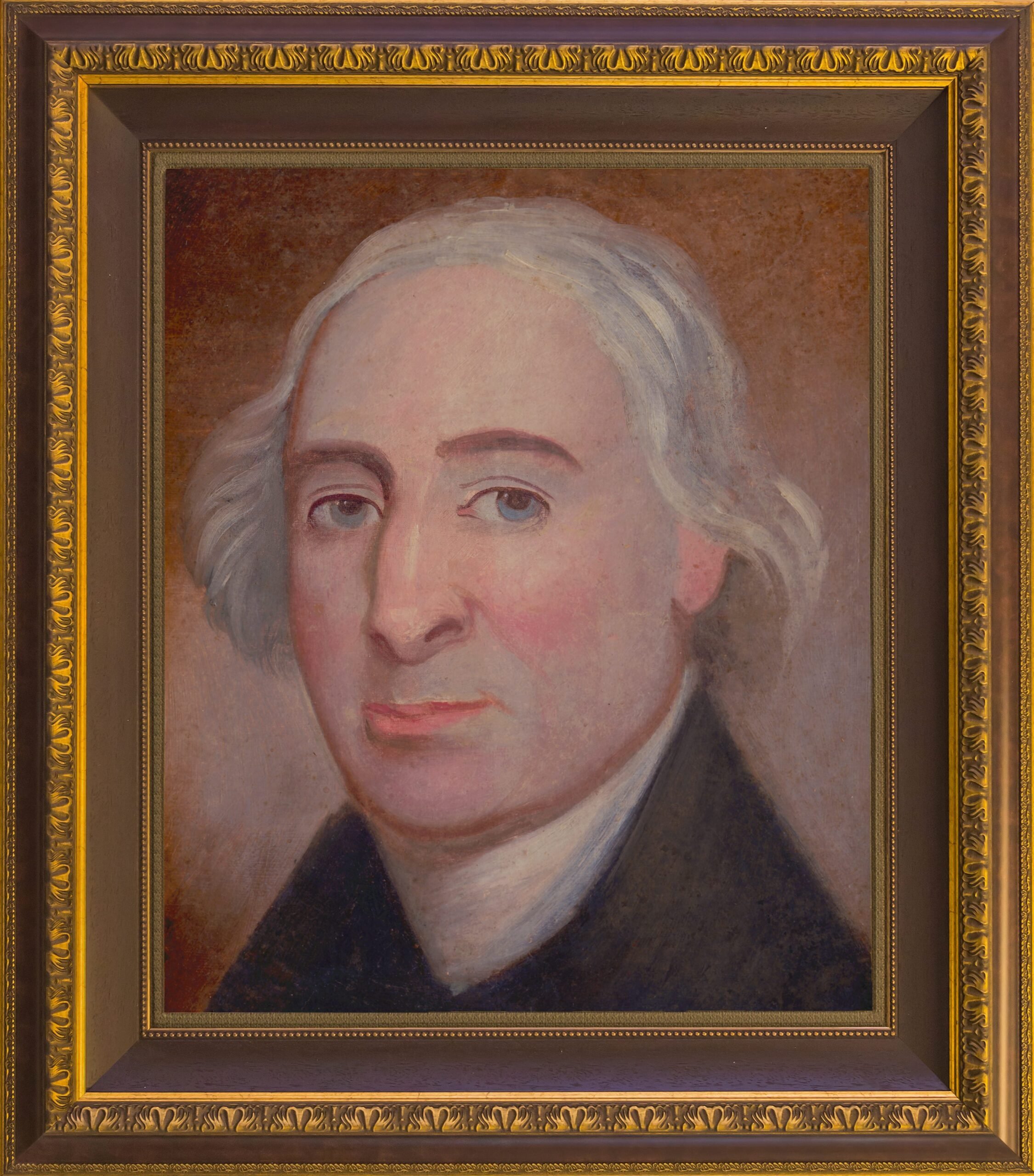
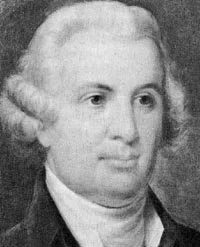
Portrait of William Hooper, by artist Robert Edge Pine. Image courtesy of the Small Special Collections Library, University of Virginia, Charlottesville.
Boston Born, Carolina Made
William Hooper was born in Boston on June 17, 1742, the oldest of five children of the Reverend William Hooper, rector of Trinity Church, and his wife Mary Dennie, daughter of a prominent Boston merchant. The family's roots ran to the Parish of Ednam near Kelso, Scotland, and the elder Hooper had carried that Scottish intellectual tradition with him across the Atlantic. He was a classicist and a gifted orator, educated at the University of Edinburgh, and he raised his eldest son accordingly.
A young William Hooper was sent to the Boston Latin School at age eight, where he worked under the celebrated headmaster John Lovell with enough success that at fifteen, he entered the sophomore class of Harvard College. He graduated in 1760 with a distinction in oratory, surpassing, by contemporary accounts, even his father in that field. The Reverend Hooper had his hopes set that his son would follow in his footsteps to become a minister, but the younger William had other plans.
In 1761, William began studying law under James Otis, one of the most intellectually formidable lawyers in the colonies, and a man famous for his early and fiery arguments about colonial rights and the limits of Parliamentary authority. The influence of Otis on Hooper's political thinking would take years to fully surface, but it was being planted during those early years of legal training in Boston.
In 1764, Hooper moved to Wilmington, North Carolina, to begin his law practice. Boston, it was said, had too many lawyers. The Cape Fear region had planters and court circuits and opportunity, and the handsome, well-educated young attorney from Boston was warmly received. By 1766, he had been unanimously elected recorder of the Wilmington borough. By 1767, he had married Anne Clark, daughter of a prominent New Hanover County family, at King's Chapel in Boston. He was building a life in the South, riding the court circuits on horseback across hundreds of miles of rough Carolina roads, making a name for himself, accumulating influence, and becoming a man of the colony. He was also, without quite knowing it yet, heading for a collision.
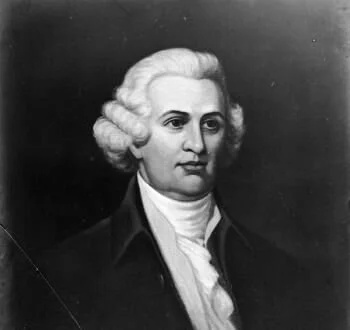
The Crown's Man in Hillsborough
To understand what happened next, you have to understand the Regulator movement, because it is the hinge on which William Hooper's entire story turns.
In the late 1760s, the North Carolina backcountry was in open revolt against corrupt colonial governance. Farmers and settlers in the Piedmont, many of them Scots-Irish Presbyterians, had grown furious at dishonest sheriffs, extortionate court fees, religious restrictions, and a system of local government they had no real voice in. They called themselves Regulators, and they organized to resist. Their grievances were legitimate, and as the movement evolved, their methods grew increasingly violent. The colonial establishment, centered in the coastal towns far removed from the Piedmont, viewed them as a dangerous threat to order.
By 1769, William Hooper was the Deputy Attorney General of the Salisbury District, appointed by Royal Governor William Tryon. He was, in the clearest possible terms, an officer of the British Crown. In September 1770, Hooper was in Hillsborough when the Regulators rioted at the courthouse, disrupting court proceedings and seizing control of the town. According to accounts from that period, Hooper was targeted by the rioters as a representative of the Crown, and was dragged through the streets of Hillsborough.
The following year, Hooper rode with Governor Tryon's militia to the Battle of Alamance, where royal forces crushed the Regulator uprising on May 16, 1771, killing several men and hanging their leaders. Depending on your interpretation, many historians consider this the first battle of the American Revolution. On that day, William Hooper was on the side of the Crown.
Let that sit for a moment, because just five years later, he would sign the Declaration of Independence.
The Shift No One Expected
So what changed? The short answer is that the British government changed it for him.
After the Regulator uprising, Hooper continued building his political career. In January 1773, he took his seat for the first time in the Provincial Assembly, representing the Scots settlement of Campbellton, later Fayetteville. He was appointed to the colony's Committee of Correspondence, which connected North Carolina's Patriot network to similar committees across the other colonies. He was reading the correspondence from Boston, from Philadelphia, from Virginia. He was watching Parliament's moves. His mentor James Otis had spent years arguing that the Crown's authority had limits, and those arguments, planted years earlier in a Boston law office, were beginning to take root.
Then came the Boston Port Act of 1774, Parliament's response to the Boston Tea Party, closing the harbor of Hooper's hometown as collective punishment for the destruction of the tea. For a man with deep Boston roots, a Boston education, a mother still living in Massachusetts, and a mentor in James Otis, this was not an abstract political event happening somewhere far away. It was personal, and it was a significant part of what radicalized him.
In April 1774, Hooper wrote a letter to his friend James Iredell that became one of the most remarkable documents of the pre-Revolutionary period. He wrote that the colonies were "striding fast to independence, and ere long will build an empire upon the ruins of Great Britain; will adopt its Constitution, purged of its impurities, and from an experience of its defects, will guard against those evils which have wasted its vigor."
This was April 1774, a full year before Lexington and Concord. The Declaration of Independence was two years away. Most colonial leaders were still publicly insisting they wanted only to address their grievances within the empire, holding out hope for reconciliation. William Hooper, a former lawyer for the Crown who had ridden with the royal militia against the Regulators, was predicting that America would break entirely from Britain and build a new empire on its ruins. As far as historians have been able to determine, it was the earliest known written prediction of complete independence from the Crown, and it earned him the epithet that would follow him for the rest of his life: the Prophet of Independence.
His father, still alive in Boston, reportedly disowned him when news of his political turn became known. The British Crown, which had appointed him to his legal position, took note. He went forward anyway.
The Delegate from North Carolina
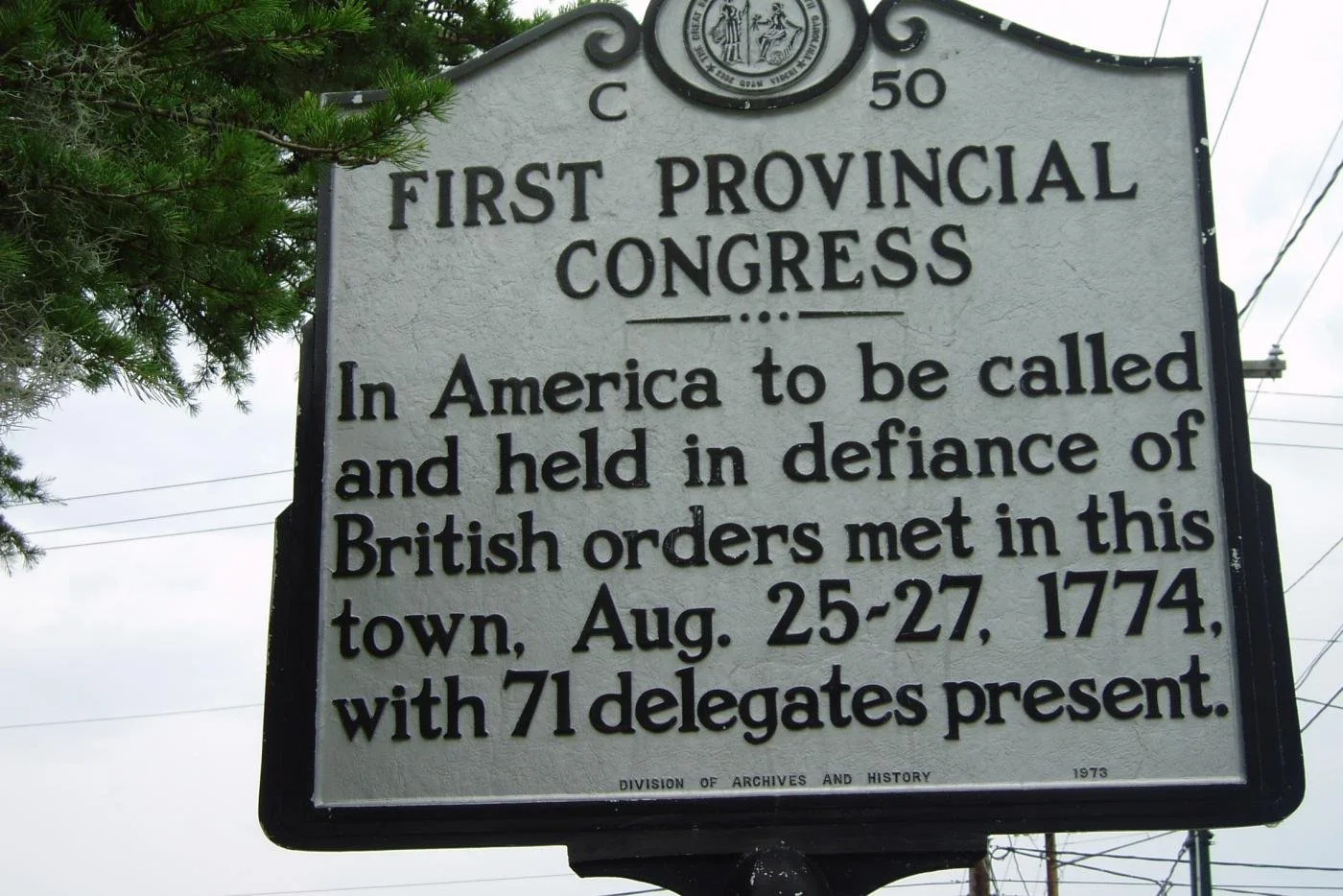
In 1774, the North Carolina Provincial Congress selected Hooper as the first of its three delegates to the First Continental Congress in Philadelphia, alongside Joseph Hewes and Richard Caswell. It was not a short journey. Hooper and Hewes rode over 450 miles on rough roads to reach Philadelphia for the opening of Congress in September 1774, arriving more than two weeks before the formal proceedings began.
John Adams, watching the delegates arrive and taking their measure in his diary, noted that Patrick Henry, Richard Henry Lee, and William Hooper were the leading orators of the Congress. At thirty-two, Hooper was among the youngest delegates, but he was recognized immediately as a man of unusual intellectual force and rhetorical power.
Over the next three years, Hooper attended three Continental Congresses, five Provincial Congresses, and four Provincial Assemblies, in addition to his service on the Wilmington Committee of Safety. Committees of Safety were local revolutionary governing bodies established across the colonies beginning in 1774, functioning as replacements for royal authority at the county and town level, responsible for enforcing Congressional resolutions, organizing militia, and managing Loyalist threats within their communities.
He was named to important committees at nearly every session. He served alongside Benjamin Franklin on the committee of secret intelligence, which held broad authority to hire agents overseas, conduct secret correspondence with European powers, and conceal sensitive information from Congress itself when necessary. He helped craft some of the most significant public statements of the Revolution, the addresses and resolutions that shaped colonial opinion and moved a people toward independence.
He was also present in June 1775 when Captain James Jack arrived from Mecklenburg County carrying a bold document: the Mecklenburg Declaration of Independence, passed by a convention of Mecklenburg citizens on May 20, 1775. Hooper, along with Hewes and Caswell, received the document and wrote back to the Mecklenburg convention, calling their declaration premature. Within a year, Hooper would sign the national one.
On July 2, 1776, the Continental Congress voted for independence. Hooper was absent that day, recalled home by illness. He was present on August 2, however, when the engrossed parchment was brought forward for the formal signing, and he added his name to the Declaration of Independence. He was thirty-four years old.
What Independence Cost Him
After the signing, a country was born, but the years that followed were among the most difficult of William Hooper's life. His service to the cause of independence had cost him nearly everything.
By the time Hooper put his name to the parchment in August 1776, the colonies and Britain had already been at open war for more than a year. The British knew who had signed the Declaration, and they were eager to make those men pay for it. Hooper's coastal estate at Masonboro Sound, which he had built in 1774 and named Finian, sat exposed and vulnerable. When British ships arrived in southern waters, Hooper moved his family into Wilmington for protection. It was not enough. The British shelled Finian and then burned it. When British forces took Wilmington on January 29, 1781, officers forced Anne Clark Hooper from her home there with little more than her family's clothing.
Hooper himself was far away in Edenton at that time, a fugitive from British forces who would have been very pleased to capture a signer of the Declaration. He was suffering from malaria, and his right arm was badly swollen and partially disabled. He moved from friend's house to friend's house through the Windsor and Edenton areas, dependent on the charity and courage of people willing to shelter a wanted man.
When he finally made his way back toward Wilmington after the British withdrawal, he found almost nothing left. The household furniture was gone. The kitchen equipment was gone. His law books had been looted or destroyed. Enslaved people he had held on the property had fled, some with the British, while others had been lost to a smallpox outbreak.
With nothing left in Wilmington, Hooper resolved to bring his family to Hillsborough. In a letter to James Iredell written in February 1782, he described the wreckage and shared a moment from the road that is difficult to forget. His daughter Betsy, overcome by the summer heat during the wagon journey north, cried out: "Mamma, let us go home." Anne Clark Hooper, whose composure, Hooper wrote, "never forsook her in the severest moment of trial," replied quietly: "My dear, we have no home."
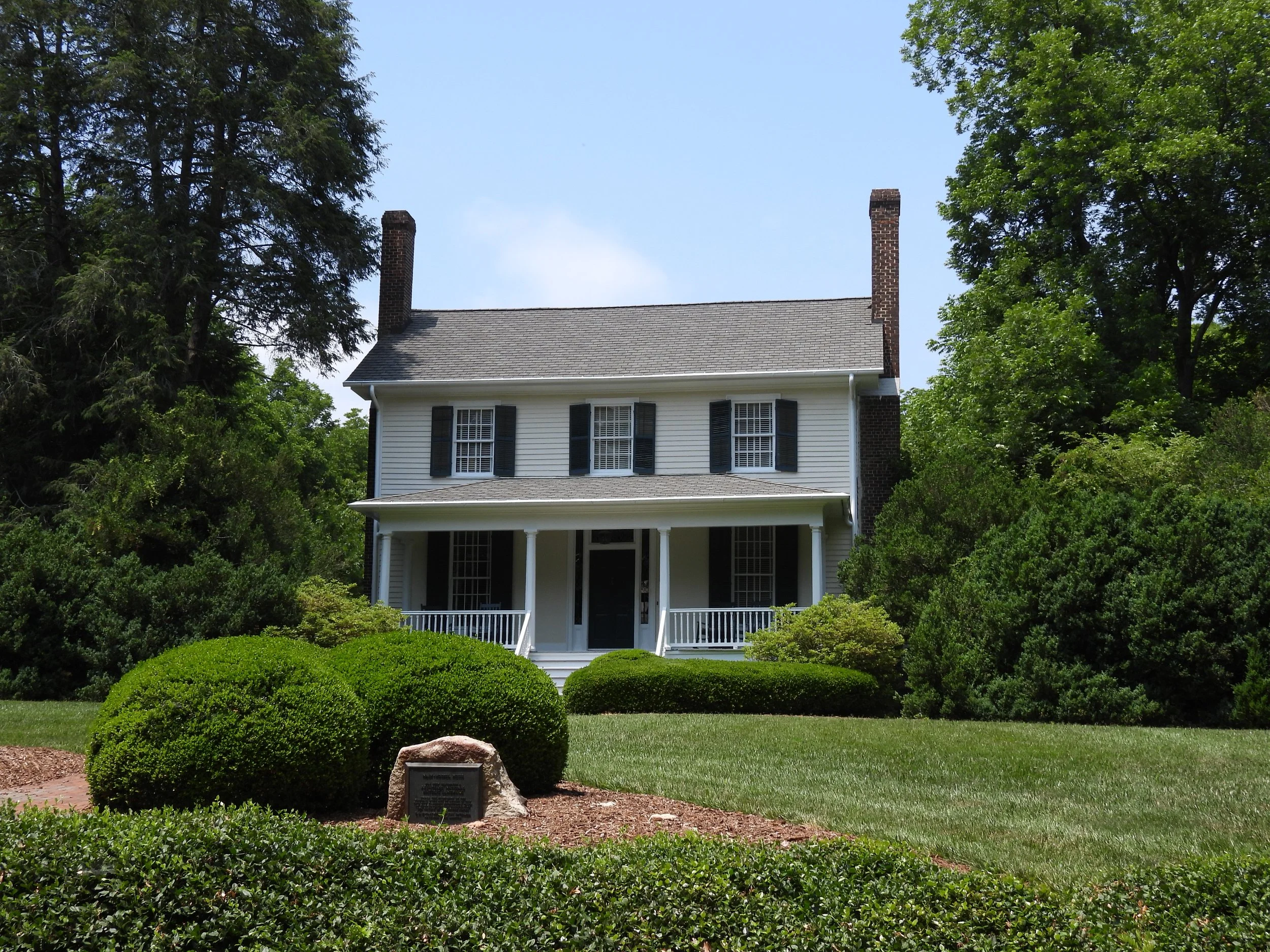
The Nash-Hooper house, where William Hooper and his family lived after he returned to Hillsborough, NC.
Last Days in Hillsborough
On April 10, 1782, the reunited Hooper family returned to Hillsborough, where Hooper's early career had been defined. The family purchased the former home of General Francis Nash on West Tryon Street in Hillsborough. Nash had built the house in 1772 and was killed at the Battle of Germantown in 1777. It is the only surviving home of Hooper's known to exist, and it still stands today at 118 West Tryon Street as a National Historic Landmark, two doors from the cemetery where Hooper would be buried eight years later.
The last years of his life were not easy ones. Hooper resumed his law practice, riding the circuits again with his old friend and colleague James Iredell, working through the flood of post-war cases involving confiscated Loyalist property, treason claims, and the legal tangles left by the Revolution. He was good at this work and found reasonable success in it. But his political fortunes were another matter.
After the war, Hooper took the position that Loyalists deserved fair treatment under the terms of the peace treaty, arguing that vengeance and property seizures violated the treaty's terms and damaged the new republic's credibility. He was right about this, both legally and morally, but it cost him nearly everything that remained of his political standing. His own brothers Thomas and George had been suspected of Loyalist sympathies during the war, which complicated his position further. He was defeated for election and found himself increasingly at odds with former allies who wanted harsher treatment of those who had sided with the Crown.
In 1788, he campaigned hard for North Carolina to ratify the new United States Constitution. The state ultimately ratified in 1789, making it one of the last to do so. By that point, Hooper had become North Carolina's only surviving signer of the Declaration of Independence. Joseph Hewes had died in 1779, John Penn in 1788. He was also seriously ill. In May 1790, his friend Iredell wrote that he feared "a few months will finish him."
On October 14, 1790, William Hooper died in the Nash house on West Tryon Street in Hillsborough, North Carolina. He was forty-eight years old. His daughter Elizabeth's wedding had been planned for the following day. His will included instructions on how to disburse his books, his land, and to distribute the people he enslaved to his wife and children. He also included instructions regarding his burial, written into his 1788 will, that his body be "buried with decency and with little expense." The family honored that wish, interring him in a corner of the garden adjacent to Old Town Cemetery, in a brick-walled family plot.
The Grave, the Stone, and What Remains
He rested there in Hillsborough for over a hundred years. Then, in 1894, the Guilford Battleground Company undertook a project to reinter the remains of North Carolina's Declaration signers at the site of the Battle of Guilford Courthouse, as a memorial to their service. On April 25, 1894, Hooper's grave was opened at dawn before family representatives. What they found was modest: a few discernible relics, described as part of a button and a nail or two. These, along with the sandstone ledger stone, were placed in an envelope and transported to the battlefield site in Greensboro, where an imposing nineteen-foot monument, surmounted by a statue of Hooper in colonial dress and in an orator's pose, was erected over the reinterment site. The monument was formally dedicated on July 3, 1897.

Monument to William Hooper at Guilford Battlefield Park in Greensboro, NC, stands above the site where his partial remains were relocated.
The sandstone slab was later returned to Hillsborough, to the original grave site. Before it left for Greensboro, someone had chiseled six additional words into the soft stone: Signer of the Declaration of Independence. Those six words are now the only inscription still legible. The original epitaph, placed by his daughter Elizabeth sometime between 1812 and 1818, has been swallowed by time and weather.
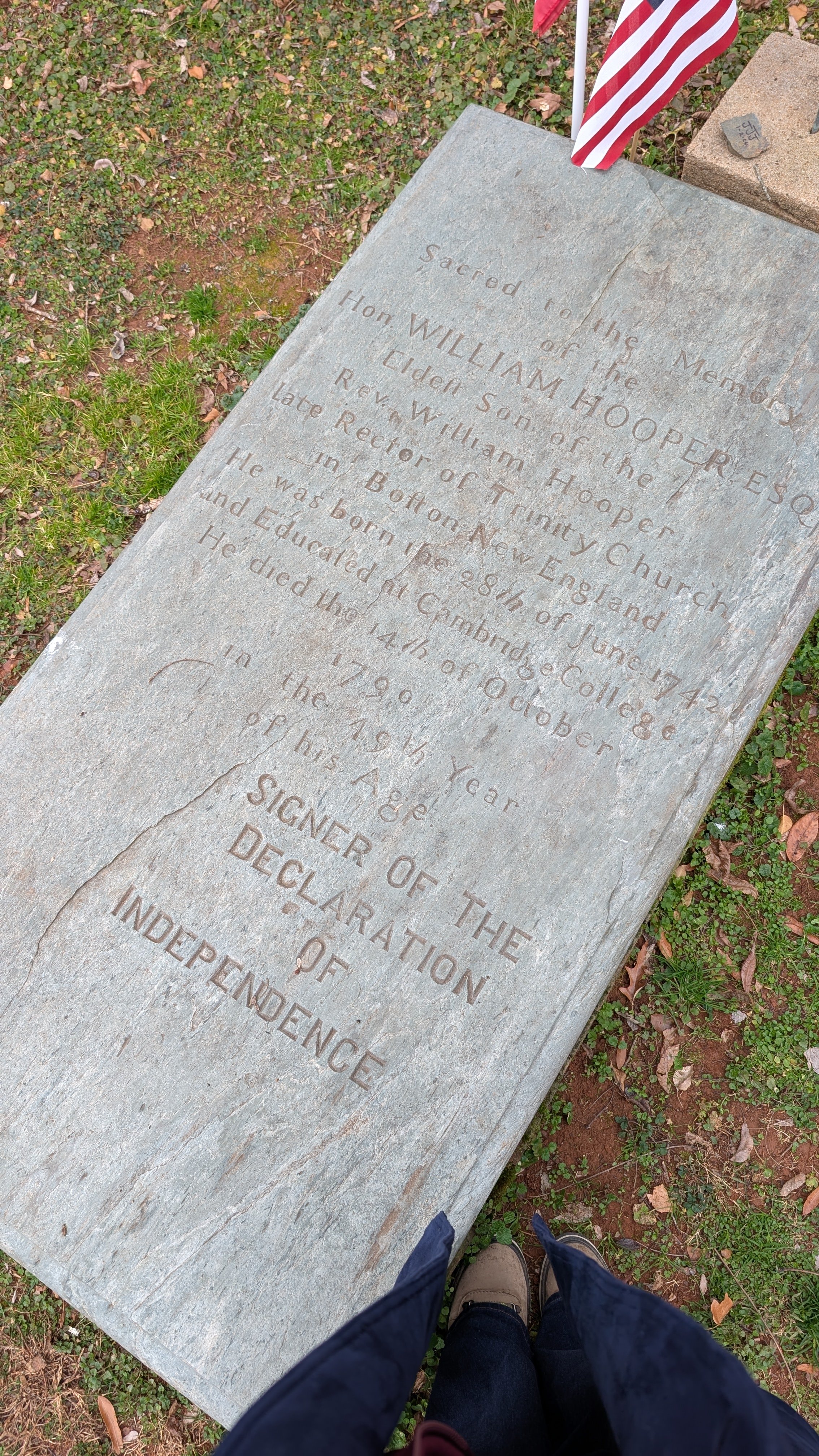
As for what actually lies beneath that slab, historians have long debated it. Many believe the majority of Hooper's physical remains never left Hillsborough at all. Contemporary accounts suggest that less than a shoebox's worth of material was actually gathered and moved to Greensboro, leading many to conclude that the ground of Old Town Cemetery holds more of William Hooper than the monument in Greensboro does.
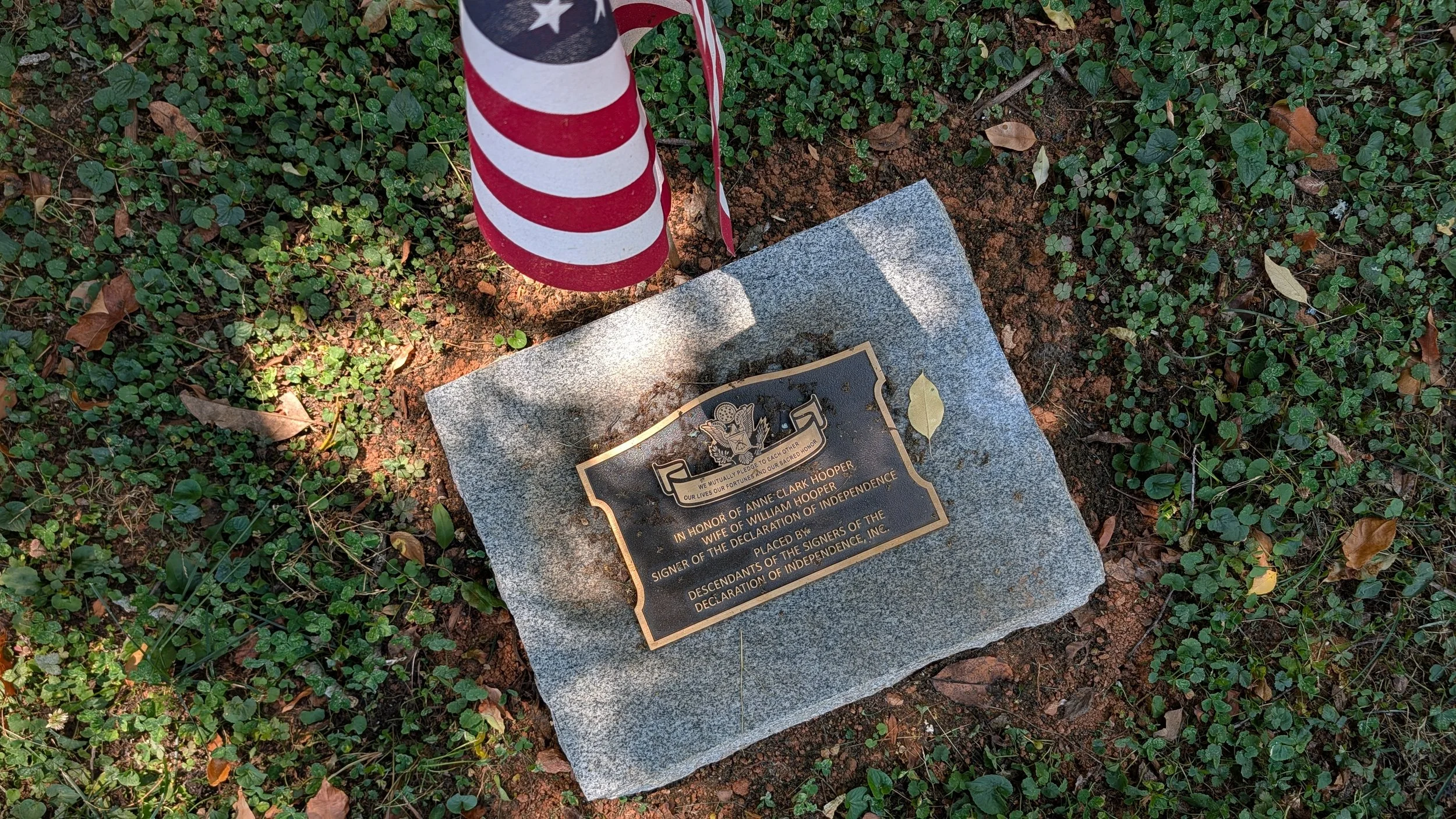
Buried beside her husband are the remains of Anne Clark Hooper (1743-1795).
So here we are, at the end of Hooper's story. The story of a man caught between two places, two loyalties, two versions of himself. The Crown's lawyer and the Prophet of Independence. The man who rode with Tryon and the man who signed the Declaration. The man who predicted the birth of a nation and then watched that nation largely move on without him. He asked to be buried with decency and little fanfare, only to be disinterred and reinterred beneath one of the most prominent monuments erected to any of his peers.
He was buried in the town where he had once been dragged through the streets as a Loyalist, and he rests there still, as a Patriot. Learning more about his story helped me understand the genuinely complicated political landscape of the American Revolution, a world that was not always cleanly divided between Patriot and Loyalist, but something in between. Something more layered. More human.
Visiting Information
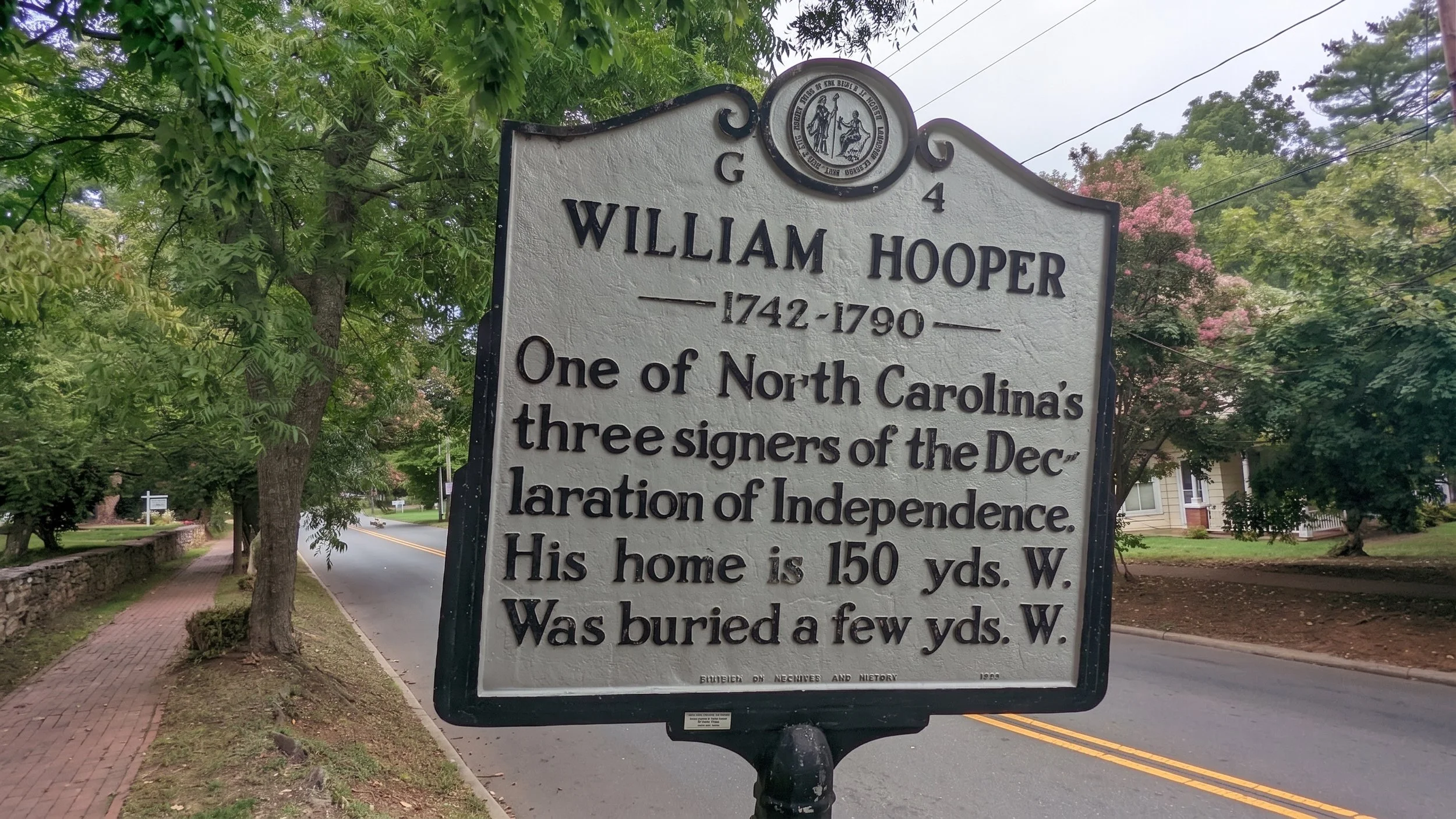
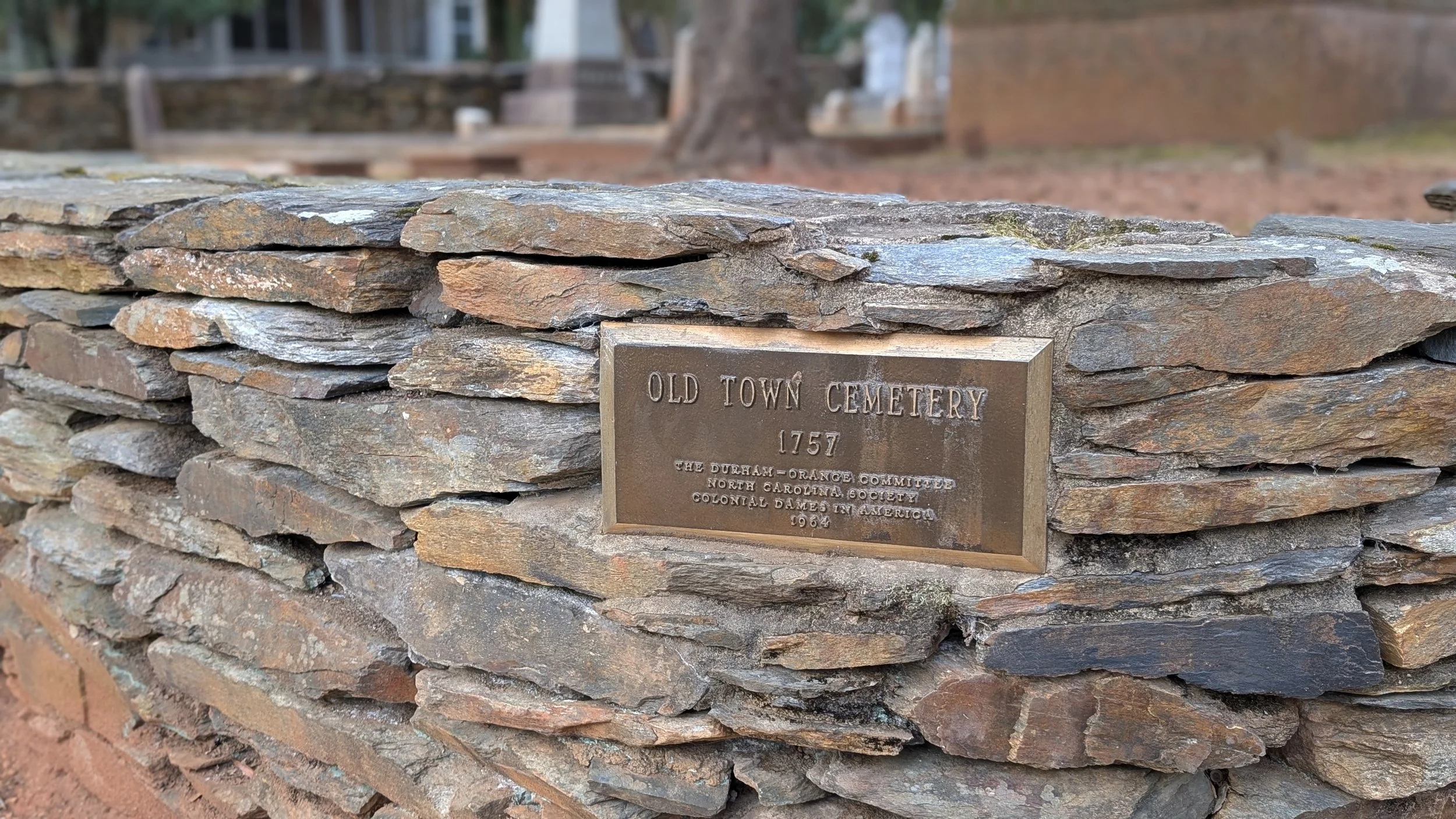
Old Town Cemetery is located at the corner of North Churton Street and West Tryon Street in Hillsborough, North Carolina. The William Hooper family plot is in a separate section of the cemetery, surrounded by a stacked stone wall. A historical marker in his honor is located near the cemetery entrance on North Churton Street.
The Nash-Hooper House, the only surviving home of William Hooper, stands at 118 West Tryon Street, in Hillsborough- just a short walk from the cemetery. The house is privately owned and not open to the public.
For those who want to see the monument and official reinterment site, the Guilford Courthouse National Military Park is located at 2332 New Garden Road, Greensboro, NC 27410. The Signers' Monument, with its nineteen-foot statue of Hooper in orator's pose, is on the battlefield grounds.