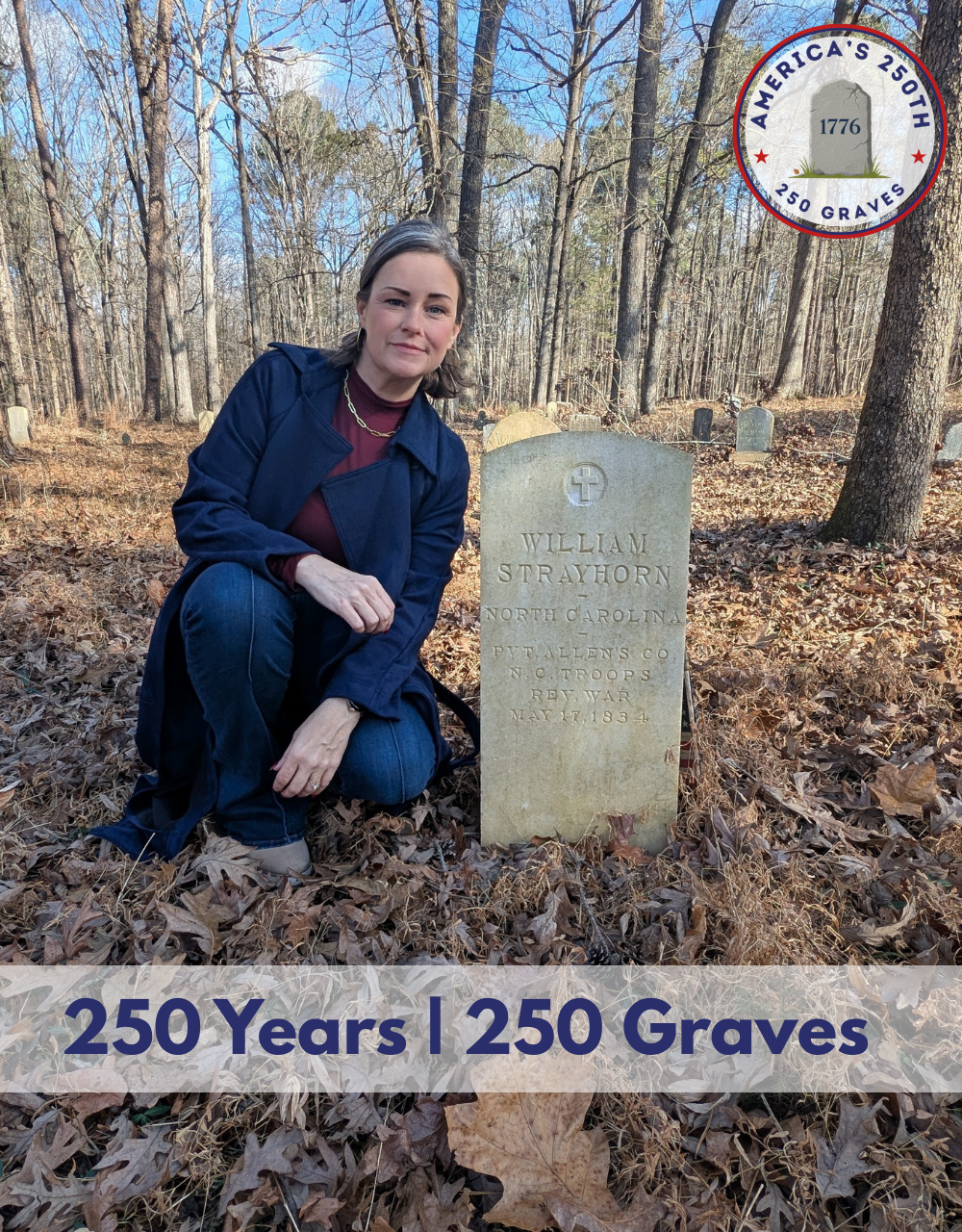
Col. Abel Kolb [17/250]
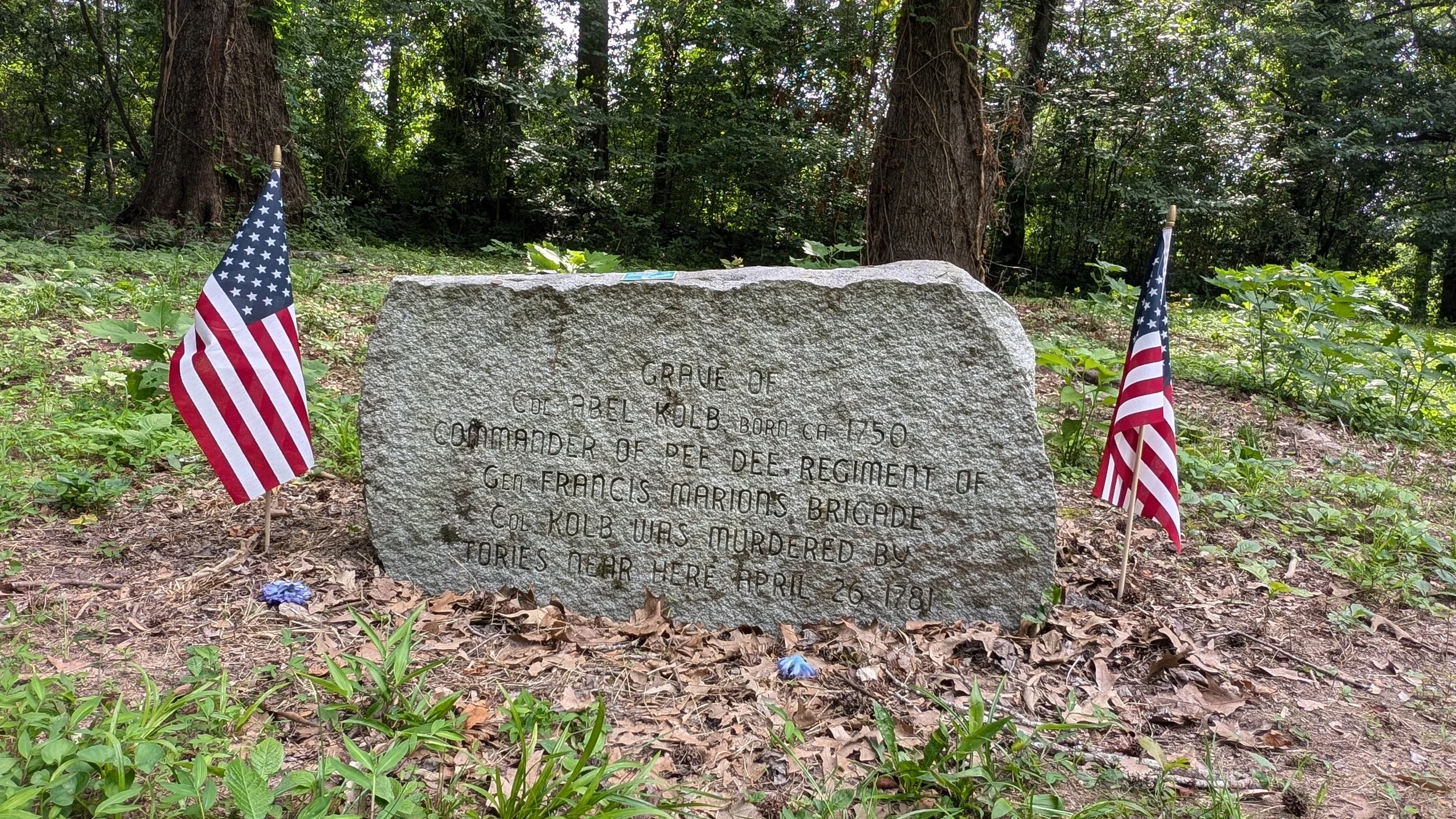
Col. Abel Kolb (1750-1781)
Buried at Welsh Neck Cemetery in Marlboro County, SC
When I pulled up to an empty field beside the Great Pee Dee River, I was convinced my GPS had taken me to the wrong place. There was nothing here. Just flat ground, river light filtering through the trees, and the quiet. I almost turned back.
But I kept walking, and there it was. A simple stone, sitting in the grass close to the water's edge. Its inscription reads: "Grave of Col. Abel Kolb, Born 1750. Commander of Pee Dee Regiment of Gen. Francis Marion's Brigade. Col. Kolb was murdered by Tories near here, April 26, 1781."
Abel Kolb was a planter, a politician, a militia commander, and one of the most capable Patriot leaders in the upper Pee Dee region of South Carolina. He helped establish institutions that still shape this community. He fought alongside Francis Marion. And on a spring night in 1781, he walked out his own front door and was shot dead in front of his family.
His stone tells you the essential facts, but it cannot possibly convey the full weight of what happened here, so I'll be expanding on his story here, which is story #17 in my 250 Graves series in honor of America's 250th Birthday.
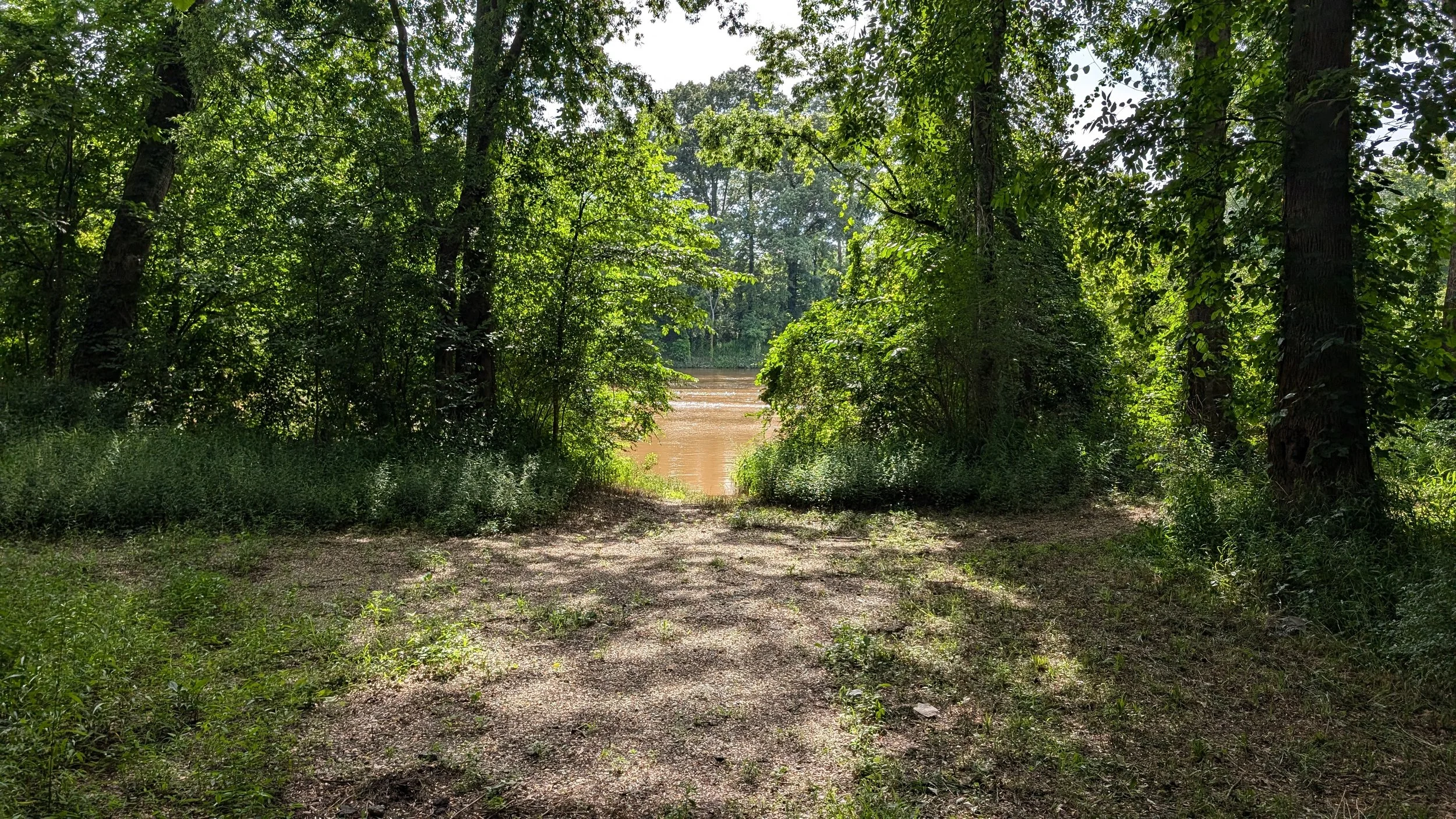
View of the Pee Dee River from the cemetery where Col. Abel Kolb is buried.
A Family Rooted in the Pee Dee Region
To understand Abel Kolb, you have to understand the land he came from and the long road that brought his family to it.
The Kolb Family story begins in Germany. Dielman Kolb and his wife Agnes Schumacher were Mennonites from Wolfsheim, in the Rhineland-Palatinate. In early 1707, three of their sons set out across the Atlantic seeking a place where they could worship freely and build a life on their own terms. They initially settled in Germantown, north of Philadelphia, and later moved to Skippack in Montgomery County, Pennsylvania, where they became part of the Mennonite community there.
Johannes was the only one of the five brothers who did not remain in Montgomery County. He paid taxes in Pennsylvania through 1735, then moved south to South Carolina and sold the last of his land by 1739. He received a grant of 650 acres in the Cashaway Neck of the Pee Dee River in 1737, and the family made their home there. Johannes was the father of nine children, including Peter Kolb, the father of Abel. Because of the number of his descendants in the region, Johannes is sometimes jokingly referred to as "Father Abraham" of South Carolina.
It was into this world that Abel Kolb was born, around 1750. His father, Peter, married Ann James, daughter of the Reverend Philip James, an early minister of the Welsh Neck Baptist Church, which was one of the oldest Baptist congregations in the American South. That marriage connected the Kolbs to one of the founding families of the upper Pee Dee.
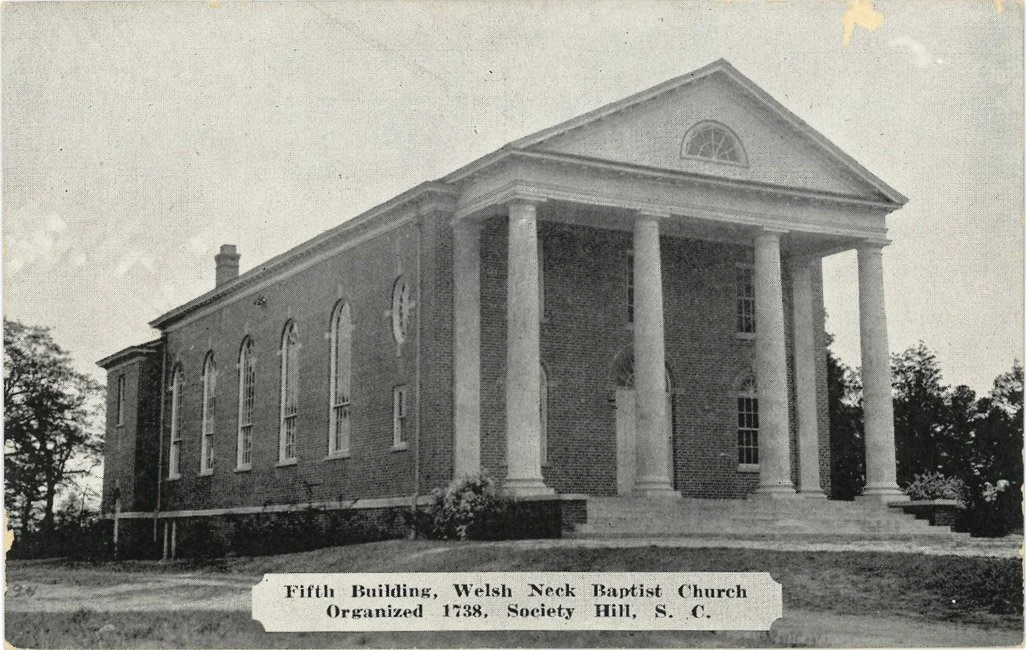
This was the 5th building of the Welsh Neck Baptist Church, which was moved to Society Hill, SC, leaving the original graveyard where Abel Kolb is buried behind.
The World Abel Kolb Grew Up In
The Welsh Neck community along the Pee Dee was tight-knit, educated, and deeply religious. Abel Kolb grew up shaped by Baptist faith, Mennonite heritage, and the life of plantation farming along the river. He was one of five children.
As a young man, Abel married Sarah James, granddaughter of Reverend Philip James. Through Sarah, he came into possession of a plantation at Sparks Ferry near Society Hill. His residence was a two-story brick building located immediately on the east bank of the river, a short distance above the ferry. The property encompassed 600 acres. Abel and Sarah had three children: two daughters, Ann and Sarah, and a son, James, who died young.
Kolb was also a civic figure of importance. The St. David's Society was organized in 1777 and chartered in 1778, with Abel Kolb listed as one of its early officers, alongside Alexander McIntosh, George Hicks, William Pegues, and Thomas Evans. The Society's purpose was to promote education in the area, and in 1786, they built the first public academy in St. David's Parish. St. David's Academy later produced some of the first faculty members of the University of South Carolina. Kolb also served as a member of the House of Representatives for the Cheraws District, alongside Charles Evans, William Henry Mills, William Pegues, Henry Pendleton, William Standard, and Samuel Wise.
There is one more detail about the Kolb plantation that should be included in his story. His 600-acre plantation at Sparks Ferry was worked by enslaved people, and, according to a 1778 notice in the Charleston Gazette, an enslaved man named John Franway had run away from Abel Kolb's plantation. The advertisement described him as a "tall yellow fellow... speaks broken English, but understands the French and Spanish languages tolerably well." He was a skilled brick mason, and Kolb believed he could pass easily for a free man.
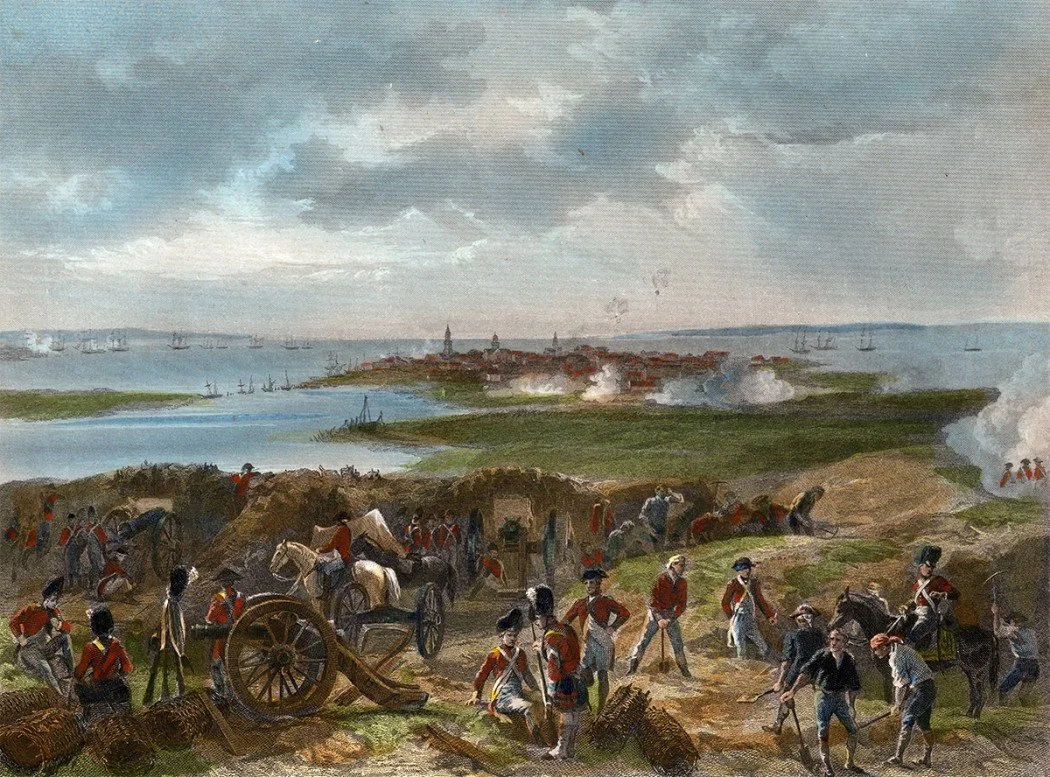
A depiction of the Siege of Charleston (1780) by Alonzo Chappel.
A Soldier from the Start
When the Revolution came to South Carolina, Abel Kolb did not wait to get involved. On September 25, 1775, he was commissioned a Captain in the Cheraws District Militia under Colonel George Gabriel Powell. He held that rank for roughly three years. By 1778, he had been promoted to Lieutenant Colonel.
In May of 1780, everything changed. As British forces laid siege to Charleston, Lt. Col. Abel Kolb marched his men into the city to help construct its defenses. On May 12th, the city surrendered. It was one of the most devastating patriot defeats of the entire war. Nearly the entire South Carolina Continental Army, most of the North Carolina Continental Army, and hundreds of militia officers were captured or paroled. Abel Kolb was paroled and sent home.
But the war in the backcountry did not pause. With a large British army now moving across South Carolina, Loyalists in the upper Pee Dee region grew bolder, raiding Patriot farms and terrorizing families. Kolb, who by now had been appointed as Commander of the Cheraws District Regiment in late 1779, began reassembling his men.
By November 27, 1780, he wrote to his longtime friend Brigadier General Henry William Harrington in North Carolina that he had 233 men plus officers under his command and was actively protecting the region from Loyalist raids. Around that same time, Major General Nathanael Greene, who had taken command of the Southern Army, camped not far from Colonel Kolb's plantation in late December of 1780 until mid-January 1781.
The Spring of 1781
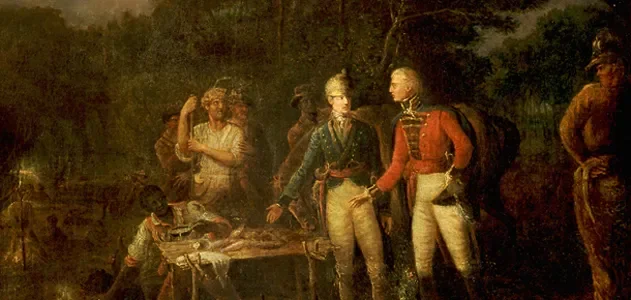
By the spring of 1781, the Revolution in the South was shifting. Cornwallis had moved his army north into Virginia. Nathanael Greene was methodically reducing British outposts across the Carolinas. The victory at Cowpens in January had given the Patriot cause enormous momentum. Brigadier General Francis Marion took command of the eastern portion of South Carolina, and the Cheraws District Regiment under Kolb fell under his authority.
Kolb and Marion worked in close coordination. On January 24, 1781, Colonel Kolb, Lieutenant Colonel Lemuel Benton, and Major Tristram Thomas led seven companies of the Cheraws District Regiment, more than 350 men in total, in support of Brigadier General Marion against the British defenses in Georgetown. The Patriots captured several key defenders, then paroled them and withdrew from the town. On March 6, 1781, Kolb fought again under Marion at the battle of Wiboo Swamp in present-day Clarendon County.
The formal battles, though, were only part of the picture. In the backcountry, the conflict between Patriots and Loyalists had become something uglier and more personal than any organized campaign. Neighbors were fighting neighbors, and settling scores with brutal efficiency. No one was entirely safe, even at home.
April 27, 1781: The Last Day of Battle
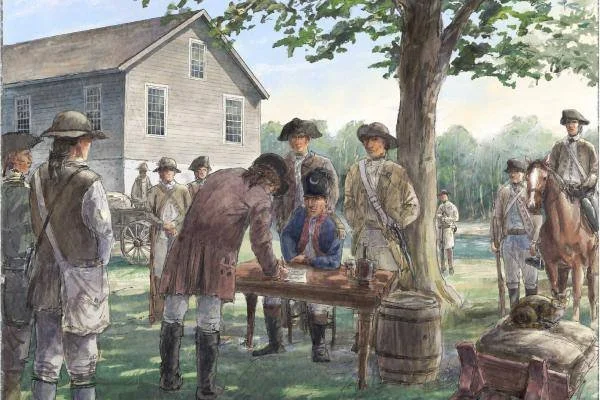
On April 27, 1781, Colonel Abel Kolb received word that Loyalist forces under Colonel Micajah Gainey had gathered along Drowning Creek, now known as the Lumber River. He moved quickly, gathering Captains Josiah Cantey and James Gillespie, surprised the Loyalists, and routed them.
That same day, Kolb led a second operation. He and his men surprised another group of Loyalists at Hulin's Mill along Catfish Creek, killing a man named John Deer, wounding others, and hanging Caleb Williams. The line between criminal and combatant in the Carolina backcountry was rarely clean.
Believing the threat had passed, Kolb returned home and dismissed his men. He was wrong.
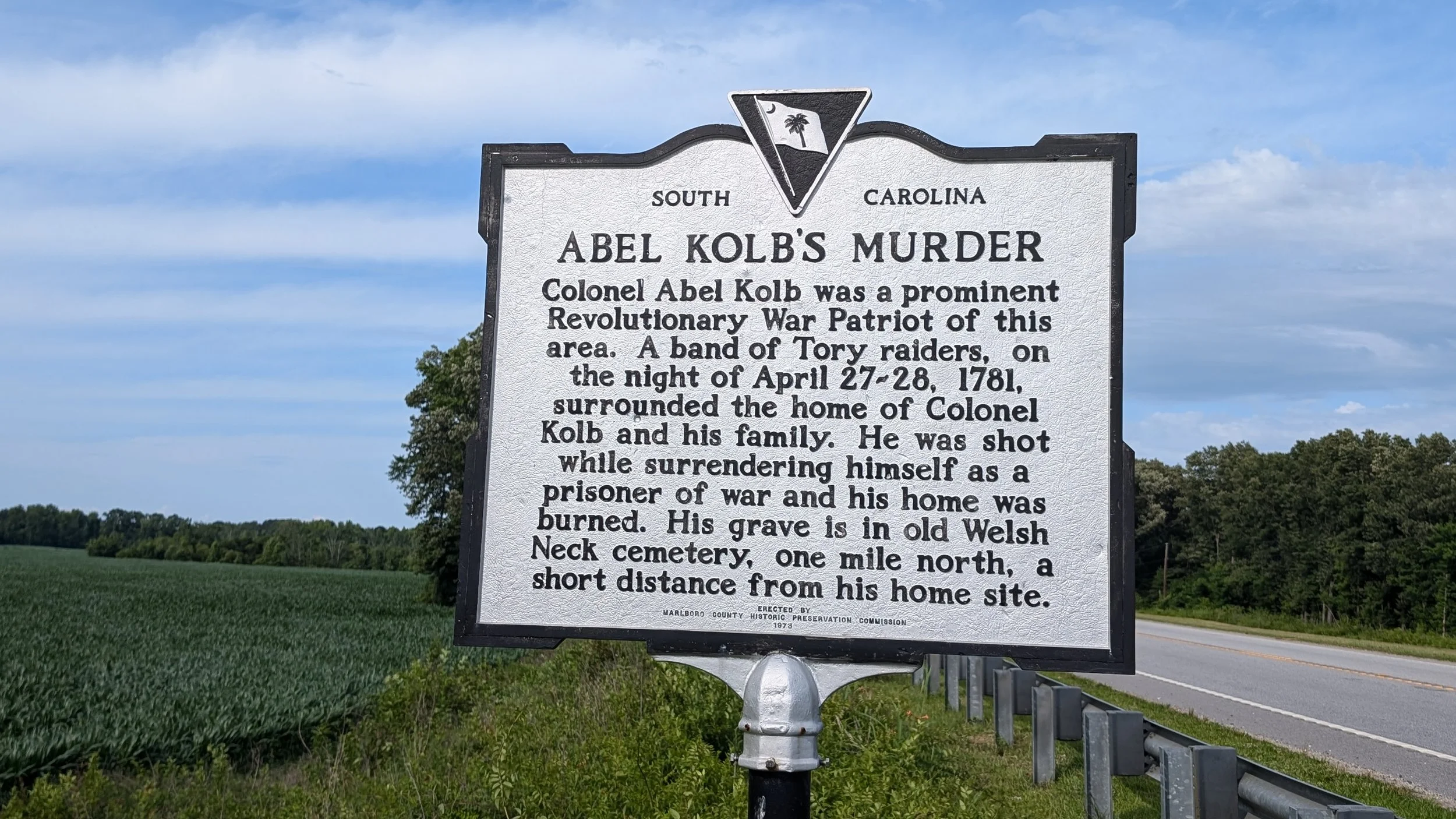
April 28, 1781: Murder at the Front Door
Captain Joseph Jones and about 50 Loyalists from the Catfish Creek area came after the Patriot leader. They shot Colonel Kolb in front of his wife and children, burned and plundered his house, freed several British soldiers being held in a guardhouse near the ferry, and killed several people they encountered along the way. Sarah Kolb and the children were spared.
The action was almost certainly in direct retaliation for Kolb's killing of John Deer and hanging of Caleb Williams at Hulin's Mill the day before. It was not a battle. It was an execution.
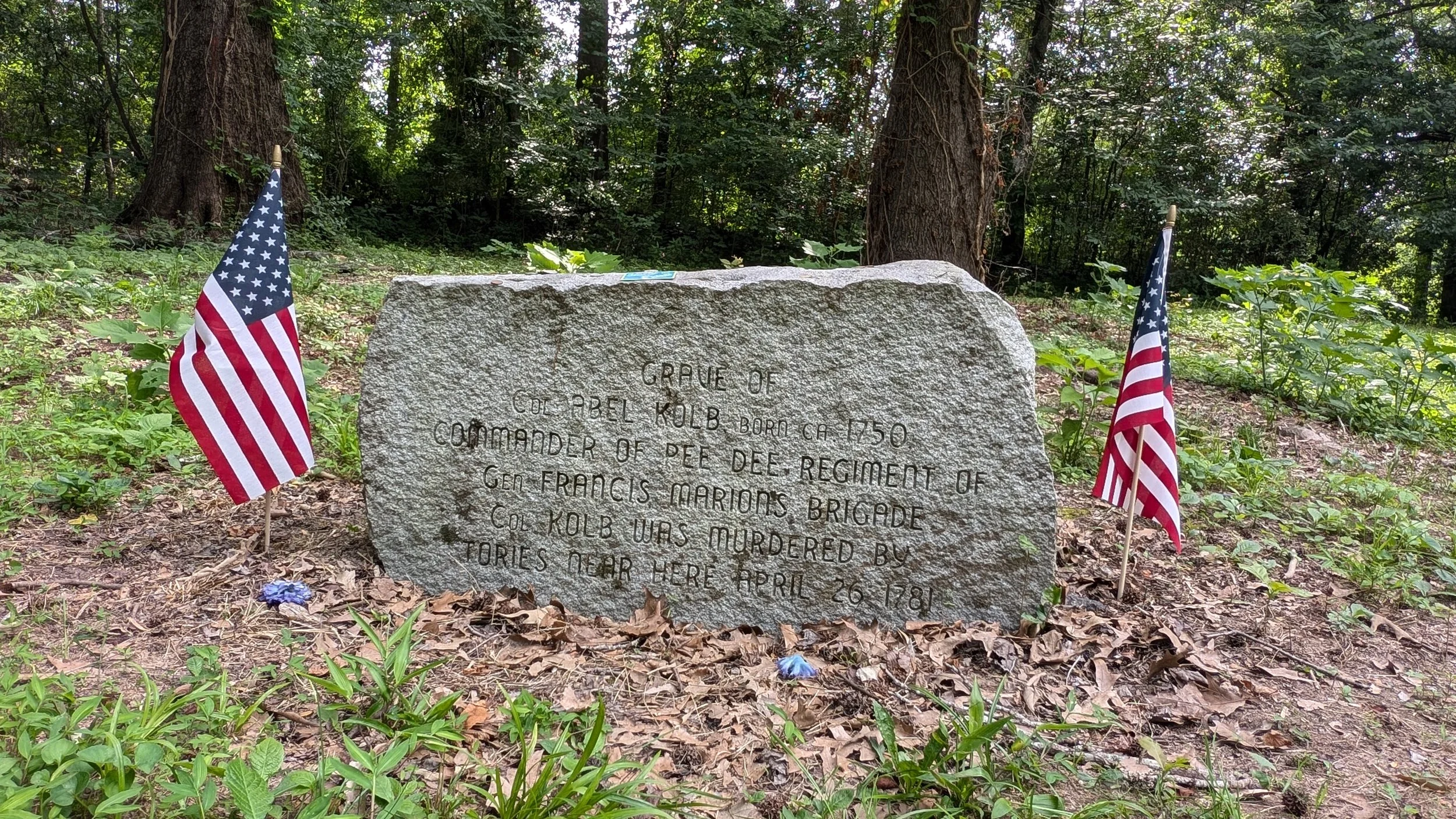
A historian later wrote: "That was a sad day to the people of Cheraw District when Abel Kolb fell by the hand of the foe. He was recognized as the leader of the patriot influence, in command of the regiment, in the prime of life, vigilant, active, daring, he commanded the respect and confidence of his countrymen far and near, and men were looking on his fast-developing abilities with admiration and hope of a bright career, not only on the field of strife, but in the pursuit of peace as well."
In June of 1781, Brigadier General Francis Marion recorded the loss in his order book: "Georgetown, June 5, 1781. The following promotions take place on 28 April 1781 - Lt. Col. Lemuel Benton to be Col., Kolb killed."
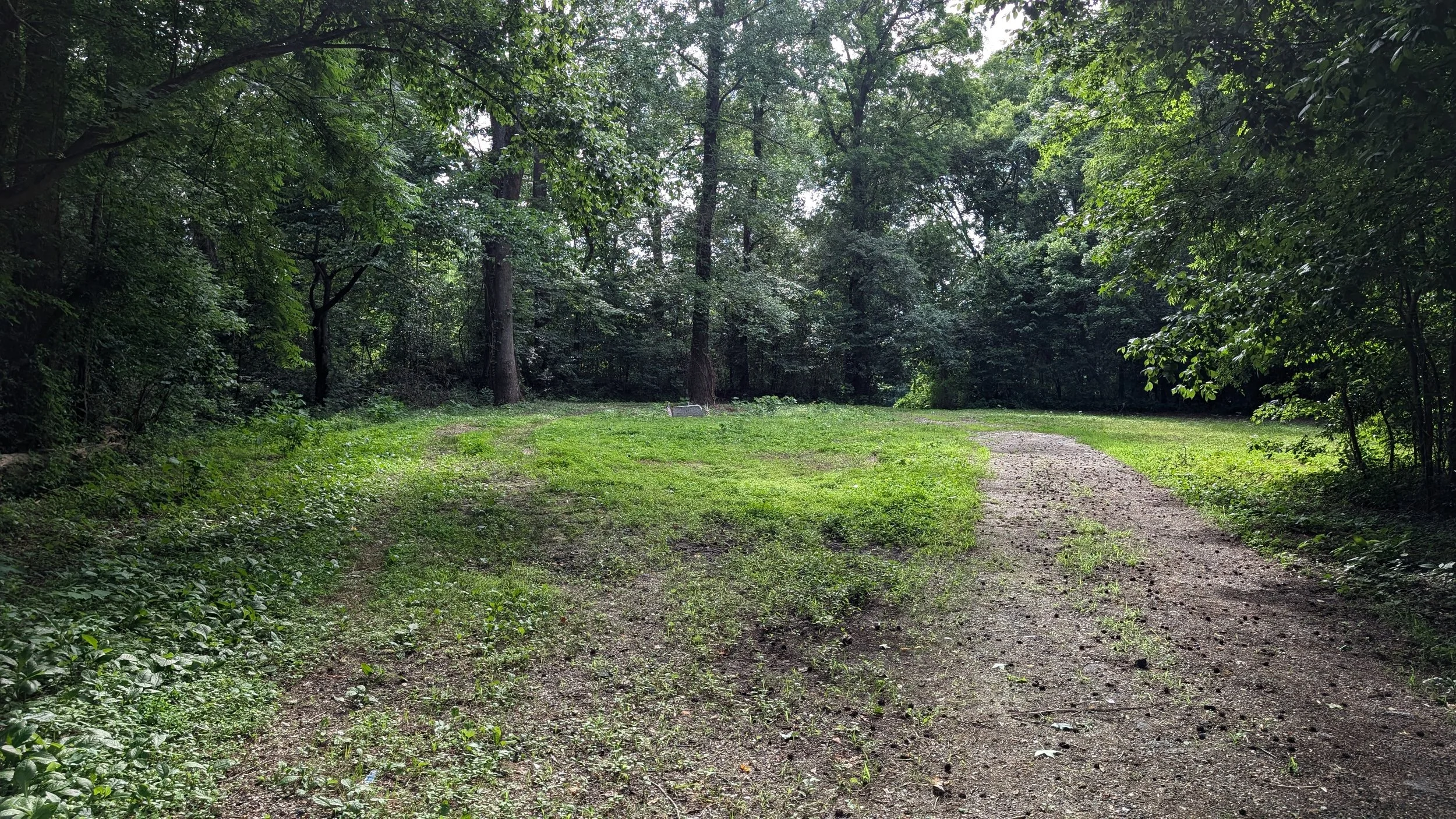
The old Welsh Neck Cemetery, located on the banks of the Pee Dee River
The Grave
Colonel Abel Kolb was buried in the old Welsh Neck Cemetery, on the east bank of the Great Pee Dee River, not far from the site of his plantation home and the spot where he fell. The former burial ground, situated in the woods, has largely returned to the earth. Two stone monuments and several river rocks mark what remains of the graves of the Marshall, Kolb, and Wilds families. When the Welsh Neck Baptist Church relocated to Society Hill, the cemetery was abandoned and left to the trees.
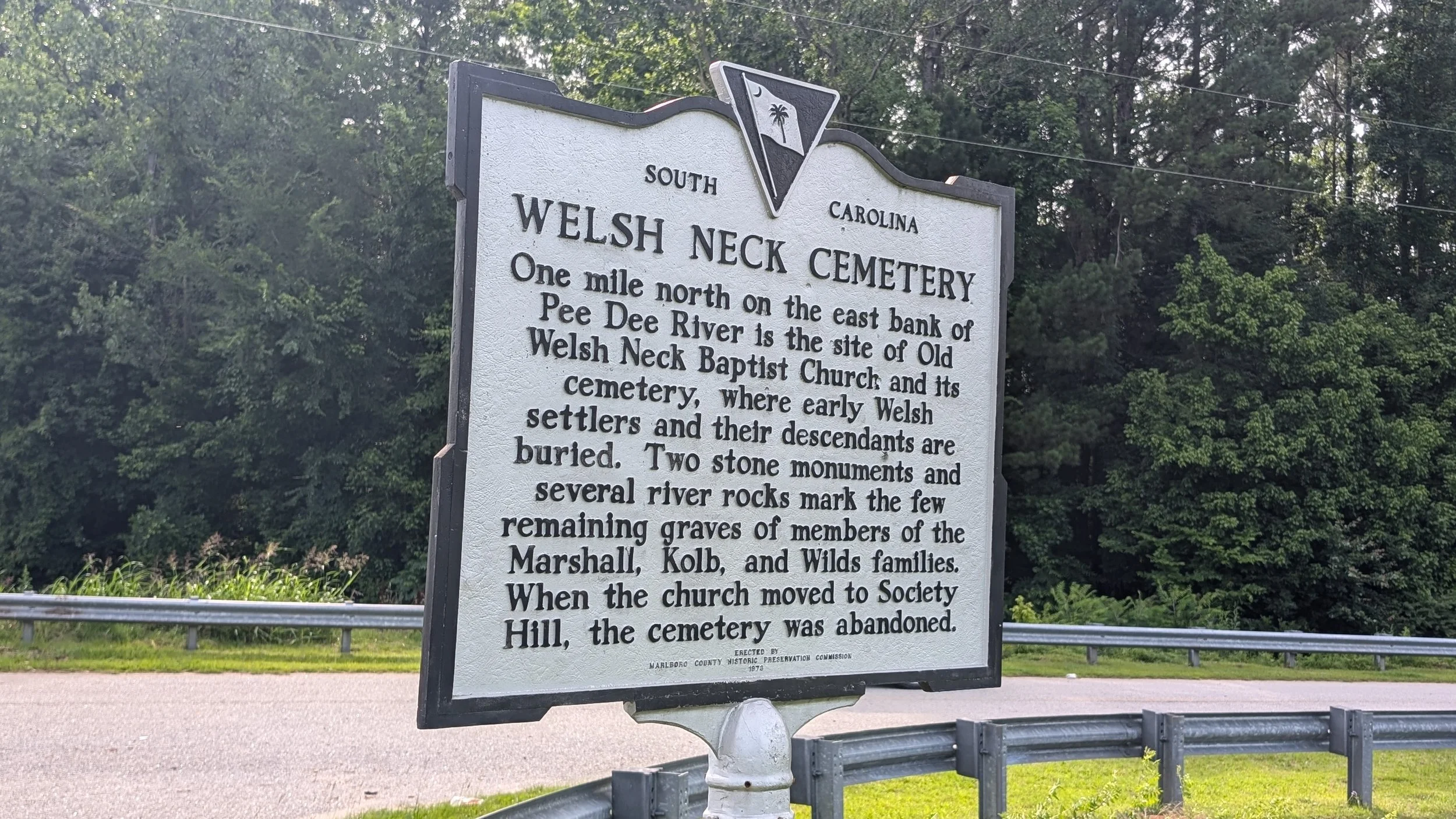
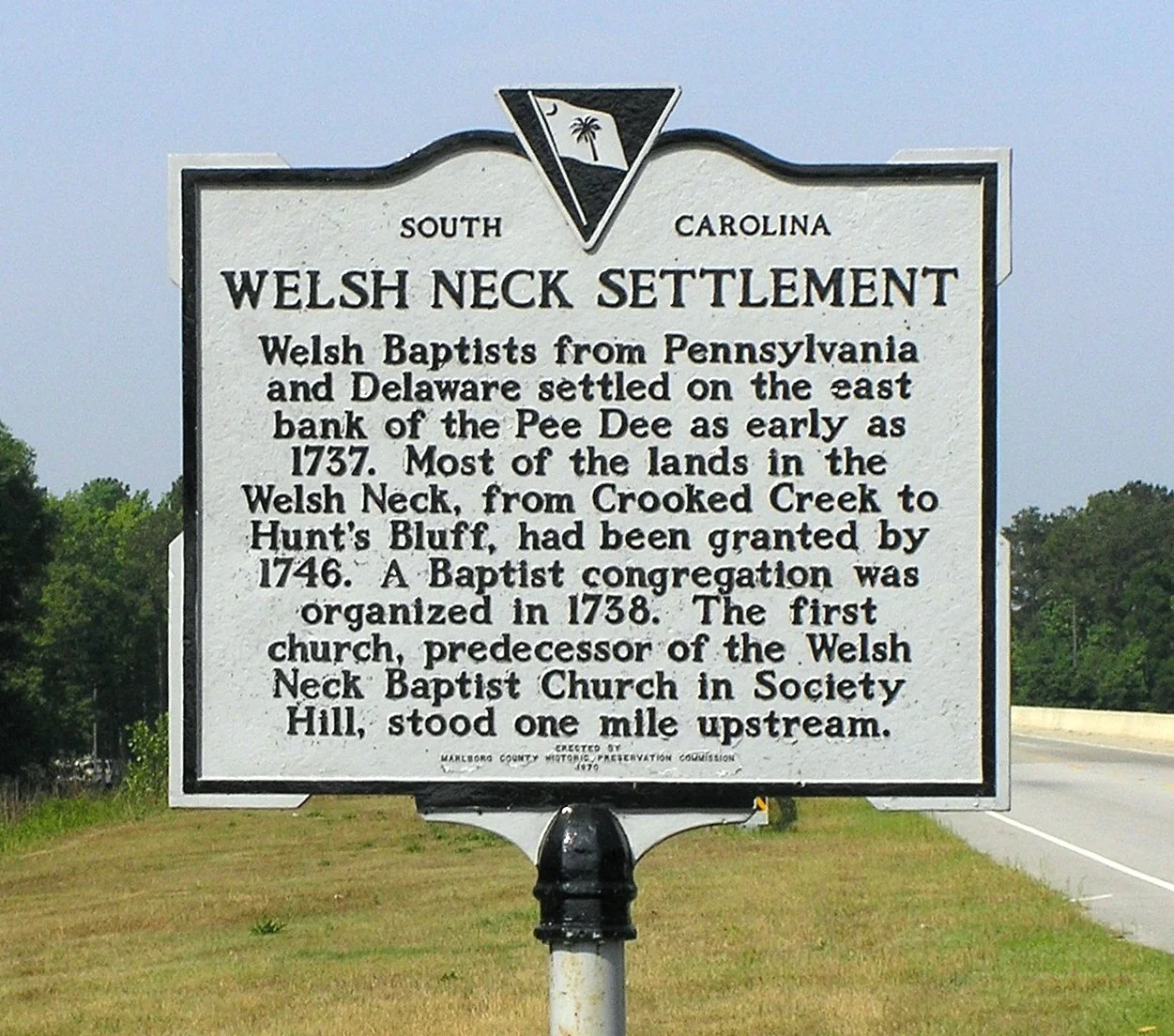
The old Welsh Neck Cemetery sits near the Darlington-Marlboro County line, about one mile north of the historical marker on U.S. Highway 15-401. The site is on private property; please verify access before visiting. The original obelisk that once stood over Kolb's grave was removed and today stands outside the Marlboro County Historical Museum in Bennettsville, SC.