Rev. Richard Martin [16/250]
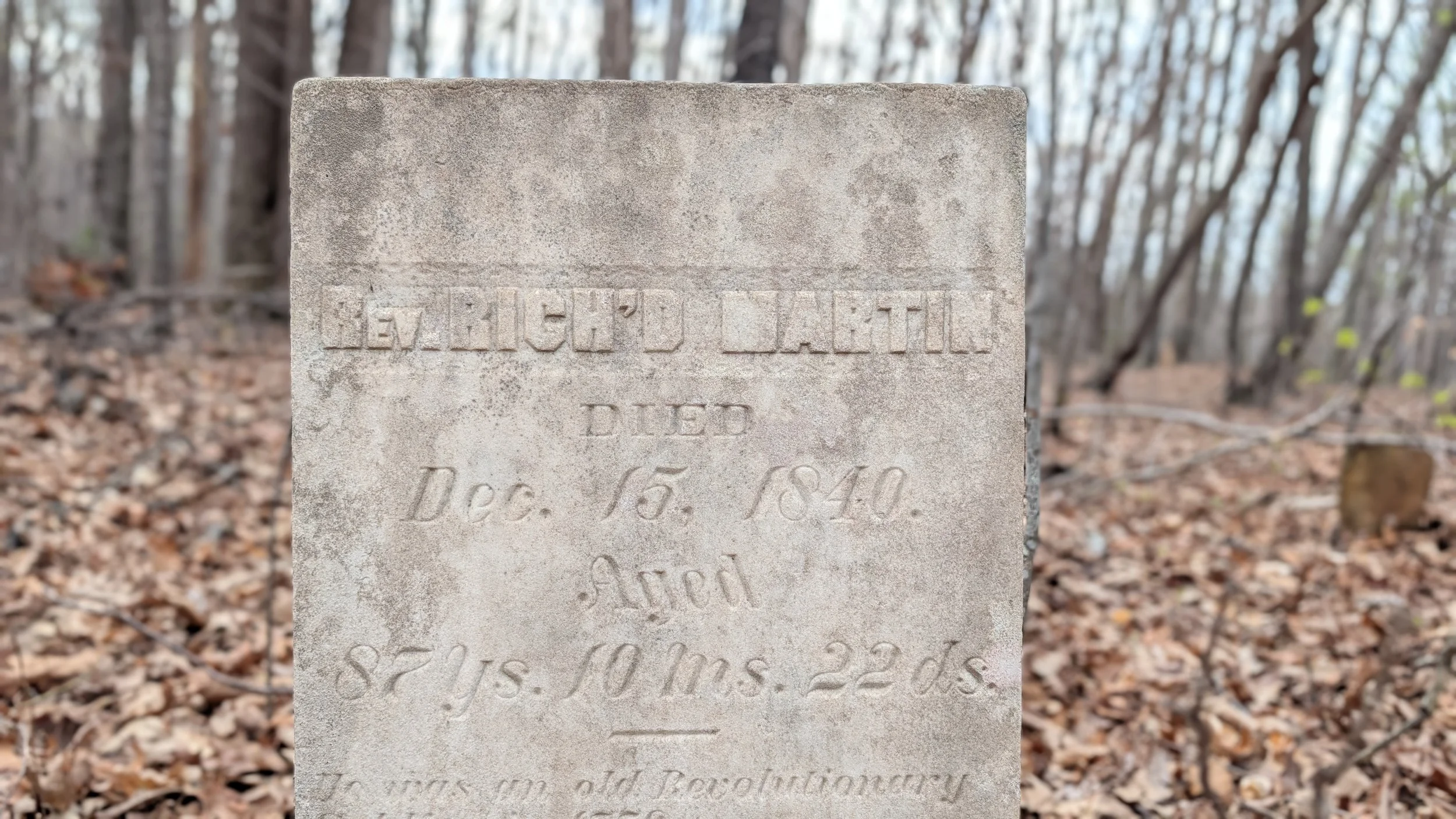
Rev. Richard Martin (1753-1841)
Buried at the Martin Family Cemetery in Caswell County, North Carolina
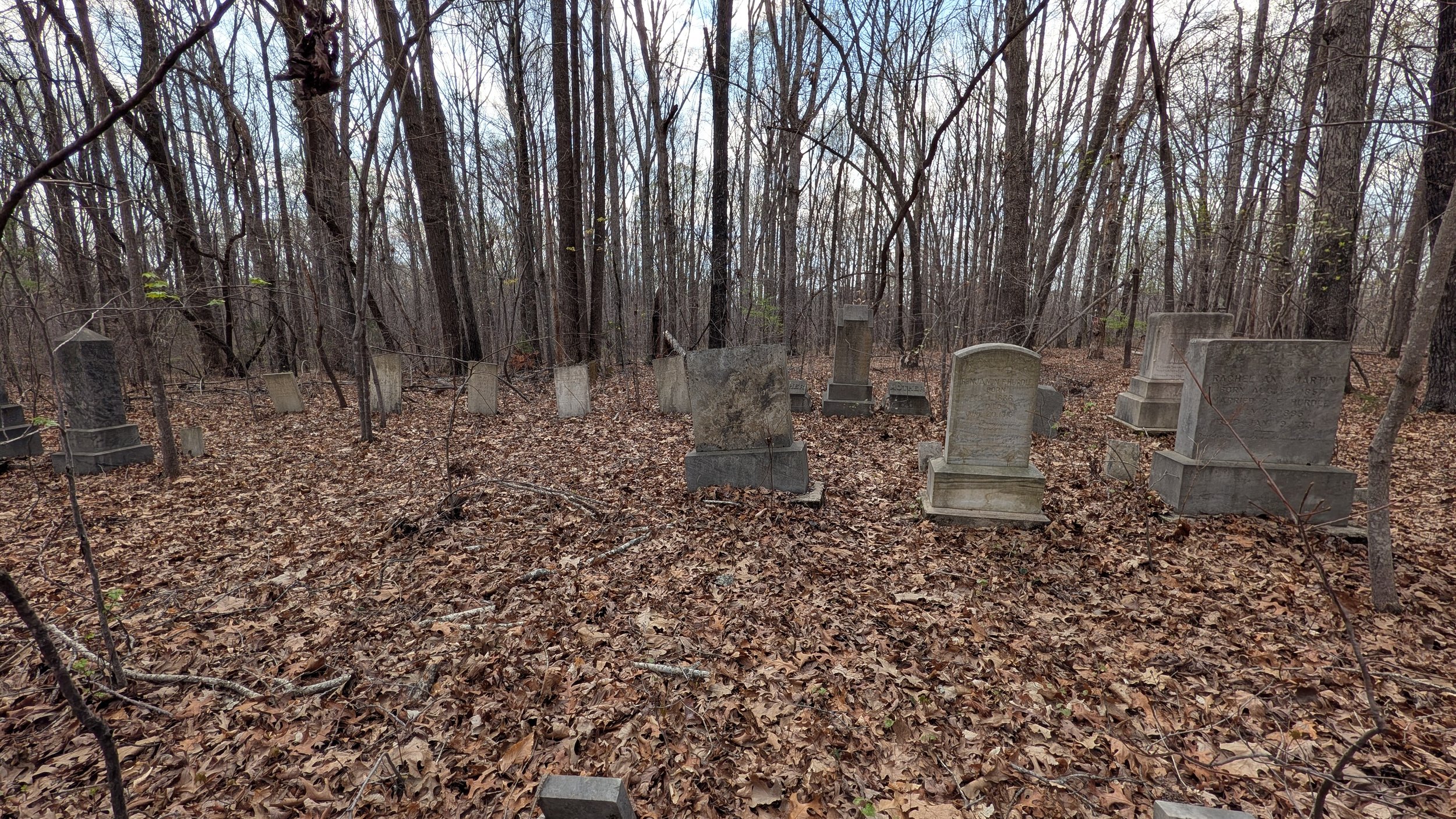
Hundreds of cars pass this cemetery every day, and most drivers probably never glance twice. For good reason, as it's practically invisible in the Spring and Summer, when nature takes this cemetery back.
When I stepped into the Martin Family Cemetery, a heavy stillness overtook me, and as I looked around, I saw what was more than just a burial or two. This place was large, with more fieldstone grave markers than I could keep count of. As the sunlight twinkled through the late Winter branches, I felt it was peaceful and heavy all at once. Looking through the records of this cemetery, there are 23 graves that carry inscriptions, but many more are marked only by fieldstones pressed into the earth, with no name or date inscription, their stories lost in the soil that absorbed them. The last burial here was in 1946, and as far as I can tell, no one has tended this ground in quite a while.
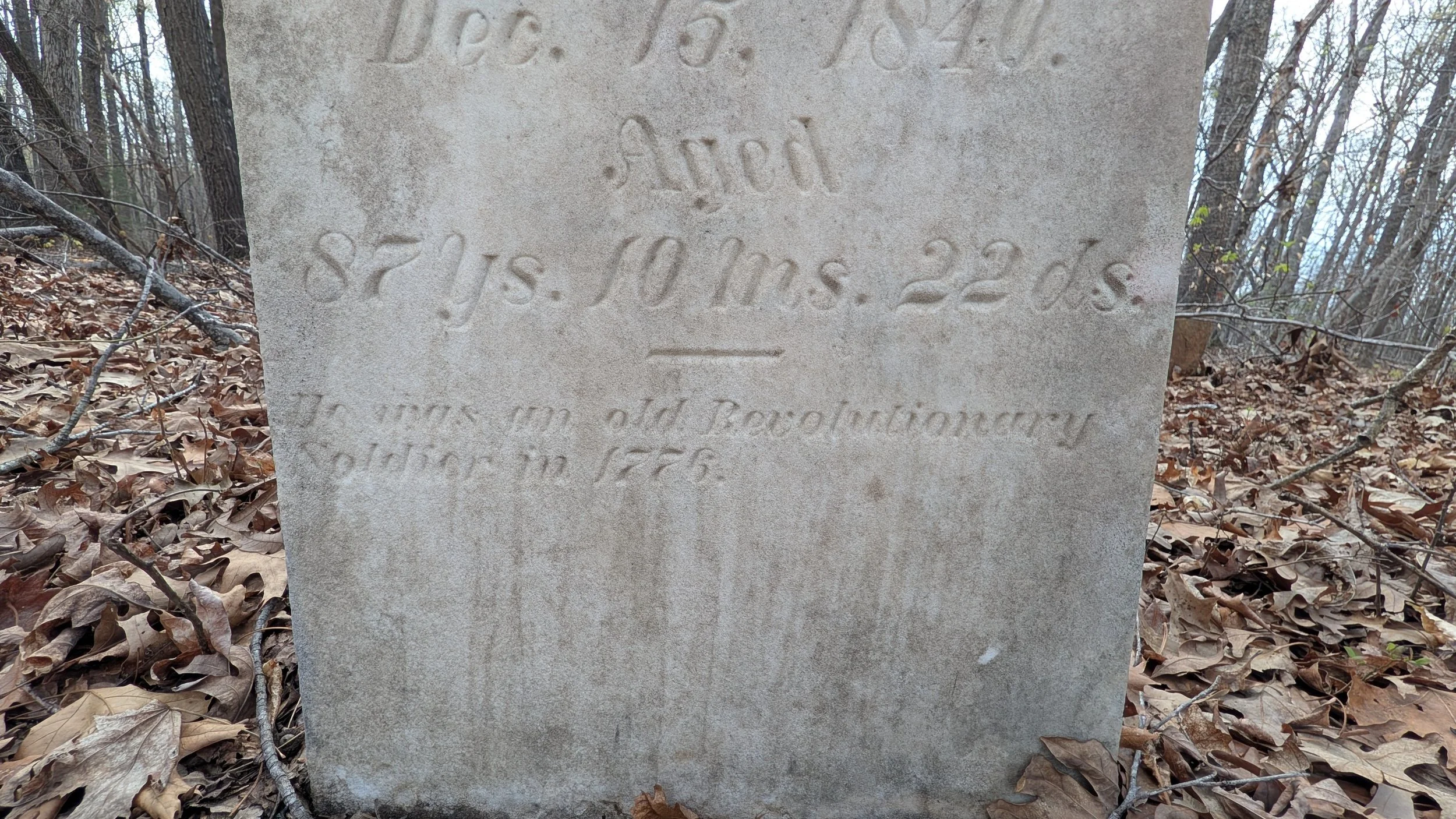
Yet here, amidst the gnarled vines, a blanket of leaves from an eon of not being attended, and in the middle of countless graves, rest the remains of Reverend Richard Martin. His grave is the oldest that still holds an inscription, and it reads: "He was an old Revolutionary soldier in 1776." That single line does not begin to cover it.
Before the War: Origins in Virginia
Richard Nathaniel Martin was born in Virginia, likely around 1753 or 1755- the exact date is disputed, as we will see when we get to the pension record. He was part of the great migration of Virginia and North Carolina piedmont families who settled the backcountry in the mid-eighteenth century, moving into what was then Orange County, North Carolina, the sprawling jurisdiction that would eventually be carved into Caswell County in 1777.
We do not know with certainty what Richard Martin's early life looked like before the Revolution. What we do know is that by the spring of 1776, he was a young man of fighting age, living in the backcountry, and the war had come to him.
The Soldier: North Carolina's 4th Continental Regiment
According to his service records, on May 7, 1776, Richard Martin enlisted as a private, joining Captain Roger Moore's company of the 4th North Carolina Regiment, under the command of Colonel Thomas Polk. He signed on for eighteen months and would end up serving two and a half years.
This was not militia duty. This was the Continental Line, which was the professional standing army that George Washington was struggling to build and hold together through the darkest years of the war. Richard Martin and his regiment marched north from Wilmington, North Carolina, where he had joined the army, and began the long journey that would carry them through North Carolina, Virginia, Maryland, Pennsylvania, New Jersey, and New York.
At Georgetown, Maryland, the regiment was inoculated against smallpox, which was a significant military logistical operation that kept thousands of soldiers alive who might otherwise have been destroyed by disease before they ever faced the British. What followed was some of the heaviest fighting of the entire war.
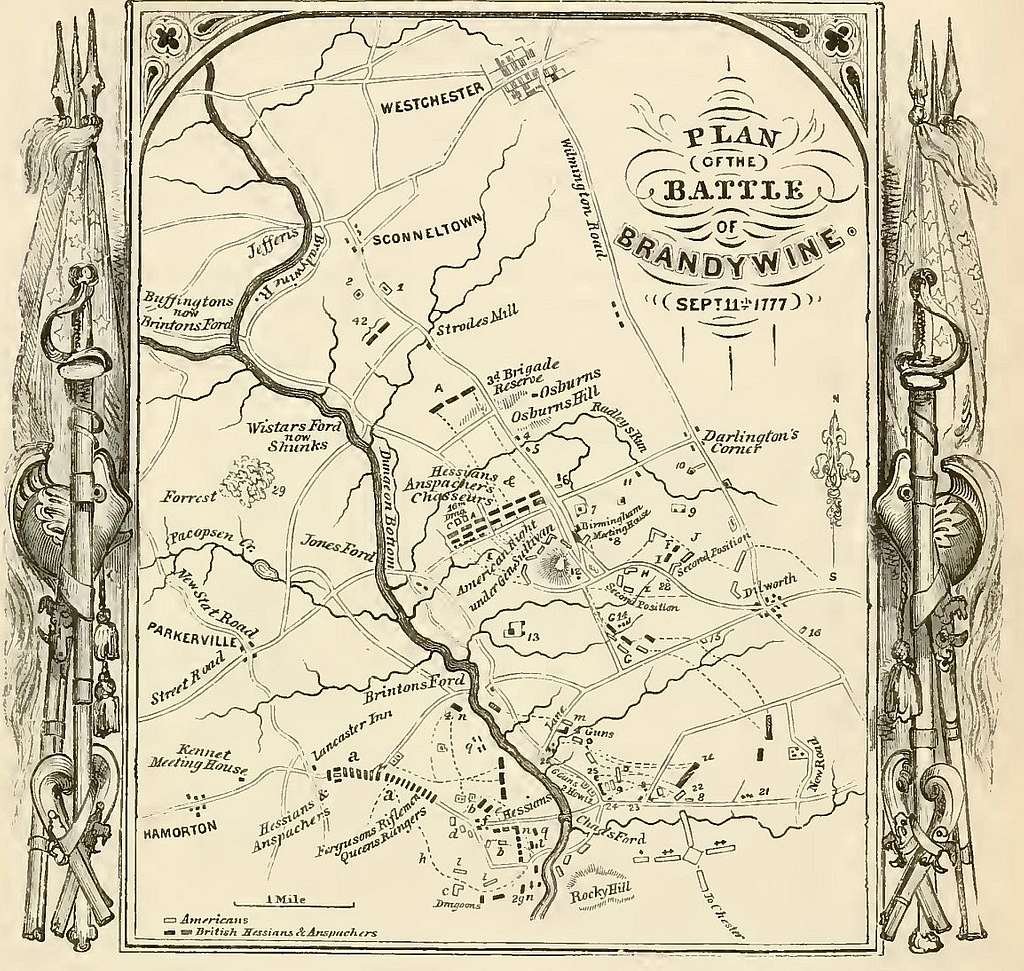
Map the Battle of Brandywine, courtesy of the Philadelphia Museum of Art
Brandywine, September 11, 1777. Washington's army met General Howe's forces at Brandywine Creek in Pennsylvania, attempting to block the British advance on Philadelphia. It was one of the largest engagements of the war. The Americans were outmaneuvered and forced to retreat, but they held together as a fighting force. Richard Martin was present for this engagement.
Germantown, October 4, 1777. Just weeks later, Washington launched a bold counterattack against the British encampment at Germantown, outside Philadelphia. The battle was a complex, fog-shrouded affair that nearly succeeded before confusion in the American lines turned it into a retreat. Richard Martin was there.
Monmouth, June 28, 1778. The following summer, the regiment fought at the Battle of Monmouth in New Jersey, which was the last major battle in the north, and a brutal engagement fought in extreme heat. The American army held the field that day under Washington's personal command.
When the 4th Regiment was reorganized, Martin was transferred to the 1st North Carolina Regiment under Colonel Thomas Clark, serving in a company commanded by Captain John Gambier Scull. He was discharged at King's Ferry on the Hudson River in October 1778, after two and a half years of service. The North Carolina Secretary of State's muster rolls confirm the record precisely: Private Richard Martin, Captain Goodman's Company, 4th Regiment, enlisted May 7, 1776, discharged November 10, 1778.
His fellow soldier, Robert Martin, (either his brother or cousin) appeared in court in 1832 to vouch for him, describing Richard as "a brave active and faithful Soldier ever willing and present, when and where his duty called him."
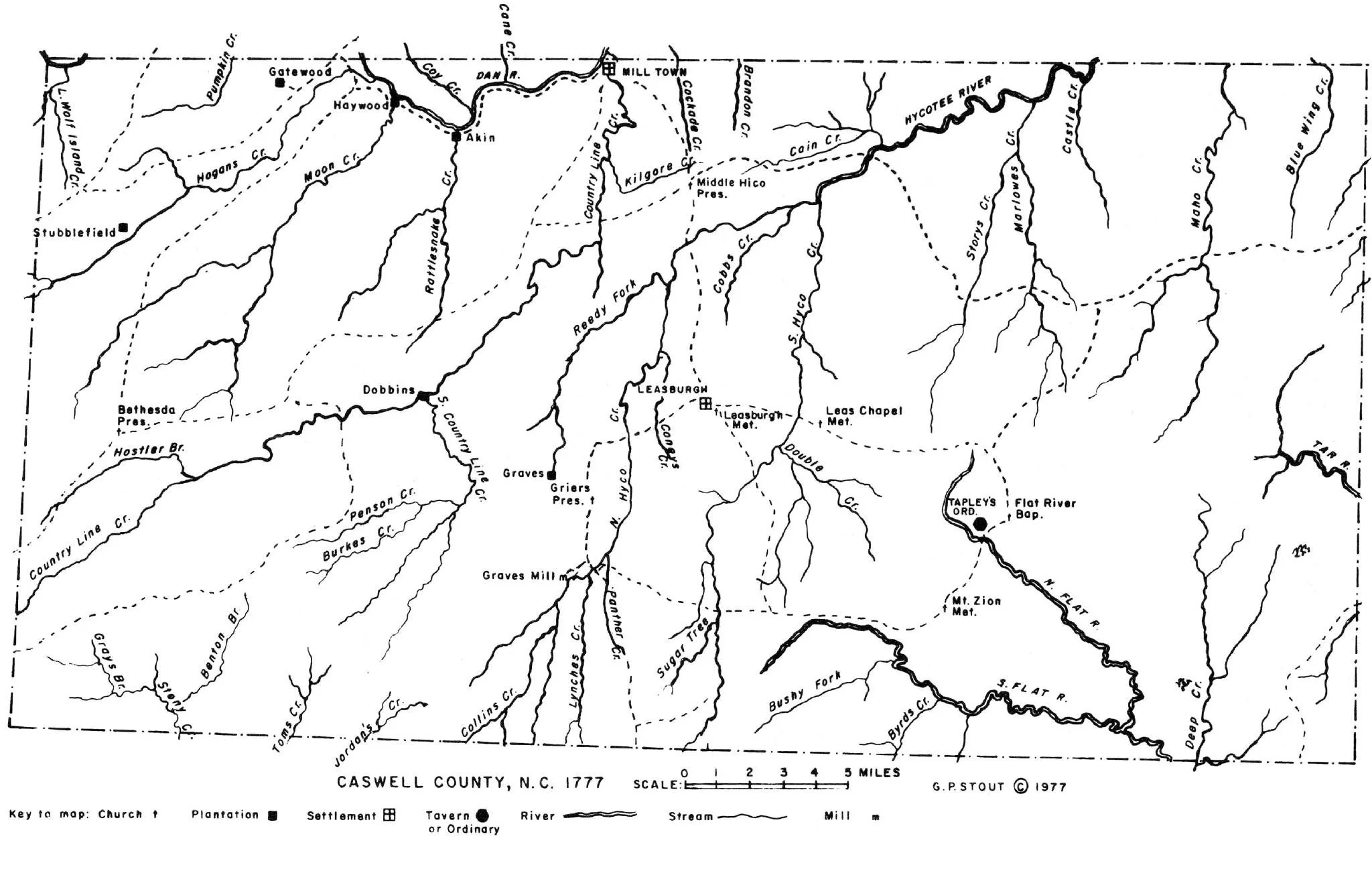
Map of Caswell County, NC, c. 1777, when it was carved out of Orange County.
Coming Home: Land, Marriage, and a Life in Caswell County
Richard Martin came home to what was now Caswell County, North Carolina. The county had been formed from Orange in 1777 while he was still in the field, named for the same Richard Caswell who had commanded North Carolina forces at the Battle of Moore's Creek Bridge.
In July 1786, Richard Martin received a land grant of 228 acres on Goose Creek in Tennessee, a bounty land warrant issued by North Carolina to veterans of the Continental Line in the western territories. From what I have found so far, I don't believe he ever relocated to Tennessee, though, and one record indicates that he sold the Tennessee tract of land to James Lea, whose family had deep ties in Caswell County.
On October 25, 1783, Richard Martin married Frances Turner (1766-1841) in Caswell County, her brother James served as their bondsman. Frances was the daughter of Henry Turner Sr., a Virginia-born farmer who had moved the family to Caswell County in 1774. Their first child, a son named George T. Martin, was born in 1784. The couple would eventually have at least five children who survived to adulthood: George, Lewis, James, Henry, and Richard Jr.
[One note on the marriage date: when George T. Martin filed for his mother's widow's pension in 1843, he reported his parents were married in 1781. The Caswell County marriage bond record gives October 25, 1783, so I have noted the 1783 bond record as the date used here, but I thought it was worth noting this discrepancy]
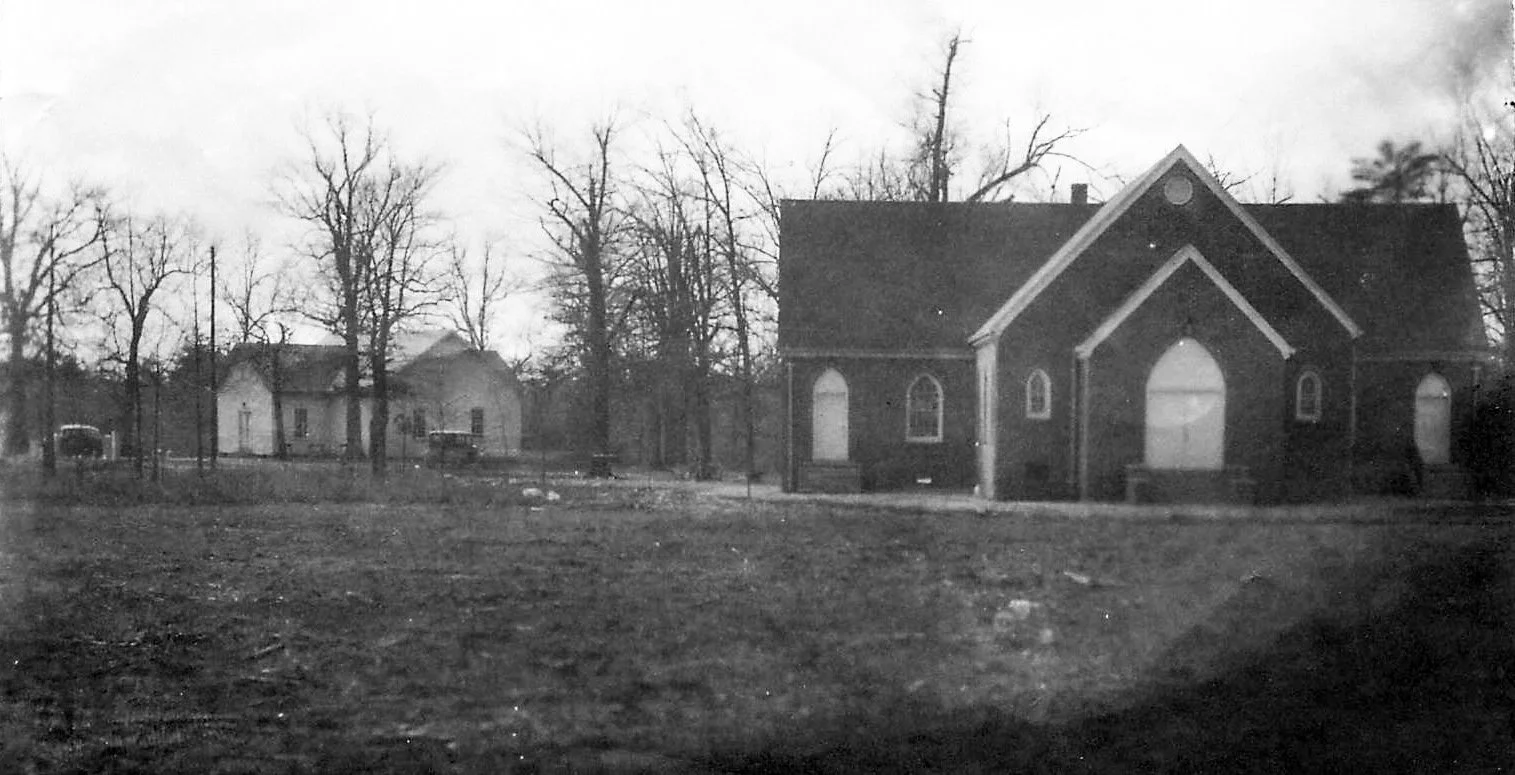
Bush Arbor Primitive Baptist Church, with the Old Church in the Background. It is possible that the old church in the background is where Rev. Richard Martin preached. The old church was torn down in the 1950s and replaced with the brick church that still stands today.
The Minister: Elder at Bush Arbor Primitive Baptist Church
Somewhere in the years between his discharge and his middle age, Richard Martin became a man of the cloth. He is identified in the historical record as a Baptist minister, and by 1810, he was serving as an elder at Bush Arbor Primitive Baptist Church, a congregation in Caswell County that had been organized around 1806. There have been three known church buildings since its founding. For several years, the members heard their sermons under a bush arbor, hence the name Bush Arbor, until a wooden frame structure was erected (visible in the background of the image above).
Rev. Richard Martin held his position at Bush Arbor until 1834, a tenure of more than two decades, and it is possible he preached under the open bush arbor as well as in the wooden frame church. The church is located in Jericho, North Carolina, not far from where Richard Martin lived and eventually where he would be buried in the Martin Family Cemetery. The congregation still exists today, worshipping in a modern brick building. In Martin's day, the term "bush arbor" described a common form of frontier worship, where outdoor gatherings held under arbors of cut brush were a practical solution for meeting space in a region where church buildings were sparse and itinerant preaching covered vast territory. It is possible that his tenure also spanned the time when the congregation met in the wooden frame structure pictured above, although the exact construction date of that building has not been confirmed.
His role in that congregation connected him to the fabric of Caswell County life in a way that bridged the gap between life in a British colony and life under the new republic. By 1832, when he walked into Caswell County Court to file his pension application, he was well known enough that his neighbor William Ware named him as a character witness, identifying him as "the Reverend Richard Martin of the Baptist Church" in Ware's own pension declaration. Martin was both the veteran vouching for his old comrade and the community elder whose word carried weight in the courthouse.
His Pension: A Soldier Remembers
On October 8, 1832, Richard Martin appeared before the Caswell County Court of Pleas and Quarter Sessions to file his pension application under the Act of Congress of June 7, 1832. He was, by his own account, seventy-seven years old as of January 29 of that year, which would place his birth on January 29, 1755, if we rely on his pension testimony, whereas other sources list his birth date as 1753.
His declaration is a remarkable document. Sitting before justices James Rainey, John R. Harrison, and James McMullin, the old soldier walked the court through battles fought more than fifty years before, explaining his service at Brandywine, Germantown, and Monmouth. He remembered the officers, the marches, and the states he had passed through. He described how the regiment was inoculated for smallpox at Georgetown. He explained that he had submitted his discharge papers to commissioners in Hillsborough to draw his land warrant, and had never seen them again. He was approved, and Pension Certificate #4514 was issued on January 21, 1833, signed by Secretary of War Lewis Cass. He was pensioned at $80 per annum. I am so thankful for these pension testimony and records that give us an in-depth look into Richard Martin's service in the American Revolution on the Continental Line.
His Family's Legacy
Richard and Frances Martin built their life in Caswell County and never left. The census record traces them across four decades: in 1800, 1810, 1820, 1830, and 1840, they appear in Caswell County. The 1800 Census includes that 2 enslaved people were living in the Martin household, and in 1820, there was one.
Richard Nathaniel Martin died on December 15, 1841, in Caswell County, North Carolina. His wife Frances, born Frances Turner in Virginia around 1763, died less than five months later, on May 13, 1842. They were buried together in the family cemetery near Yanceyville, where they remain today.
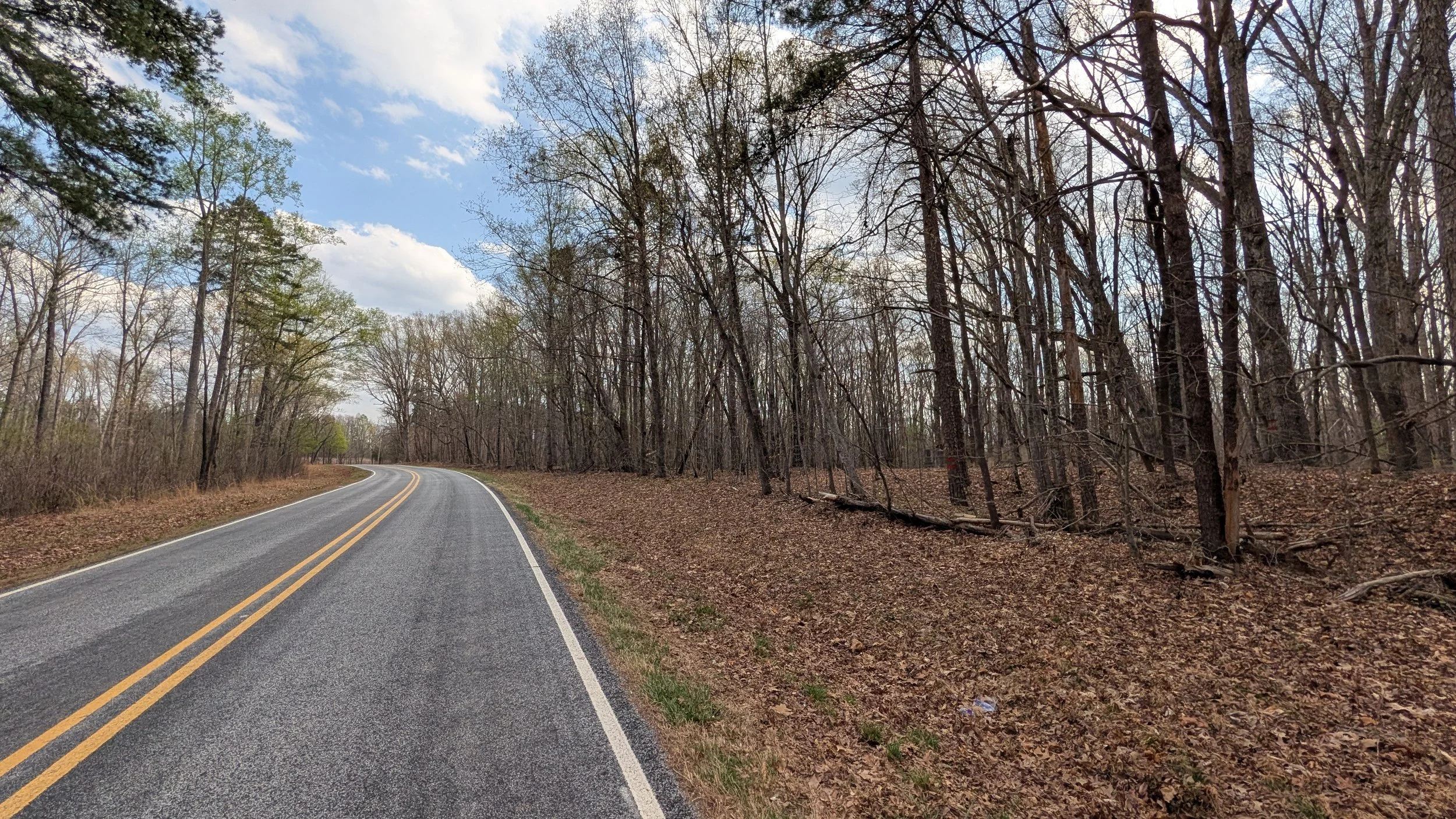
View of the family cemetery along the roadside.
A Visit to the Martin Family Cemetery
The cemetery sits alongside the road, with twenty-three graves that bear inscriptions. Many more are marked by fieldstones, unnamed, the people beneath them known only to God. The last burial was in 1946, and it appears the grounds have not been tended in many years. Richard Martin's stone is the oldest inscribed marker in the cemetery. The inscription is not elaborate. It does not list his regiment, his battles, or his years of service. It says only what the people who buried him most wanted to be remembered: "He was an old Revolutionary soldier in 1776."
He had marched through six states. He had stood at Brandywine, Germantown, and Monmouth. He made it home, built a family, and spent more than two decades as an elder in a Baptist congregation in the North Carolina piedmont. And now, countless cars speed past his final resting place, with no idea of the history that lies within these grounds. The story of Reverend Richard Martin is one that has not been well documented, and it is my honor to bring his contributions and service to light.
This large monument is believed to be the only one in America dedicated to 18th-century women and their contributions to the Revolutionary War.
This project is made possible by readers like you.
Your support helps to pay for website costs, gas to travel to these sites, and cleaning supplies for the veteran stones that I’m working to restore.
If you believe this work is important, your support is so appreciated!
Citations
Pension Application of Richard Martin, R6944 / Frances Martin f30NC, Southern Campaigns American Revolution Pension Statements and Rosters, transcribed by Will Graves. Download here
North Carolina Secretary of State's Office muster roll certification, signed by William Hill, January 14, 1844, contained in pension file
William Ware pension application, Caswell County, November 5, 1832 and November 5, 1833
Caswell County Historical Association, "Revolutionary War Soldiers: Caswell County, North Carolina," ncccha.blogspot.com
U.S. Federal Census, Caswell County, North Carolina: 1800, 1810, 1820, 1830, 1840