Phillip Souder [12/250]
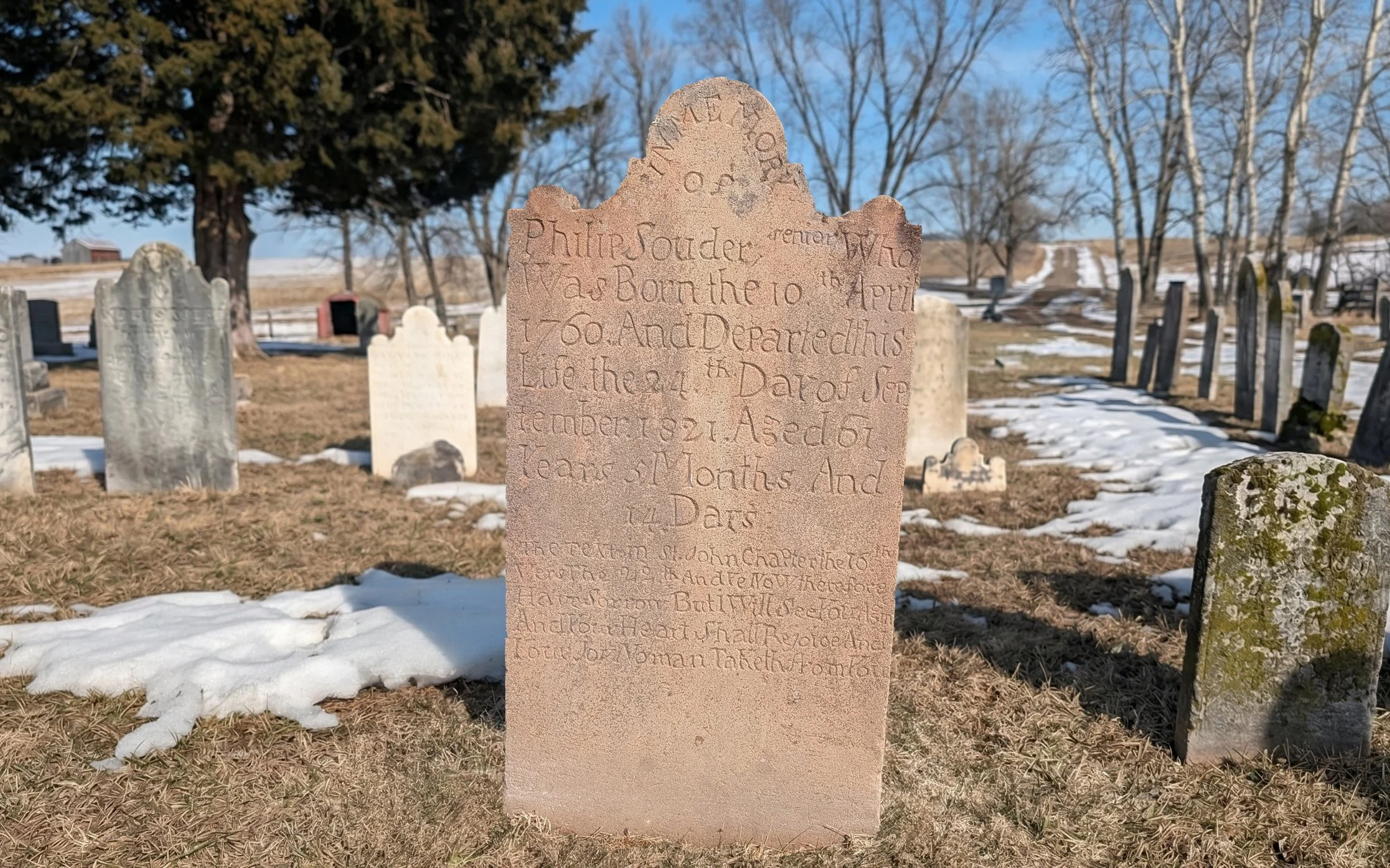
Philip Jacob Souder 1760-1821
Buried in Lovettsville, Loudoun County, Virginia
There is a quiet cemetery on a bend in the road where the land tips down toward the mighty Potomac River. Just across the river are the Maryland farms where Philip Souder spent most of his adult life. He lived in Maryland. He served in Virginia. And in the end, he was buried in a place that feels like a crossroads between the two, which may be the most fitting thing about him. His is grave 12 of 250 in my series this year, visiting the graves of 250 people who were involved in the revolution in commemoration of America's 250th Anniversary.
Born Into a World in Motion
Philip was born on April 10, 1760, in Lancaster, Pennsylvania, the child of immigrants: his mother from Germany and his father from Switzerland. Not long after his birth, he was baptized at Strayer’s (Salem) Reformed Church in Dover Township, York County, Pennsylvania, a congregation organized around 1757 where Lutheran and Reformed worshippers shared a building and community.
It was a faith tradition that his family had carried with them across the ocean. The German Reformed tradition, rooted in the Calvinist branch of Protestantism, had been built by people who had survived the religious wars of the Rhine Valley and who did not take their freedom lightly. More than sixty percent of the Germans and Swiss arriving in Pennsylvania in the 1700s were either Lutheran or German Reformed, and the two groups maintained close ties throughout the colonial period. For a child like Philip, born into this world in 1760, his parents’ faith was not just religion. It was community, identity, and language. German was likely the language of his home long before English was.
Enlisting in Virginia
By 1776, Philip was sixteen. Sometime before then, his family had moved. Where and why, the records do not say. That year, he enlisted as a private in Captain John Smith’s company of the 3rd Virginia Regiment, under Major Isaac Beall.
The 3rd Virginia drew its men from a swath of northern Virginia counties such as Loudoun, Fauquier, and Prince William. This was borderland territory that met the Maryland shore of the Potomac, where Philip appears in the records in 1776.
On both sides of that river, German-speaking settlement communities were tightly interwoven. In that kind of border world, it was not unusual for a young man living near the Potomac to end up in a Virginia unit, even though he later built his life in Maryland.
The 3rd Virginia Regiment had a hard war, and while I can't confirm the details of Philip's exact service, I was able to find some interesting details about this regiment. Organized in February 1776 at Alexandria and Dumfries, it drew companies from Prince William, Fauquier, Stafford, Louisa, Fairfax, King George, Loudoun, and Culpeper Counties. Its commanders included Hugh Mercer, George Weedon, and Thomas Marshall, father of future Chief Justice John Marshall. James Monroe served in its officer corps.
The regiment at Harlem Heights in September 1776, and later, the regiment joined Washington’s retreat across New Jersey and served as part of the rear guard as the army fell back before the British advance. They crossed the Delaware and fought at Trenton and Princeton in December 1776 and January 1777, then spent the spring on picket duty in New Jersey.
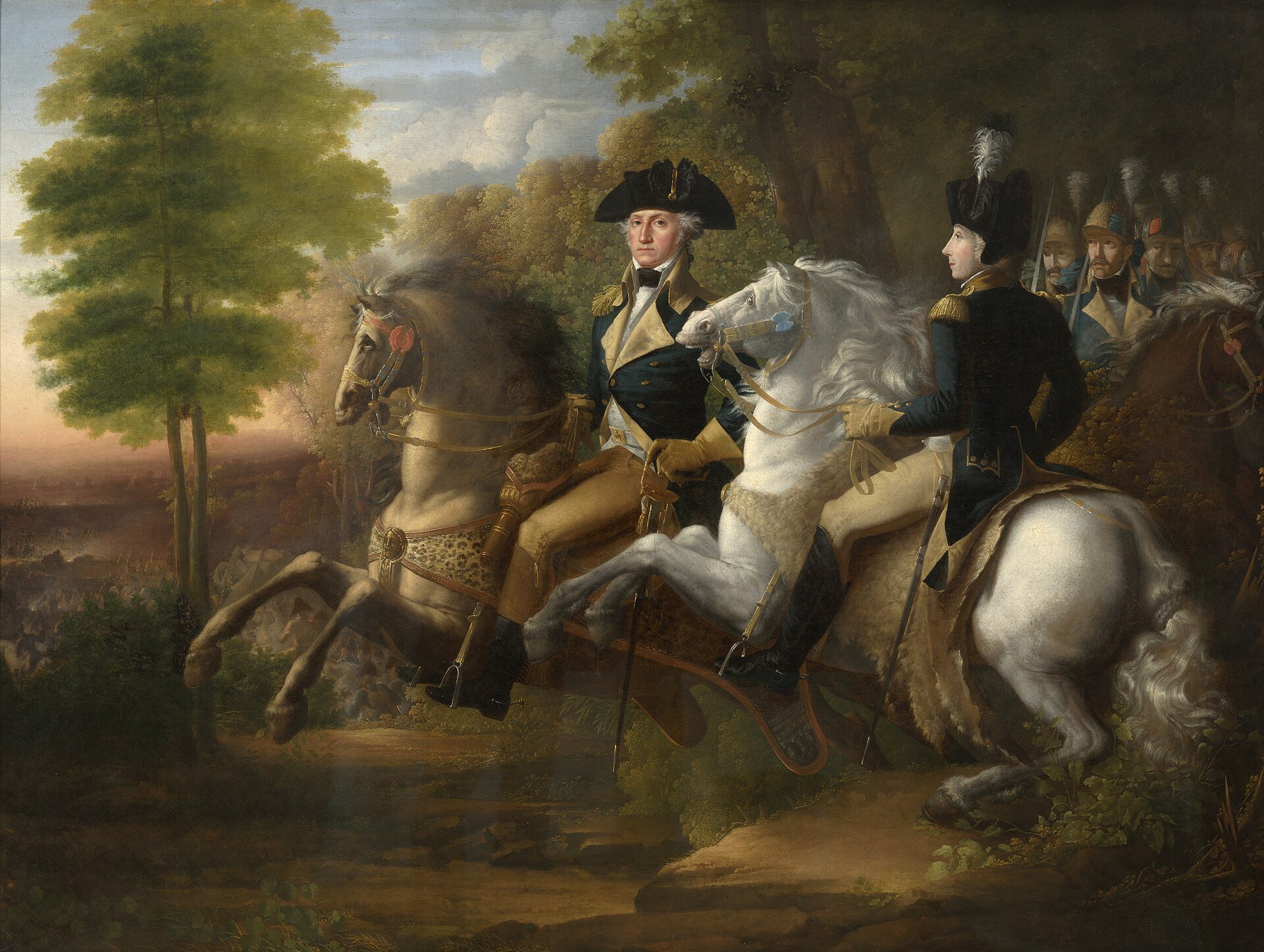
Washington and Lafayette at the Battle of Brandywine, painting by John Vanderlyn, c. 1825.
Then came the Battle of Brandywine on September 11, 1777, when the 3rd Virginia was ordered far in advance of the main American line to buy time for the rest of the army to form. It was on that field that the young Marquis de Lafayette, on his first day in battle, took a musket ball in the leg.
From Brandywine, the 3rd regiment endured the winter at Valley Forge with George Washington and went on to fight at Germantown and Monmouth in 1778. The surviving records do not track Philip’s footsteps through each of those campaigns with certainty, but we know he belonged to this regiment during this period.
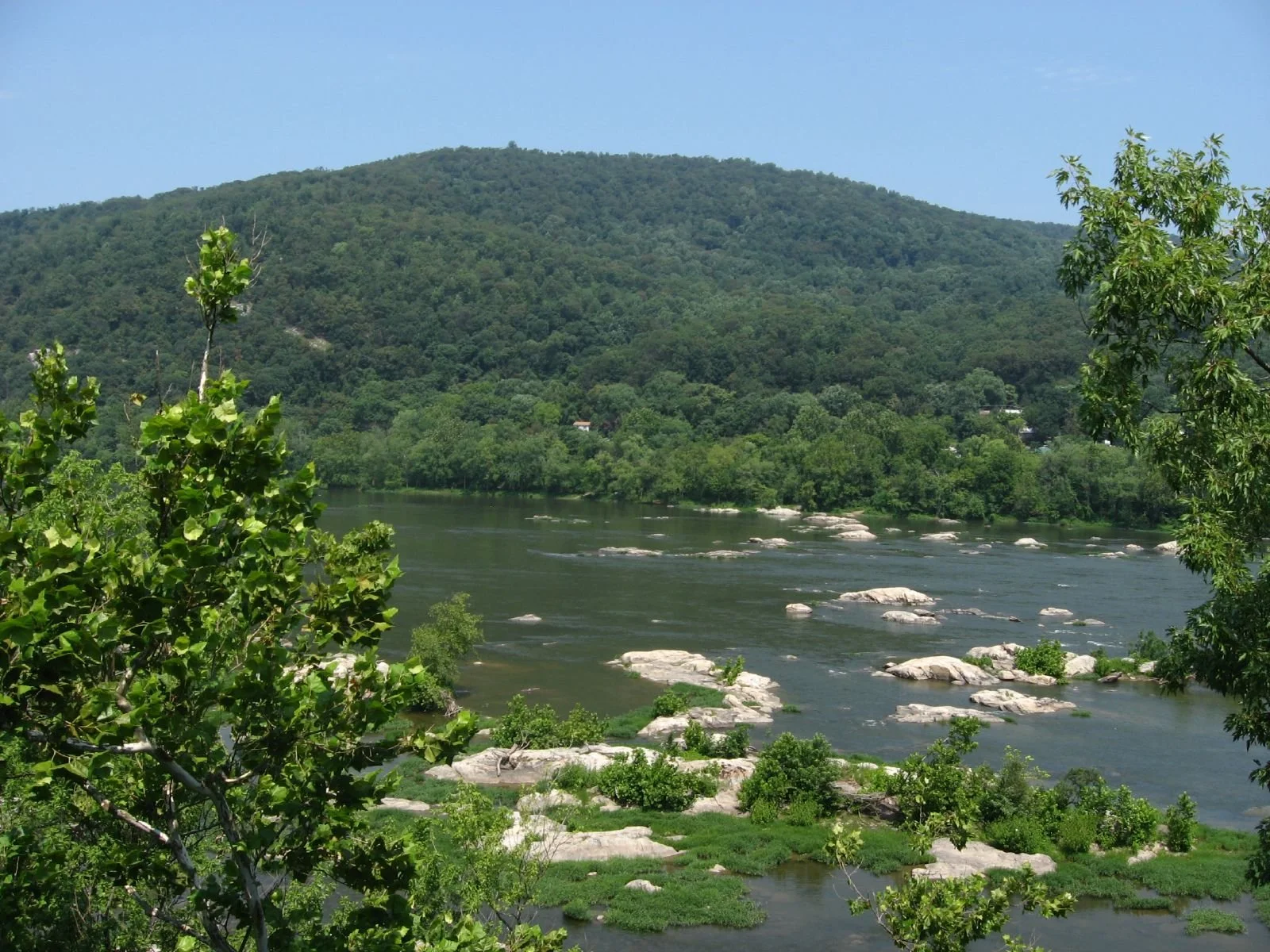
The Potomac River on the Maryland/Virginia border. Photograph courtesy of Ken Lund.
The Place Phillip Called Home
After the war, Philip crossed the Potomac for good and built his life in Frederick County, Maryland, one of the most distinctly German corners of the new republic. As late as the first decades of the nineteenth century, German was still spoken as readily as English in the streets and on the surrounding farms. When Frederick got its first newspaper in 1786, it was printed in both languages.
In 1783, the year the war formally ended, Philip married Susanna Boger. Together, they had eleven children.
By the time of his death in 1821, Philip had built something substantial. His estate papers describe two working farms on the Maryland side of the Potomac, about nine miles from Frederick Town on the road to Luckett’s Ferry, one of the busy river crossings that bound this part of Maryland to northern Virginia throughout the eighteenth century. During the Revolution, the Lucketts operated ferries in this stretch of the river, and Continental troops and supplies often passed there. Philip’s farms lay in that same well-traveled corridor.
The estate inventory is detailed and helps paint a picture of his estate. One farm, with 141 acres and thirty in timber, had a one-story frame dwelling, a meat house, corn house, spring house, servant house, log barn, and apple orchard with a spring of clear water. The second farm, 184 acres about a mile and a half away, had a log dwelling, spring house, and stable.
Philip died on September 24, 1821, without a will. The courts had to untangle his affairs, which provided us with the aforementioned inventory of his estate. Susannah Boger Sauder was appointed guardian of the younger children and the farms were sold: the first to his son Anthony for $5,642, the second to his son Peter for $4,784. Susannah received one-ninth of the estate, and each child received $991.11.
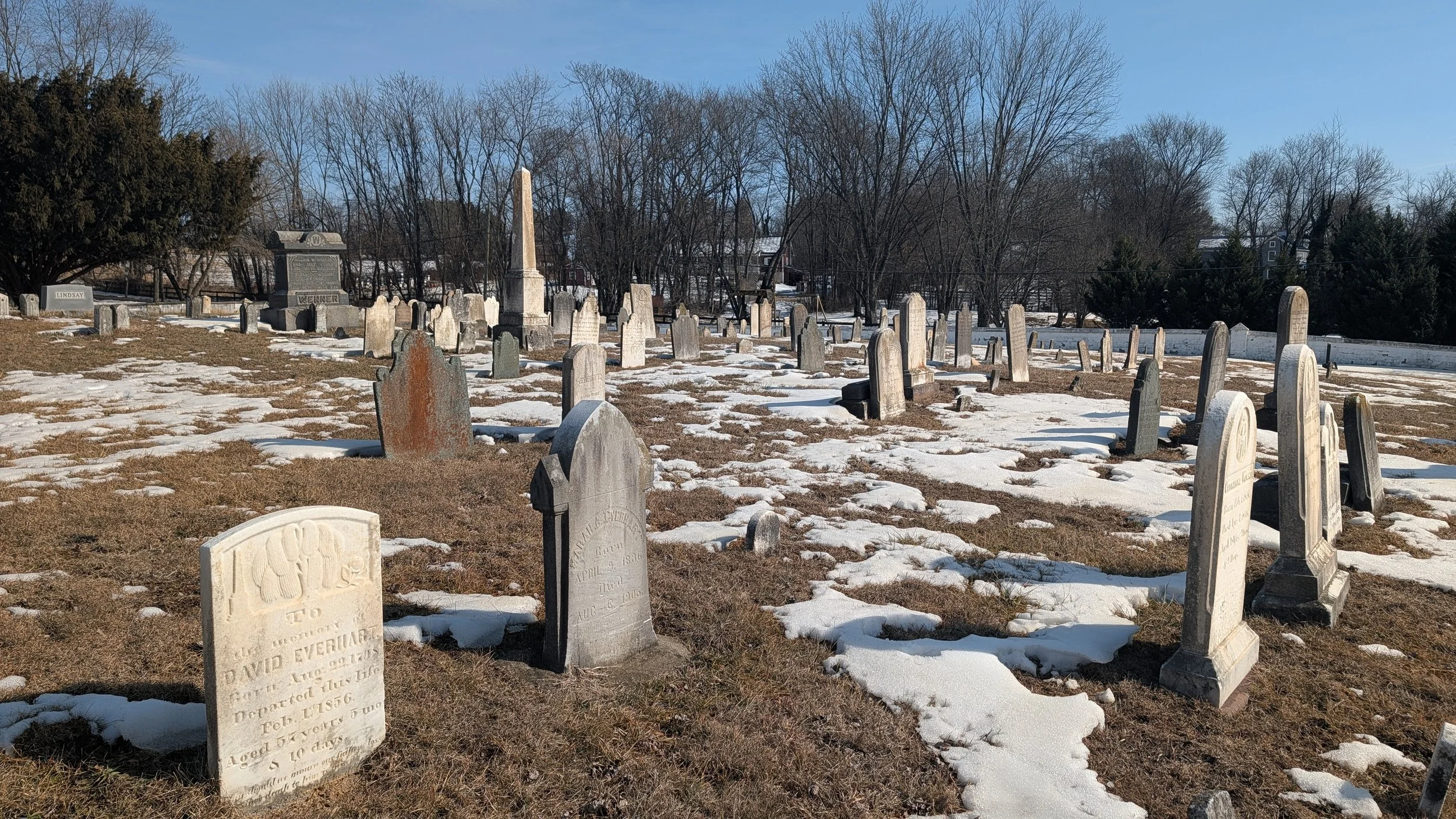
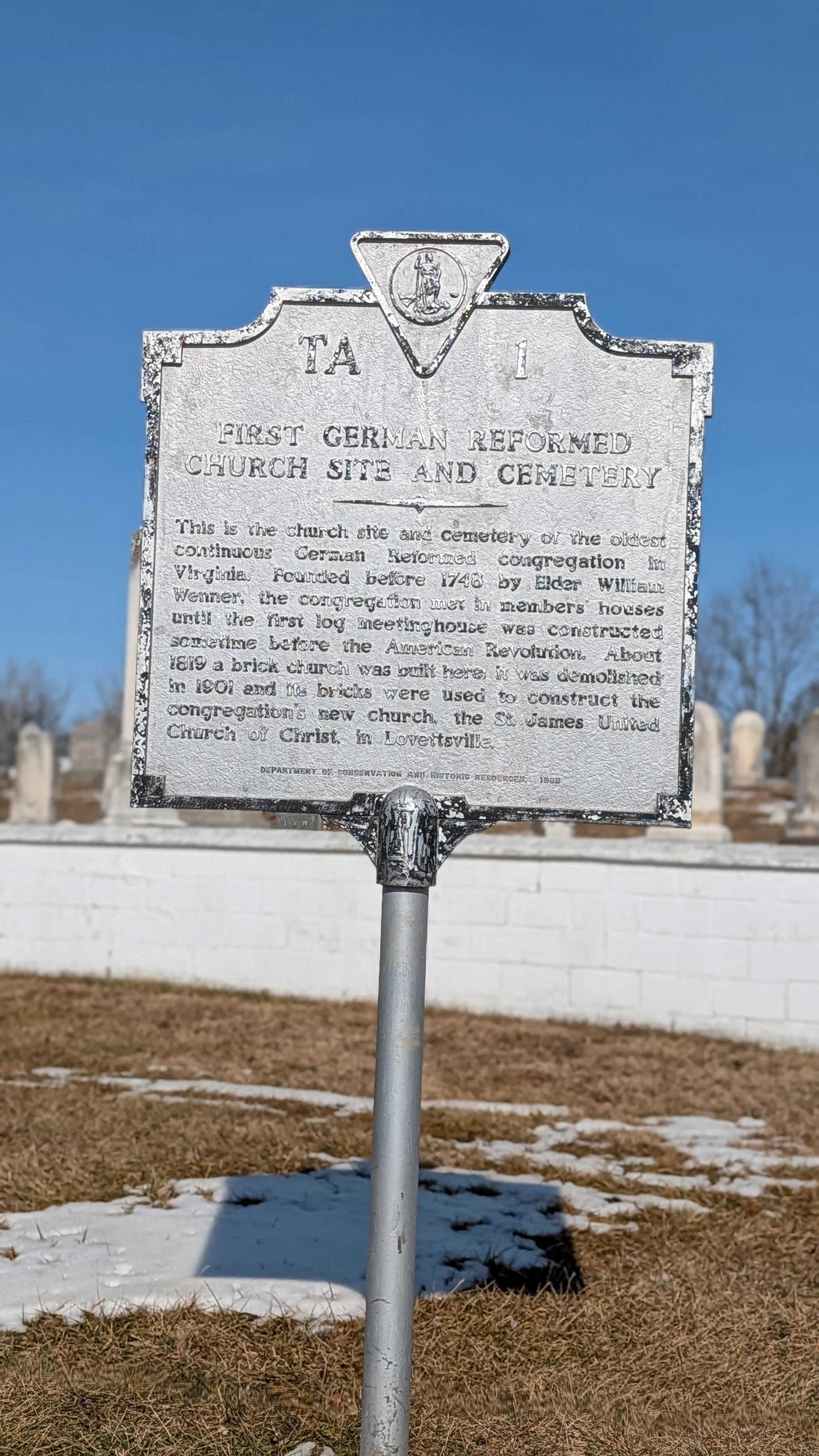
St. James Reformed Church Graveyard, Lovettsville, Virginia
St. James Reformed Church Graveyard
Philip lived and farmed in Maryland, but he rests in Virginia, in the St. James Reformed Cemetery on Lovettsville Road, in the heart of the German settlement community that had been taking root along the Virginia side of the Potomac since the 1730s.
The German Reformed Church in Lovettsville was one of the earliest of its kind in Virginia. Many of the early settlers came from the Palatinate region of Germany and brought the Reformed (Calvinist) tradition with them. The congregation was founded before 1748 by Elder William Wenner and met in members’ homes until a first log meetinghouse was built sometime before the Revolution.
Engraving of Francis Marion defeating Major Frazier at Parker's Ferry, South Carolina.
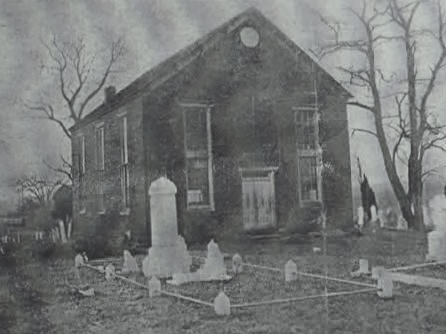
The old Reformed Church building in the cemetery, which was in use from 1819 until about 1900.
Around 1819, they started building a brick church on the site. Philip died just two years later, in 1821, the same year that the brick church was completed.
That building was demolished in 1901, and its bricks were reused to construct the congregation’s new church in town, renamed St. James. The three earlier buildings on the original site were simply known as the “German Reformed Church.” The cemetery remains there still, a stone-walled yard just off the bend in Lovettsville Road, looking down toward the river Philip crossed so many times.
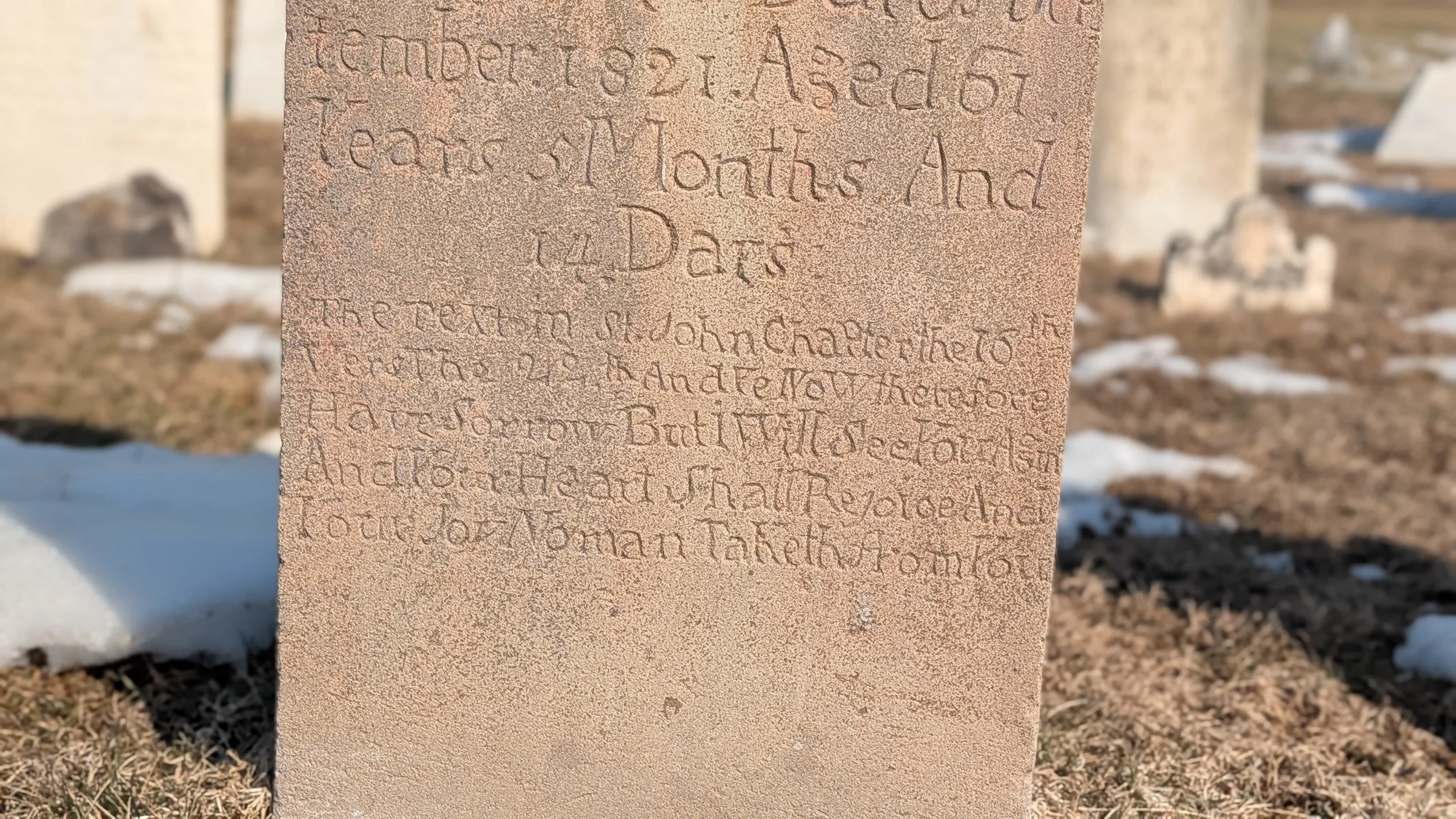
His Gravestone
Philip’s gravestone is one of the more striking stones in the cemetery. Its inscription is worn but still fanciful, and it quotes the Gospel of John, chapter 16, verse 22:
“And ye therefore now have sorrow: but I will see you again, and your heart shall rejoice, and your joy no man taketh from you.”
It is a verse about grief and reunion, about the promise that loss is not the end.
To his epitaph, I might add: Soldier. Farmer. Man of the Potomac River.
The top part of his stone says: Philip Jacob Souder Senior, born April 10, 1760. Died September 24, 1821. Aged sixty-one years, five months, and fourteen days.
This project is made possible by readers like you.
Your support helps to pay for website costs, gas to travel to these sites, and cleaning supplies for the veteran stones that I’m working to restore.
If you believe this work is important, your support is so appreciated!
Citations
Frederick County, Maryland. Equity Case JS-2, pp. 243-252. Estate of Philip Souder. July 1822.
FamilySearch Catalog. St. James United Church of Christ, church register (Reformed Church), Loudoun County, Virginia, ca. Sept. 17, 1789-August 23, 1823. https://www.familysearch.org/search/catalog/641007
Peters, Joan. The Third Virginia Regiment of Foot, 1776-1778. 2 vols. Westminster, MD: Heritage Books, 2008.
Valley Forge Legacy: The Muster Roll Project. "3rd Virginia Regiment." http://valleyforgemusterroll.org/regiments/va3.asp
Journey With Murphy. "The Battle of Brandywine." https://journeywithmurphy.com/2020/11/battle-of-brandywine/
Brandywine Soldiers. "3rd Virginia Regiment." https://brandywinesoldiers.com/category/soldiers/continental/virginia/3rd-virginia
Founders Online, National Archives. "George Washington to Major Isaac Beall, 31 March 1778." The Papers of George Washington, Revolutionary War Series, vol. 14. Charlottesville: University of Virginia Press, 2004. https://founders.archives.gov/documents/Washington/03-14-02-0338
Thomas Balch Library, Leesburg, VA. German Reformed Church Photograph, n.d. Collection VC0080. https://ead.lib.virginia.edu/vivaxtf/view?docId=tbl%2Fviletbl00280.xml
Lovettsville Historical Society and Museum. "The Reformed Church of Elder Wenner." http://www.lovettsvillehistoricalsociety.org/index.php/local-history/houses-of-lovettsville/the-reformed-church-of-elder-wenner-1733-now-st-james-united-church-of-christ-10-east-broad-way-lovettsville-virginia/
Virginia Department of Historic Resources. Lovettsville Historic District, NRHP Nomination, 2012. https://www.dhr.virginia.gov/registers/Counties/Loudoun/255-5001_Lovettsville_HD_2012_NRHP_FINAL.pdf
History of Loudoun County, Virginia. "Lovettsville: A German Settlement." https://www.loudounhistory.org/history/lovettsville/
Philadelphia Encyclopedia. "German Reformed Church." https://philadelphiaencyclopedia.org/essays/german-reformed-church/
Heritage Frederick (Historical Society of Frederick County). "Cultivating Independence." https://frederickhistory.org/cultivating-independence/
Groups Today. "Finding the Roots of the American Revolution in Frederick County." https://groupstoday.com/destinations/finding-the-roots-of-the-american-revolution-in-frederick-county
Find A Grave. "Saint James Reformed Cemetery, Lovettsville, Virginia." https://www.findagrave.com/cemetery/1207710/saint-james-reformed-cemetery