Francis “Swamp Fox” Marion [11/250]
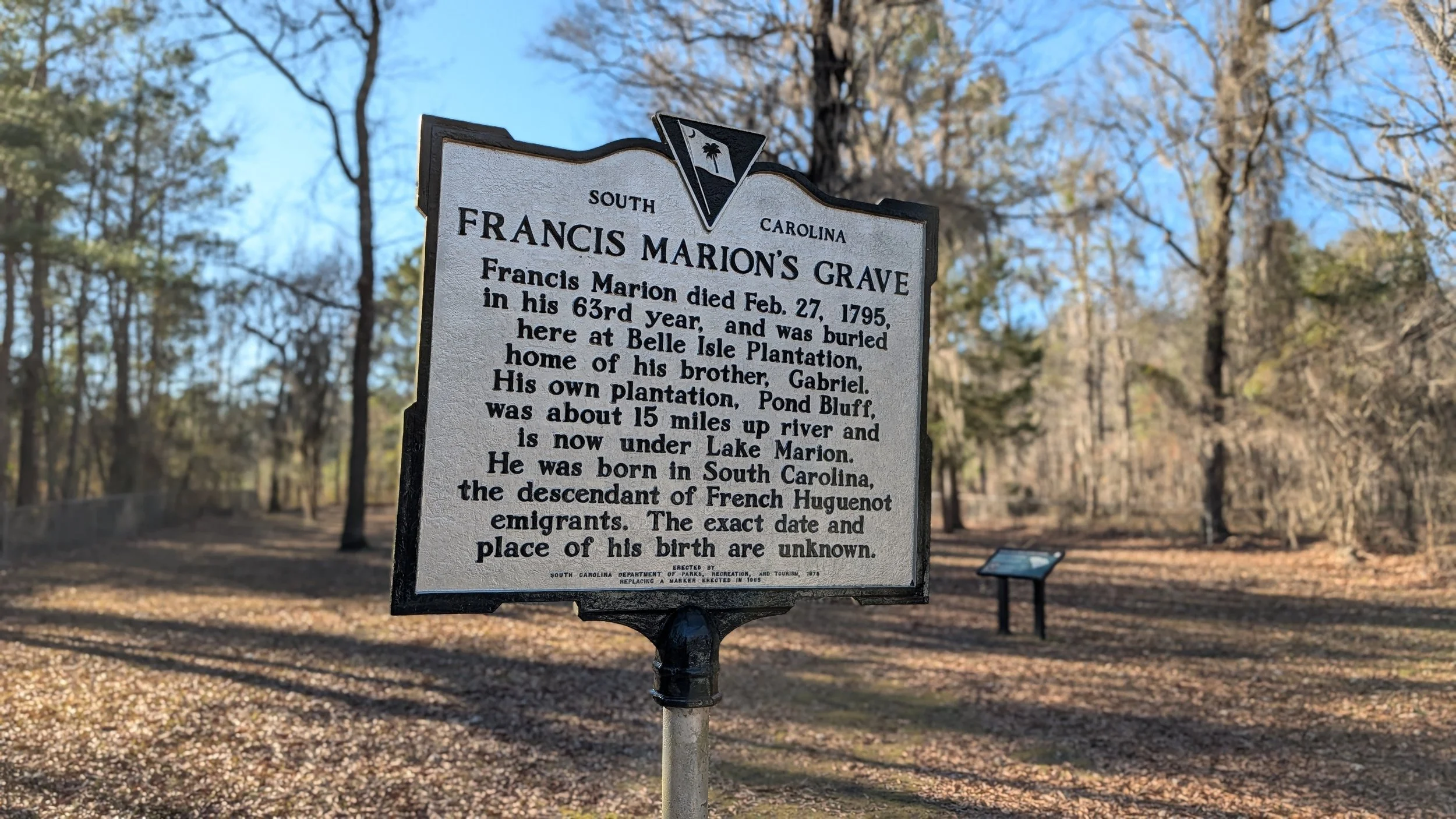
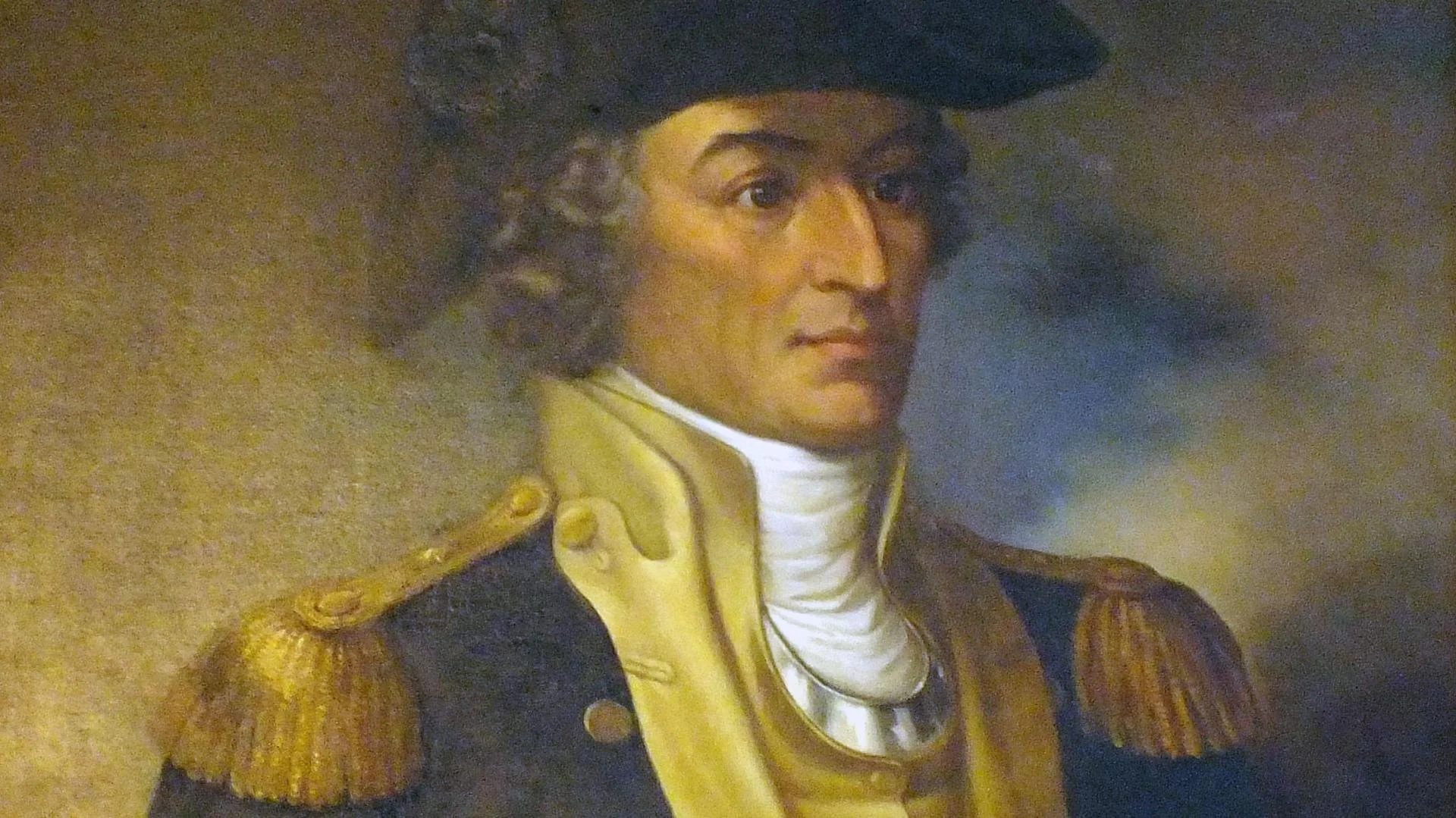
Gen. Francis "Swamp Fox" Marion (1732-1795)
Buried at Belle Isle Plantation in Berkeley County, South Carolina
His grave might be the most famous one I’ll document for this project, but it’s also one of the most isolated to visit.
Most of the people in this series live in the middle ground of Revolutionary memory- vital, but mostly forgotten figures whose stories deserved better than a footnote. Francis Marion is not one of those. He is, by far, one of the most famous names that will appear in this project.
And yet his grave feels familiar to me for another reason. It sits at the end of a long dirt road in rural Berkeley County, South Carolina, surrounded by what used to be his family’s plantation. The road is narrow and arrow‑straight, cutting through woods and hunting land. There are two brick pillars, but no gate. No visitor center, no tour buses, no gift shop. When I visited, mine was the only car in the small clearing that serves as a parking lot. If you didn’t already know who waited at the end of that road, you’d never guess that one of the most consequential soldiers of the American Revolution is buried there.
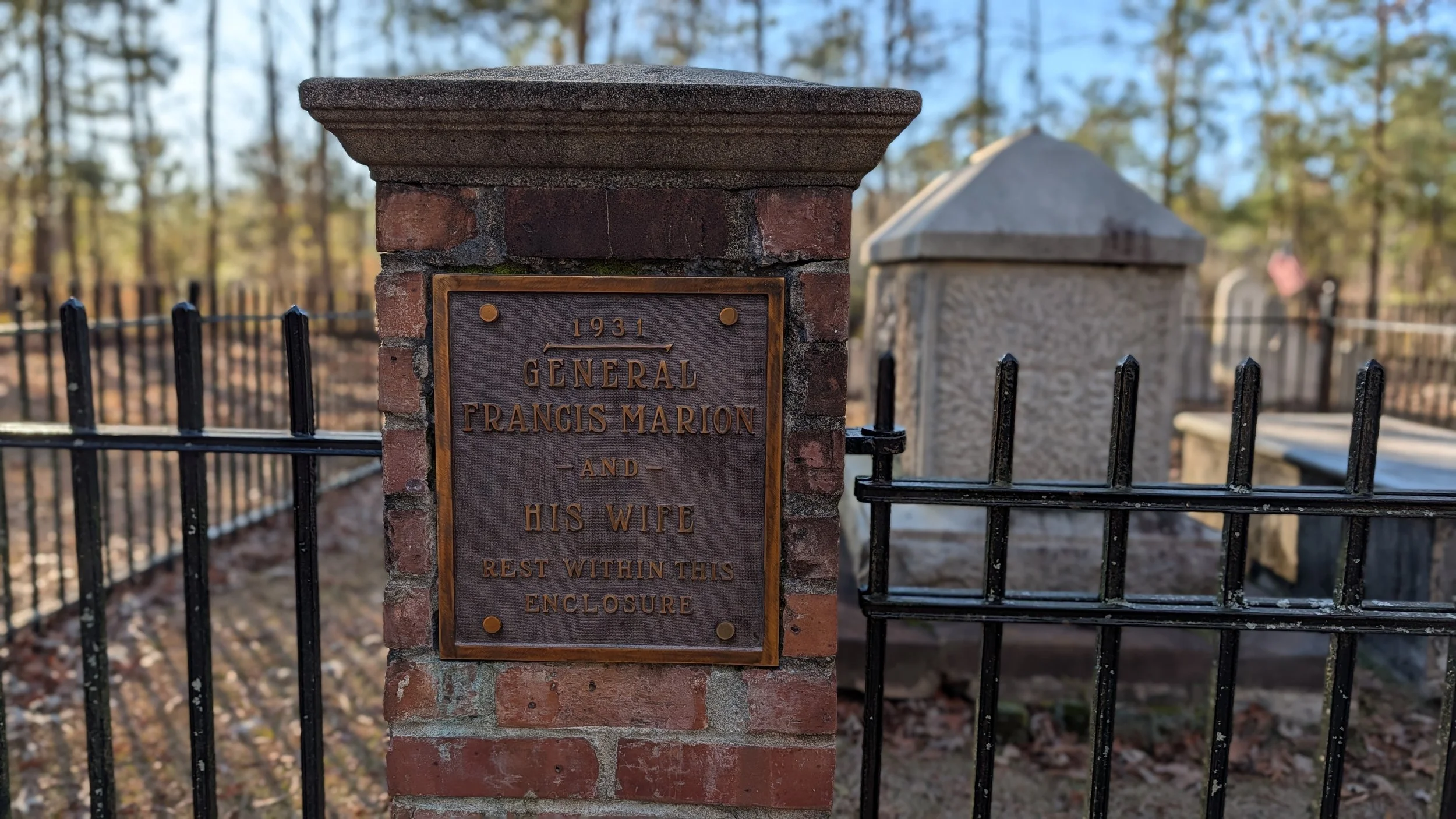
The grave itself is well kept. It is not, however, easy to reach or easy to stumble on by accident. Tourists flock to statues, restored forts, and battlefield parks. Marion lies alone, hidden in the pines. I suppose that’s fitting for a man who spent most of the war making sure no one could find him, then either.
Early Years
Francis Marion was born around 1732 in what is now Berkeley County, South Carolina, the youngest son of a Huguenot family that had fled France after the Edict of Fontainebleau. He was small, slight, and born with malformed legs, which surprised me as it was hardly the image of a future guerrilla commander. But from early on, he seemed to be restless, stubborn, and eager for danger.
At about fifteen, he signed on to a schooner bound for the West Indies. The trip did not go as planned. The ship reportedly struck a whale and sank. Seven men went into the water; five survived, drifting in a small boat for a week before making land. That was enough seafaring for Marion. He came home, settled along the Santee River near his brother, and eventually purchased his own plantation, called Pond Bluff, in 1773.
Lessons from the French and Indian Wars
War found him long before the Revolution. In 1756, Marion joined the South Carolina militia during the French and Indian War. In 1761, he fought under Captain William Moultrie in a major expedition against the Cherokee. When the army reached a narrow mountain pass where British troops had previously been ambushed, Marion was given the job of clearing any Cherokee forces lurking in the brush. He survived, and he took notes.
The Cherokee fought from cover. They used the terrain, woods, ravines, and river crossings to turn a conventional army into a clumsy, panicked target. Two decades later, in the swamps and pine forests of lowcountry South Carolina, Marion would return the favor on behalf of the American cause.
Charleston Falls and Marion Vanishes
By the time the Revolution reached South Carolina, Marion was already a trained officer. In February 1776, he was promoted to major, helped fortify Charleston Harbor, and defended the left side of the works at Fort Sullivan on June 28. He rose to lieutenant colonel, commanding the 2nd South Carolina Regiment and fighting at the siege of Savannah in 1779. Then came Charleston.
In March 1780, the British closed in on the city. Marion wasn’t there when it fell, but this wasn't because of a brilliant tactical insight, but instead due to an accident where he had broken his ankle and was sent into the countryside to recover. When Charleston surrendered in May, nearly 5,000 American troops were taken prisoner and because he was away, Francis Marion was not among them.
It is interesting to consider that his broken ankle may have saved the Revolution in South Carolina, and possibly the entire Southern campaign. While the main American army sat in British prison camps, Marion slipped into the swamps of South Carolina's lowcountry.
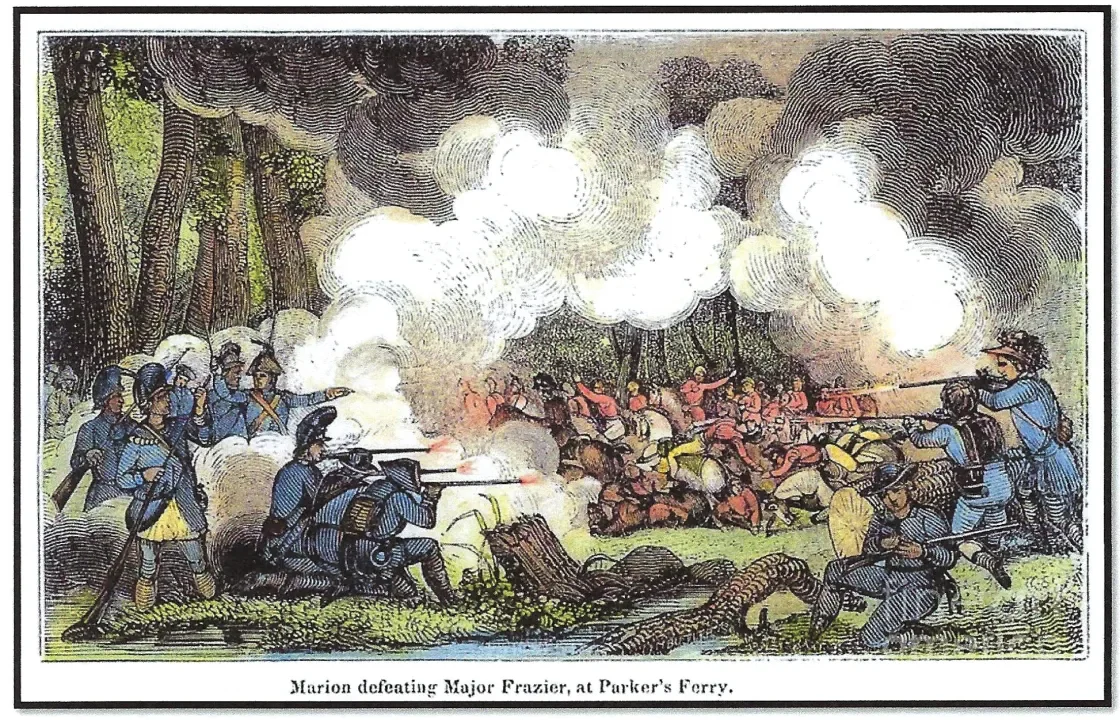
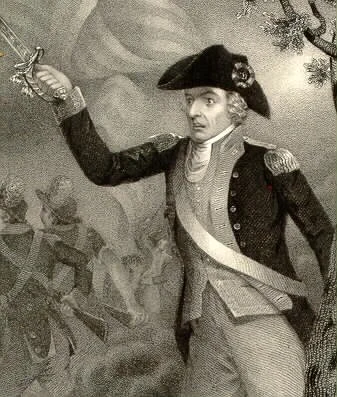
Engraving of Francis Marion defeating Major Frazier at Parker's Ferry, South Carolina.
He began to assemble a small militia force, mostly local men who knew the rivers and back roads as well as he did. For a time, he was the only organized American resistance in South Carolina. From bases along the Pee Dee and Santee rivers, he harassed Loyalists, ambushed British patrols, and attacked supply lines.
In August 1780, he raided the British post at Murray’s Ferry, then launched a nighttime assault that freed 150 Patriot prisoners and captured about 20 British guards. It was not a glorious, banner-waving victory. It was smaller than that: a handful of men moving quietly through the night, striking hard, and vanishing before dawn.
The British believed they had taken South Carolina. Marion set about stealing it back, one swamp crossing at a time.
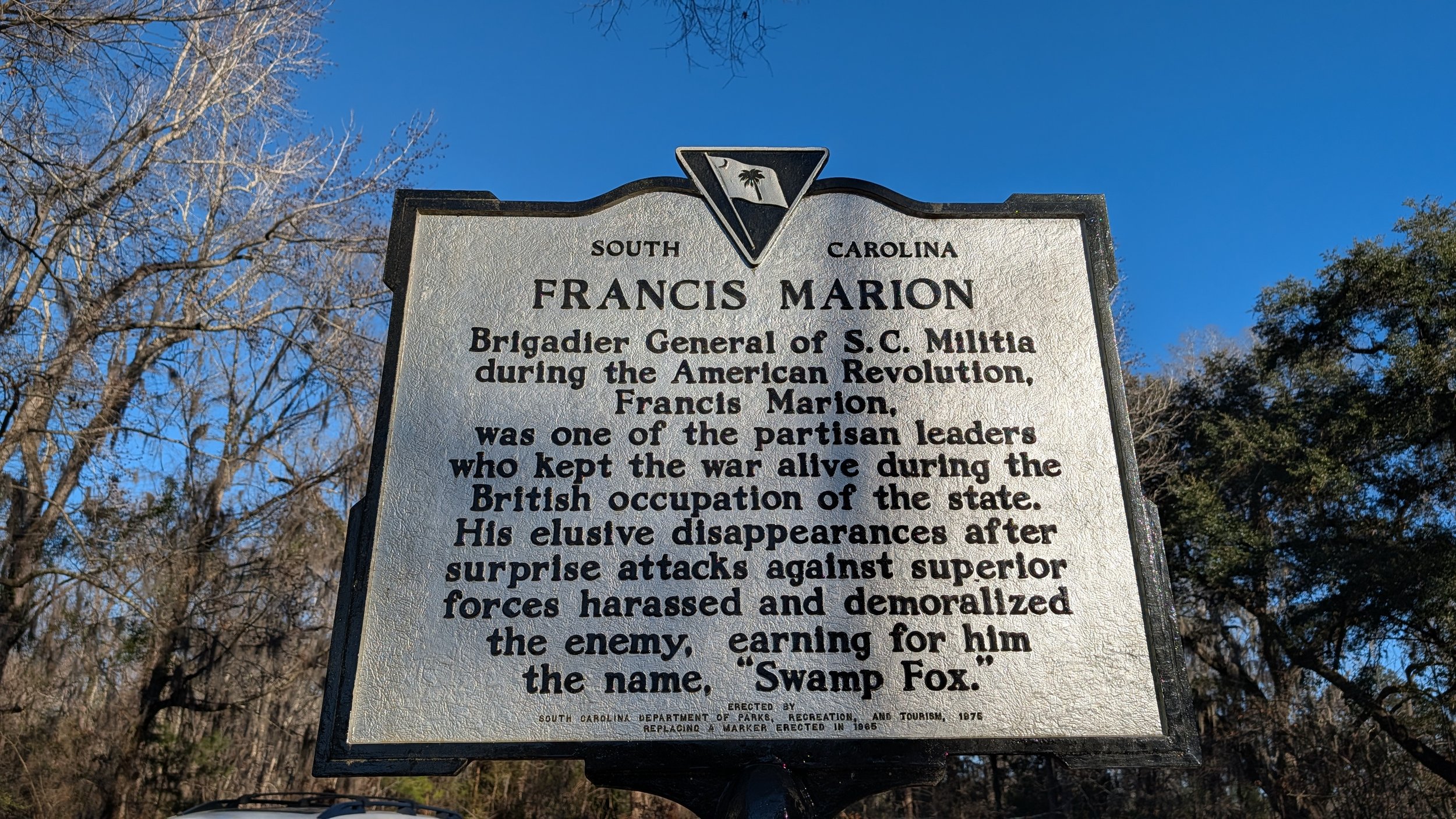
The Swamp Fox
The British did not take kindly to this. They sent one of their most feared cavalry commanders, Colonel Banastre Tarleton, to hunt Marion down.
In November 1780, Tarleton pursued Marion’s men for more than 26 miles through the swamps. The chase ended not with a glorious cavalry charge, but with frustration. The story goes that when Tarleton finally gave up, he remarked that “as for this old fox, the Devil himself could not catch him.”
The nickname spread faster than his pursuers ever did. “Swamp Fox” suited him: small, elusive, seemingly able to melt into the cypress and reappear miles away.
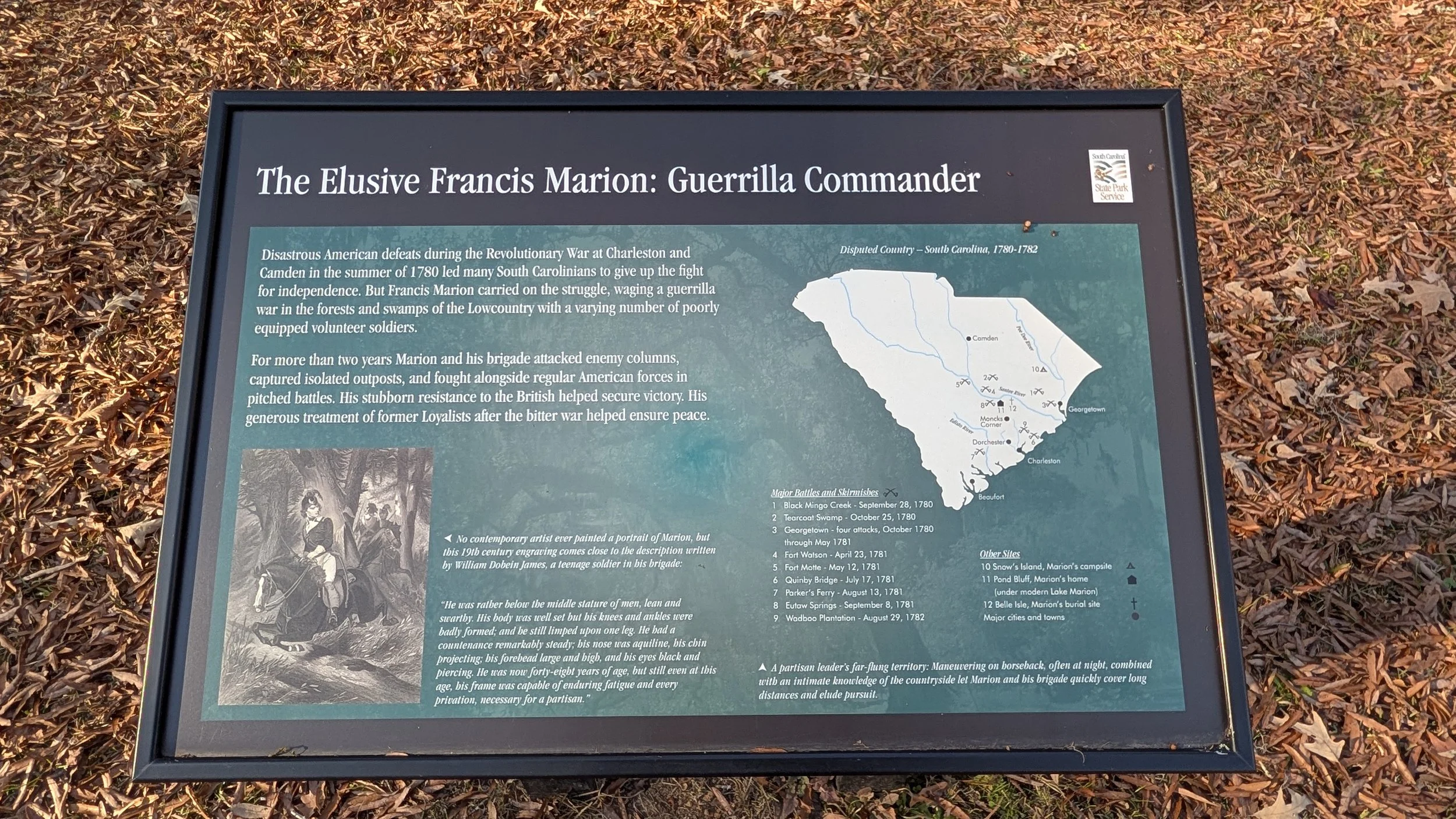
Francis Marion's gravesite has numerous historic markers and interpretive panels like this one.
Lord Cornwallis himself admitted that Marion had stirred up the countryside so much between the Santee and Pee Dee Rivers that “there was scarcely an inhabitant who was not in arms against us.” A militia colonel with a few dozen irregulars had effectively denied the British control of the rural lowcountry.
Marion’s war was not fought in the kind of battles that typically happen. His strategy and action were about raids and skirmishes: night crossings at Black Mingo Creek and Tearcoat Swamp, surprise attacks at Georgetown and Quinby Bridge, assaults on small forts like Watson and Motte, ambushes at Parker’s Ferry and Wadboo Plantation. None of these were decisive on their own, but together, they kept the Patriot cause alive in the South long enough for Nathanael Greene and a formal Continental Army to arrive.
In April 1781, Marion joined forces with Henry “Light Horse Harry” Lee to capture Fort Watson, a key post on the Santee. The next month, they took Fort Motte, severing British communications between posts in the Carolinas. By the end of 1781, the British were falling back toward the coast. The “old fox” was living up to his name.
Marion’s Final Campaign
The war in South Carolina did not end with a clean break or a single decisive clash. It sputtered and flared in fits and starts, even as the larger conflict wound down elsewhere.
In 1782, Colonel William Thompson marched a 700‑man force out of British‑held Charleston and managed what few had done before: he scattered Marion’s men. For a moment, the Swamp Fox looked cornered. It was a rare reversal in a career built on making other people retreat.
But it didn’t last. Thompson was soon defeated, and Marion rebuilt his command. His final action of the war came on August 29, 1782, at Fair Lawn. There, he ambushed roughly 200 men under Major Thomas Fraser. Fraser tried to flip the trap, turning on Marion in hopes of snatching victory from the ambush. It didn’t work. When the smoke cleared, Marion’s men held an ammunition wagon and the field, and Fraser suffered a defeat. It was a fitting last note for a commander who had spent two years making British officers look foolish in the Carolina lowcountry.
From Battlefield to Statehouse
When the shooting finally stopped, Marion did not fade quietly into obscurity. He stepped into politics with the same steadiness he had shown in the swamps. He was elected to the South Carolina State Senate in 1782 and again in 1784. The state also appointed him commander of Fort Johnston, a post that came with a salary he badly needed. British forces had left Pond Bluff in ruins; the income from Fort Johnston helped him begin to rebuild the plantation they had burned.
In 1790, Marion was elected as a delegate to South Carolina’s constitutional convention. Serving there meant he had to resign his Fort Johnston command, which was a trade he accepted. In 1791, he was elected again and voted in favor of joining the new federal union. The Swamp Fox, who had once haunted British columns through the cypress and cane, was helping to build the political world that would replace the one he had torn down.
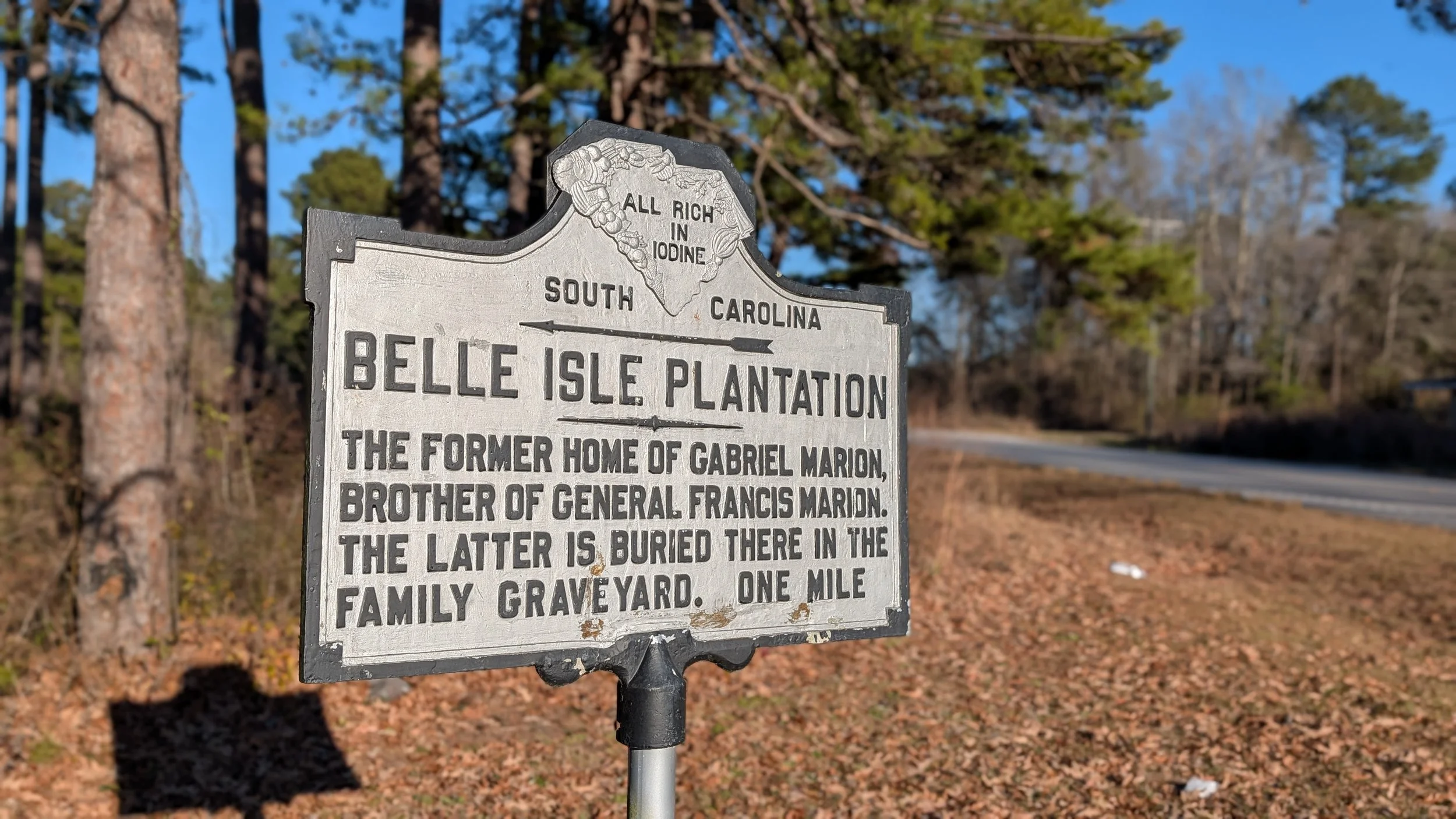
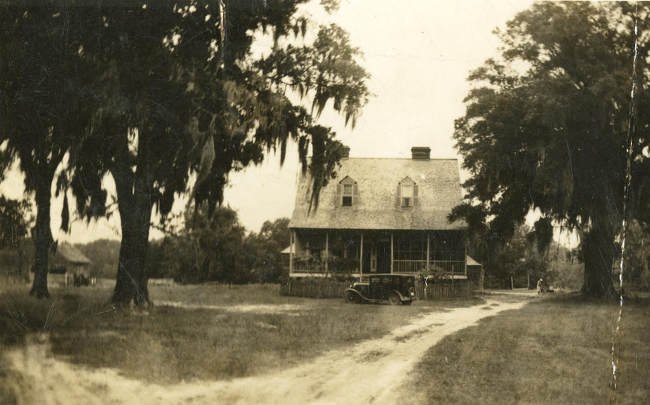
Belle Isle Plantaton, the former home of Gabriel Marion, brother of General Francis Marionm and the location of Francis's grave.
After the Revolution
Following the war, he argued forcefully for full amnesty for Americans who had supported the British. In the bitterness of a civil war that had split neighbors and families, he pushed for reconciliation. I think this is one of the more remarkable things he did, although it's often overlooked in favor of the more gripping tales of swamp skirmishes.
At 54, he married Mary Esther Videau, his 49‑year‑old cousin. He never had children.
On February 27, 1795, Francis Marion died at Pond Bluff. He was buried not there, but at his brother Gabriel’s Belle Isle Plantation, a few miles away. That is where you will find him today.
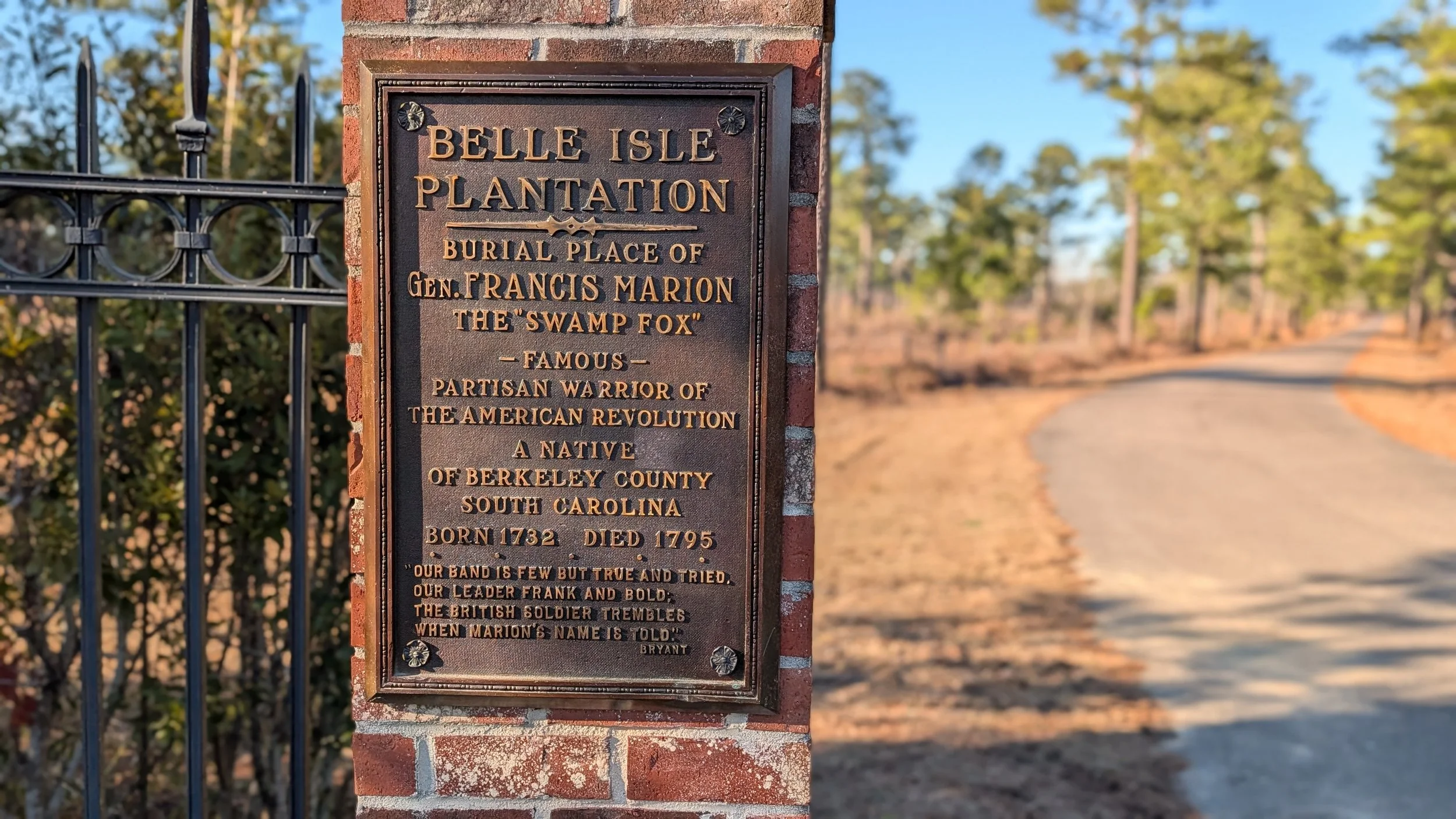
The Grave in the Pines
Today, Marion’s tomb stands on the old Belle Isle plantation site in Berkeley County, reached by a narrow turn off State Road 45 in what is now Francis Marion State Park. There’s no gate across the brick entrance pillars, no ranger to wave you in. A straight dirt road runs roughly eight‑tenths of a mile to a small clearing and a cluster of stones. On my visit, the parking lot was empty. The silence felt fitting.
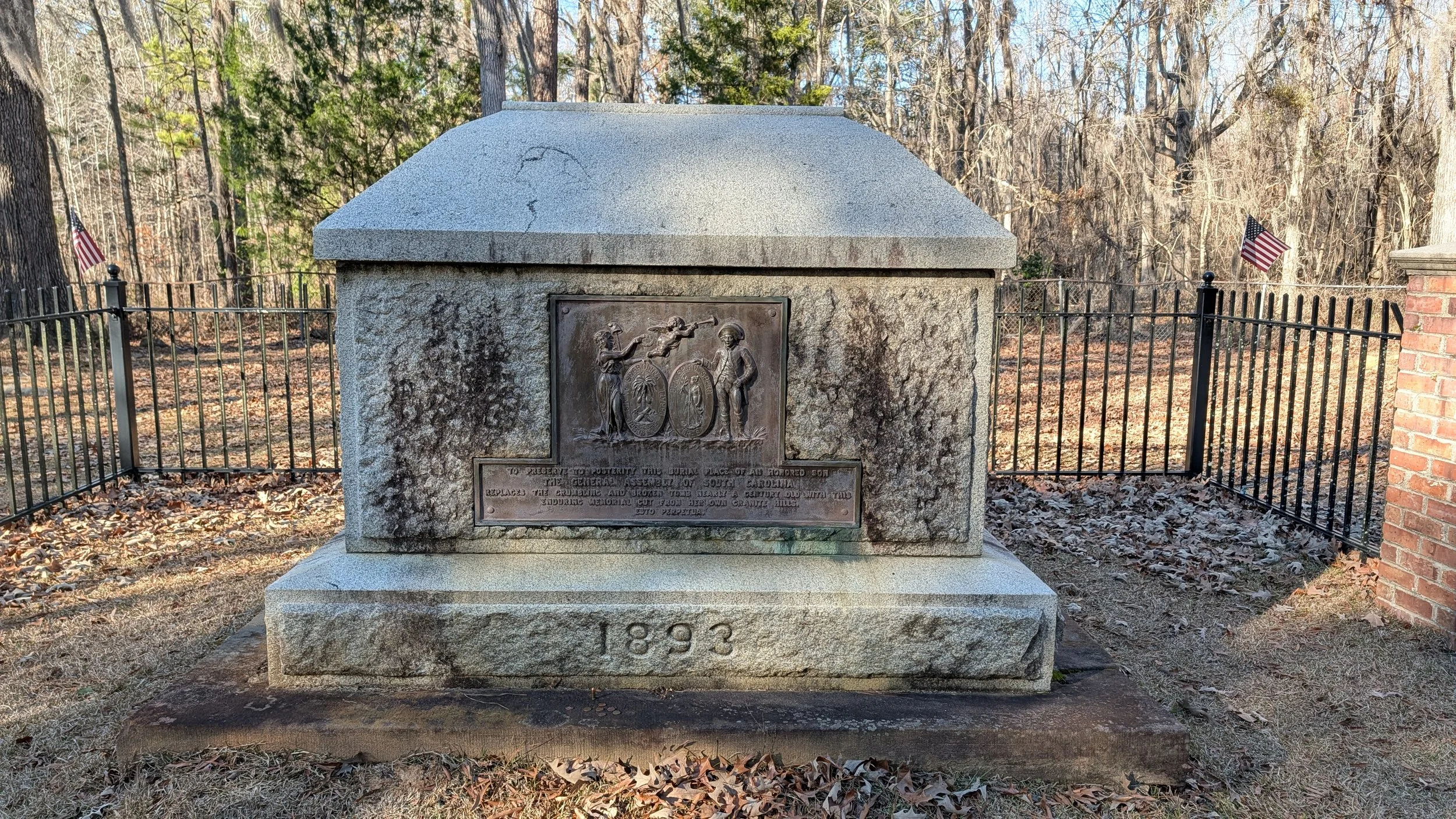
In 1893, nearly a century after his death, the South Carolina General Assembly replaced his crumbling original tomb with a monument of blue granite quarried in the state. The inscription on one side describes his life:
“Sacred to the Memory of Genl. Francis Marion,
Who departed his life, on the 27th of February, 1795, in the sixty-third year of his age.
Deeply regretted by all his fellow-citizens.
History will record his worth and rising generations embalm his memory
as one of the most distinguished Patriots and Heroes of the American Revolution.”
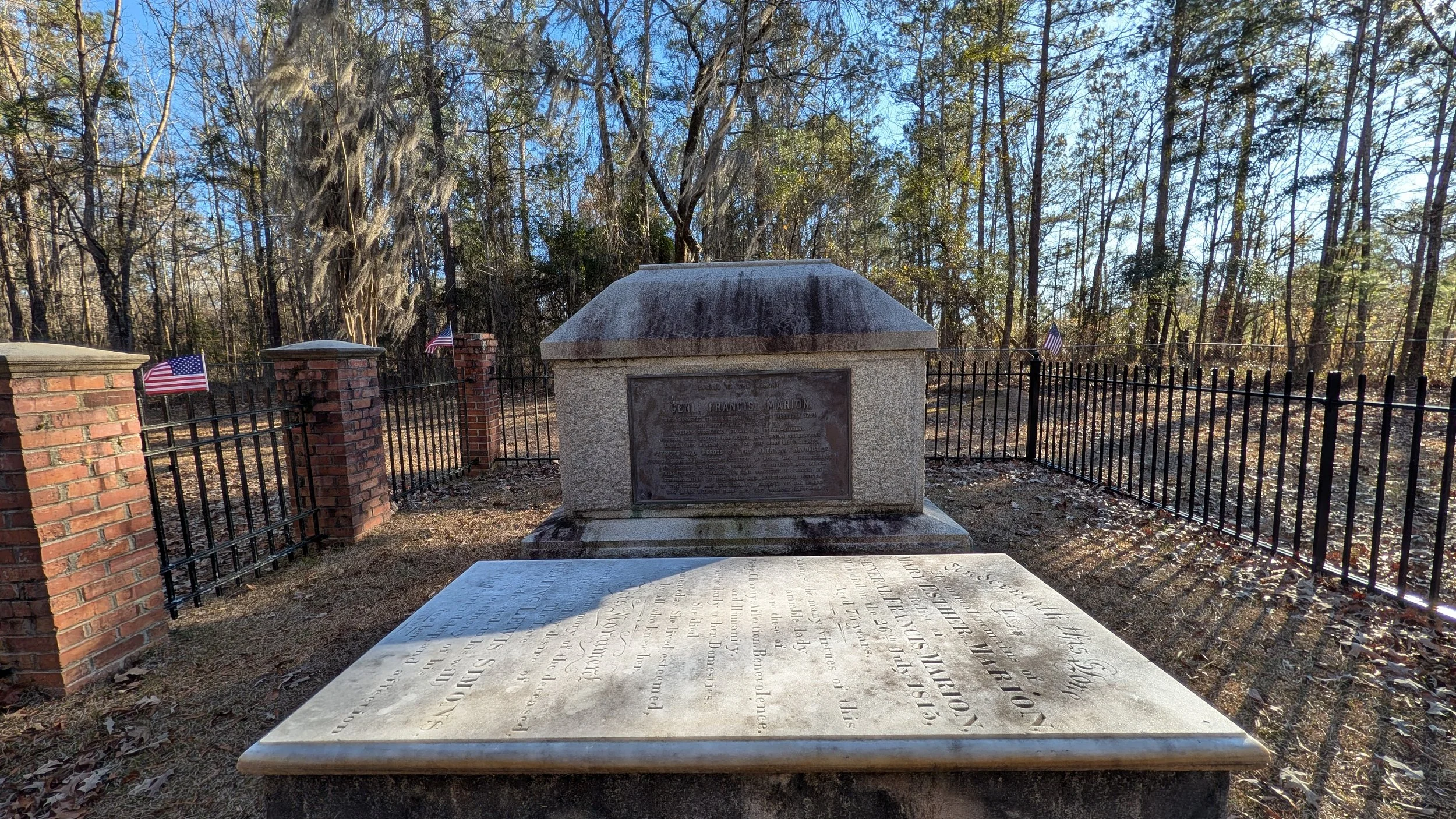
Marion lies here beside his wife, Mary Esther. She died in 1815, 22 years after her husband.
Pond Bluff, the plantation where he actually died, no longer exists. In the 1940s, the Santee‑Cooper hydroelectric project flooded the region to create Lake Marion, which was named in his honor. Much of the landscape he used so expertly, the swamps, the riverbanks, the hidden paths, are now underwater.
The Whole Picture
This project is about remembering people as they were, not as we might prefer them to be. Marion is no exception.
He was a gifted guerrilla commander and a crucial figure in the Southern theater of the American Revolution. He was also a man of his time in ways that are harder to celebrate. He owned enslaved people. He fought in a brutal campaign against the Cherokee. During the Revolution, he received an order from Governor John Rutledge to execute Black people suspected of carrying supplies or intelligence for the British, and historians still debate how he used that authority.
While we can admire his tactical brilliance and his role in keeping the Patriot cause alive in South Carolina, we can also acknowledge the violence and oppression that underpinned his world. Remembering him honestly requires that we not flatten him into a one-dimensional figure who is either a hero or a villain.
This project is made possible by readers like you.
Your support helps to pay for website costs, gas to travel to these sites, and cleaning supplies for the veteran stones that I’m working to restore.
If you believe this work is important, your support is so appreciated!
Citations
"Francis Marion." American Battlefield Trust. https://www.battlefields.org/learn/biographies/francis-marion
"Ambush: Francis Marion and the Art of Guerrilla Warfare."
American Battlefield Trust. https://www.battlefields.org/learn/articles/ambush-francis-marion-and-art-guerrilla-warfare
"GEN Francis 'Swamp Fox' Marion (1732-1795)." Find A Grave, Memorial ID 669. https://www.findagrave.com/memorial/669/francis-marion
"Francis Marion Tomb at Belle Isle Plantation Cemetery." The Liberty Trail. https://thelibertytrail.org/sc/trail-sites/historic-sites/francis-marion-tomb-belle-isle-plantation-cemetery
"General Marion in his Swamp Encampment Inviting a British Officer to Dinner." Engraving by John Sartain after John Blake White, 1841. The Metropolitan Museum of Art, Gift of Rev. Augustus Batten, 1947. https://www.metmuseum.org/art/collection/search/894656
"General Marion Inviting a British Officer to Share His Meal." United States Senate Art & Artifacts. https://www.senate.gov/art-artifacts/fine-art/paintings/33_00002_000.htm
Crawford, Amy. "The Swamp Fox." Smithsonian Magazine, July 2007. https://www.smithsonianmag.com/history/the-swamp-fox-157330429/
"Battle of Black Mingo: Swamp Fox Francis Marion." Revolutionary War Journal. https://revolutionarywarjournal.com/battle-of-black-mingo-swamp-fox-hones-his-guerrilla-tactics/
"Francis Marion 'Swamp Fox' and the Battle of Tearcoat Swamp." Revolutionary War Journal. https://revolutionarywarjournal.com/francis-marion-swamp-fox-strikes-again-battle-of-tearcoat-swamp/
"Imagining the Swamp Fox." American Revolution Institute. https://www.americanrevolutioninstitute.org/imagining-the-swamp-fox/ Kaufman, Scott.
"Fact versus Fabrication: Popular Depictions of Francis Marion and the Historical Record." Age of Revolutions, February 2, 2026. https://ageofrevolutions.com/2026/02/02/fact-versus-fabrication-popular-depictions-of-francis-marion-and-the-historical-record/