John Mills, Sr. and John Mills, Jr. [28&29/250]
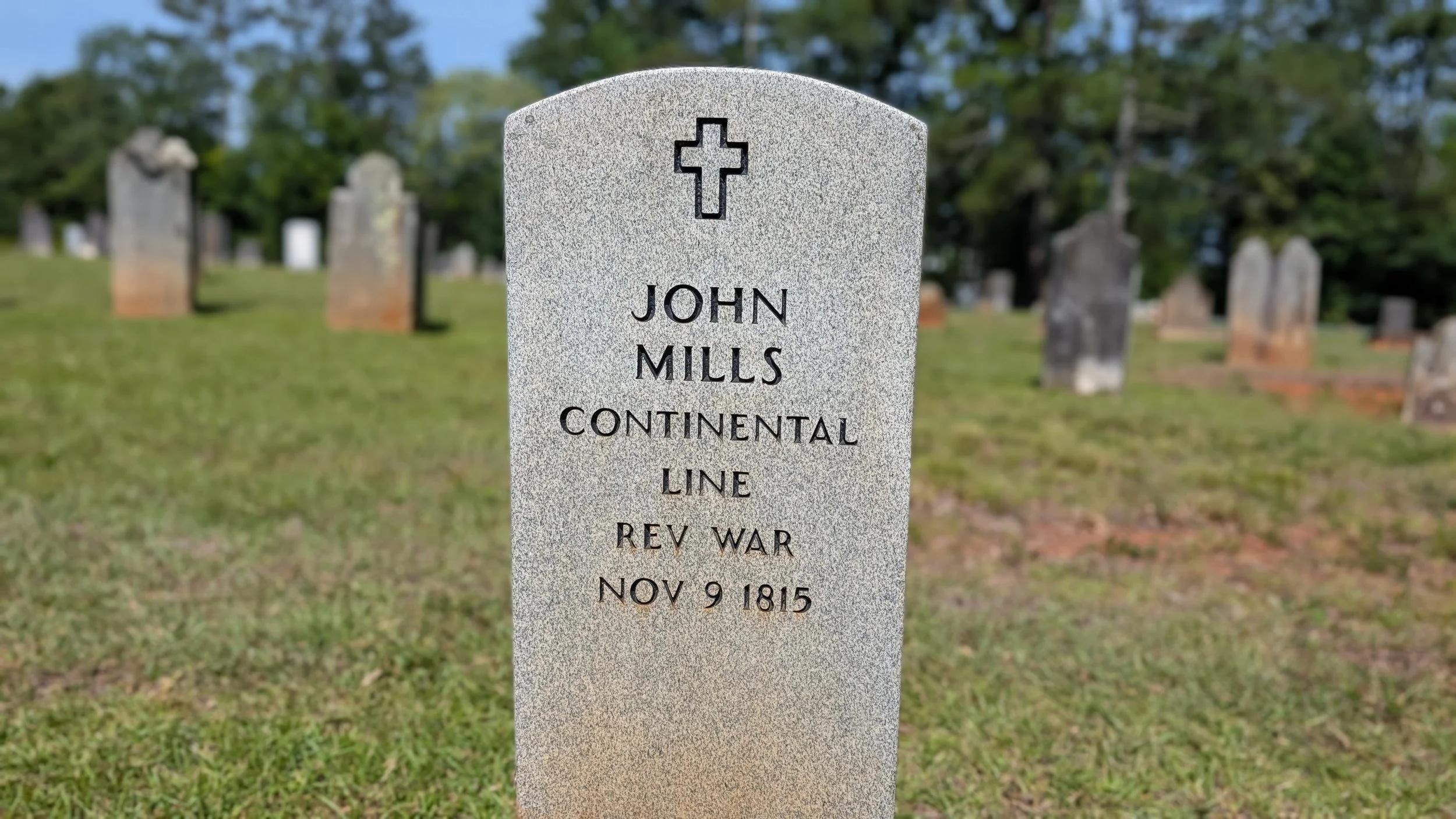
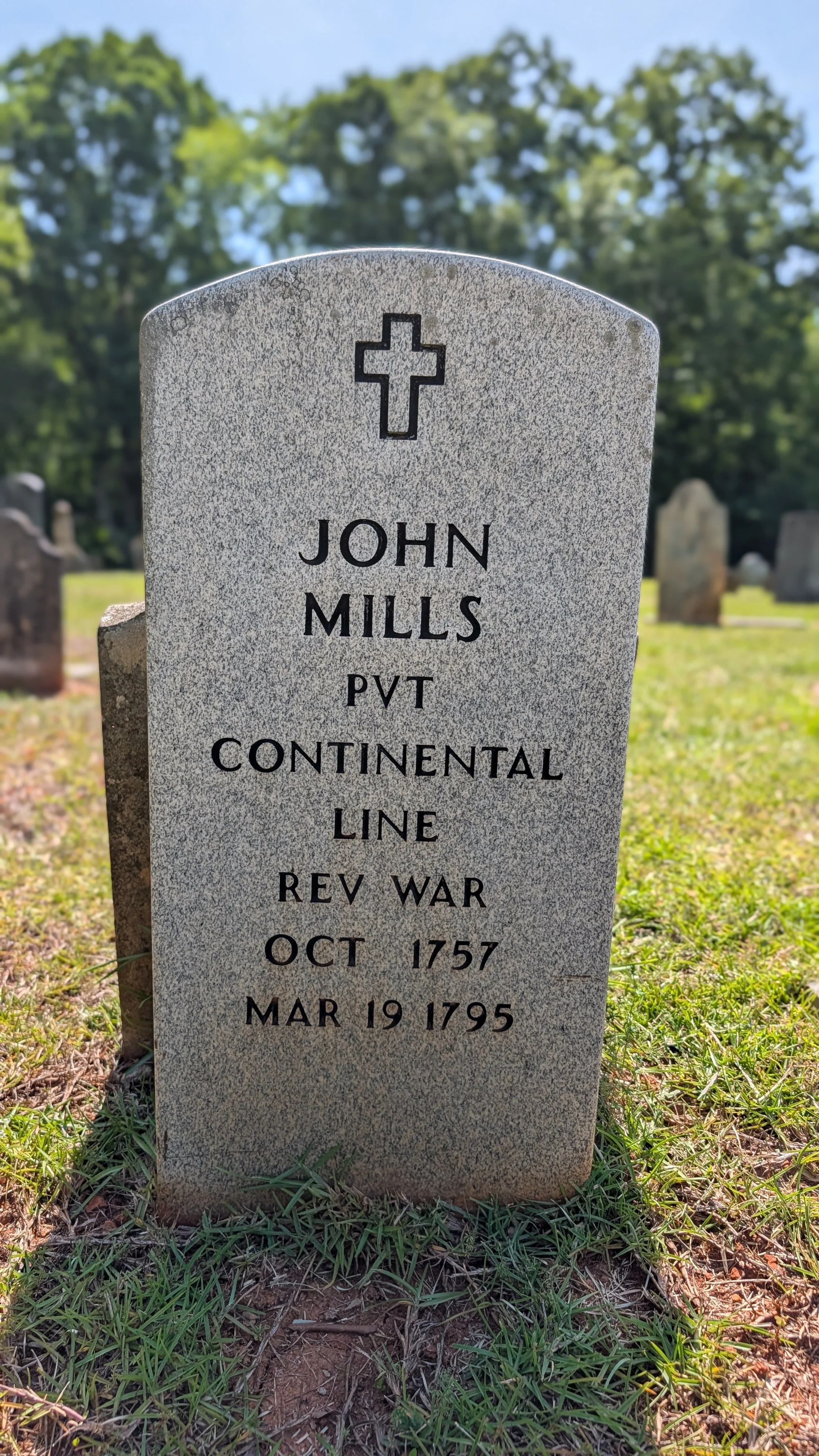
Capt. John Mills, Sr. (1732-1815) & Capt. John Mills, Jr. (1757-1795)
Buried at Fishing Creek Presbyterian Church | Chester County, South Carolina
Father and son, these two men both served bravely in the fight for American independence, and here in Chester County, they rest among dozens of others who sacrificed dearly for that same cause. Most of their names are missing from the history books, but I think their contributions deserve better, so let's change that.
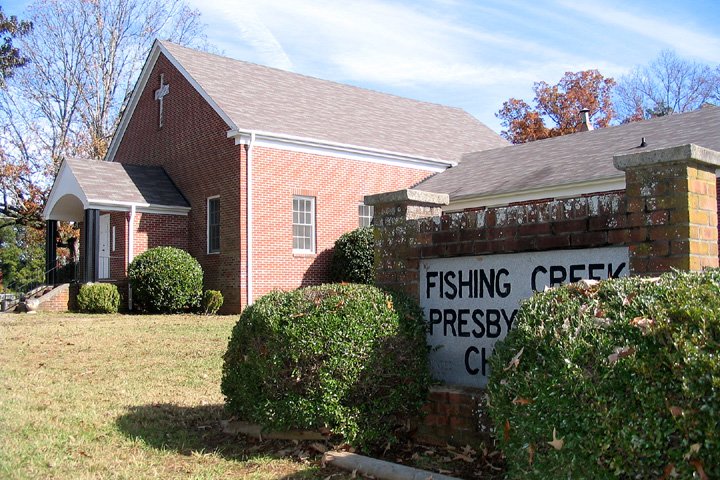
Fishing Creek Presbyterian Church
Early Life
John Mills, Sr. was born about 1732. Like so many of his Fishing Creek neighbors, his family's roots trace back through Scotland and Ulster before crossing the Atlantic, eventually making their way down the Great Wagon Road from Pennsylvania into the Carolina backcountry and settling in what was then Camden District and later became Chester County.
In 1755, he married Sarah Elizabeth Edwards, and in 1757, the family welcomed a son they named John Mills, Jr., continuing a name that ran through generations of this line before him.
Like the rest of his neighbors, John and his family were farmers, living a quiet life on the Carolina frontier until war came to their doorstep, and both father and son answered the call to take up arms against the Crown.
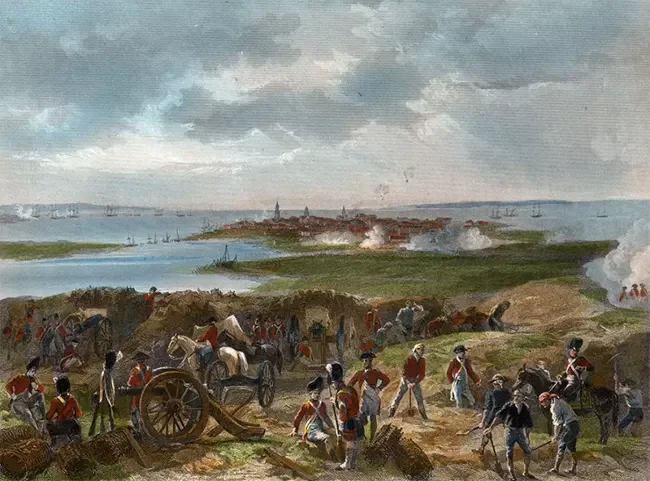
Siege of Charleston by Alonzo Chappel
When the War Came South
After the Second Continental Congress adopted the Declaration of Independence on July 4, 1776, the fighting to that point had been concentrated far from South Carolina, mostly in New England and the mid-Atlantic colonies (except for a failed British attempt to take Charleston in 1776). That changed once the British settled on a new approach to winning the war, known by historians as the Southern Strategy.
They had failed to crush the rebellion in the North, and Gen. George Washington's Continental Army, though battered, refused to disappear. So British strategy shifted attention to the Southern colonies, betting that Georgia, South Carolina, and the Carolina backcountry held enough Loyalist sympathy to let them reclaim the South county by county and squeeze the rebellion from the bottom up.
The plan started well for the Crown, with British forces capturing Savannah, Georgia, in December 1778. With Georgia secured, British commander Sir Henry Clinton set his sights on Charleston, the wealthiest and most important port city in the South, landing thousands of troops south of Charleston in February 1780. They spent the following months tightening a siege around the city, trapping the Southern Continental Army with nowhere to retreat. Gen. Benjamin Lincoln surrendered the city, and his army with it, on May 12, 1780. It remains one of the worst defeats American forces suffered in the entire war: more than 5,000 Continental soldiers and militia captured in a single stroke, and with them, the only organized American army left in the South.
For farmers like John Mills, more than 200 miles inland in the Fishing Creek settlement, the fall of Charleston was a turning point.
The Summer It All Changed
With Charleston in British hands, Lord Cornwallis pushed his army into the backcountry, planting an outpost at Rocky Mount, South Carolina, just 20 miles from the Mills family farm at Fishing Creek. That June, the British revoked their own parole terms and ordered every man in the district to swear allegiance to the Crown or be treated as an enemy. It was an ultimatum that pushed a lot of previously undecided men into the fight, John Mills, Sr. among them.
His military record is thinner than his son's, which makes sense for a man already in his mid-forties with a farm and family to run. What we do know is that he held a captain's commission, first in the Fairfield Regiment starting in 1777, then in the New Acquisition District Regiment through 1780. His company is tied to one confirmed engagement, the skirmish at Mobley's Meetinghouse in May 1780, one of the opening actions of that violent summer, coming just two days after the rout at Beckhamville a few miles away. A man his age holding a captain's commission at all says something about the standing he'd already earned in this community long before the war ever reached it.
John Mills, Jr.
As for his son, the record is far more vivid. John Mills, Jr. held a captain's commission of his own, serving under three successive commands over the course of the war: the Turkey Creek Regiment in 1780, the Little River District Regiment through 1780 and 1781, and Hampton's Regiment of Light Dragoons in 1781 and 1782. Over those two years, his company fought in an almost unbroken chain of engagements:
Hanging Rock (Aug. 6, 1780)
Fishing Creek (Aug. 18, 1780)
Kings Mountain (Oct. 7, 1780)
Fish Dam Ford (Nov. 9, 1780)
Blackstocks (Nov. 20, 1780)
Lee's Creek (Jan. 1781)
Fort Granby (Feb. 19, 1781)
Thomson's Plantation (Feb. 22, 1781)
Friday's Ferry (May 1, 1781)
Orangeburgh (May 11, 1781)
St. James Goose Creek Church, Quinby's Bridge, and Shubrick's Plantation (all mid-July 1781)
Eutaw Springs (Sep. 8, 1781)
Fort Dorchester (Dec. 1, 1781).
That is essentially the entire back half of the South Carolina campaign, carried by one company, under one commander, for the better part of two years without a real break.
Looking at the men who served under him, it's clear this company was drawn heavily from the pews of Fishing Creek Church itself. Several of the names on his roster belong to men now buried within a few steps of him: Lt. Archibald Gill, Sgt. Robert Gill Jr., and privates Joseph Gaston, Samuel Neely, Hugh Kelsey, George Kelsey, Robert Kelsey, Samuel Kelsey, and Thomas Kelsey, along with two men, father and son, both named Jonathan Jones. This was not a company of strangers. It was a company of neighbors, and in more than a few cases, family.
John Mills, Jr. died in 1795, 20 years before his father followed him to this same cemetery, where both of them rest today.
This project is made possible by readers like you.
Your support helps to pay for website costs, gas to travel to these sites, and cleaning supplies for the veteran stones that I’m working to restore.
If you believe this work is important, your support is so appreciated!
Citations
Will of John Mills, Chester District, South Carolina, dated May 31, 1806, as transcribed on WikiTree.
Moss, Bobby Gilmer. Roster of South Carolina Patriots in the American Revolution. Baltimore: Genealogical Publishing Co., 1983.
Scoggins, Michael C. "Three Months in 1780." New Acquisition Militia. York County Culture and Heritage Commission, June 2003. https://newacquisitionmilitia.com/three-months-1780/.
Lewis, J.D. "Capt. John Mills, Sr." The American Revolution in South Carolina. Carolana.com. https://www.carolana.com/SC/Revolution/patriots_sc_capt_john_mills.html.
"John Mills (1732-1815)." Find a Grave, memorial no. 39496312. https://www.findagrave.com/memorial/39496312/john-mills.
"John Mills (1757-1795)." Find a Grave, memorial no. 39496207. https://www.findagrave.com/memorial/39496207/john-mills.
"Sarah Elizabeth Mills." Find a Grave, memorial no. 233968574. https://www.findagrave.com/memorial/233968574/sarah_elizabeth-mills. Unconfirmed by independent record; see discrepancy note.
"Fishing Creek Presbyterian Cemetery." Find a Grave. https://www.findagrave.com/cemetery/1979134/fishing-creek-presbyterian-cemetery.