Gannaway Martin [30/250]
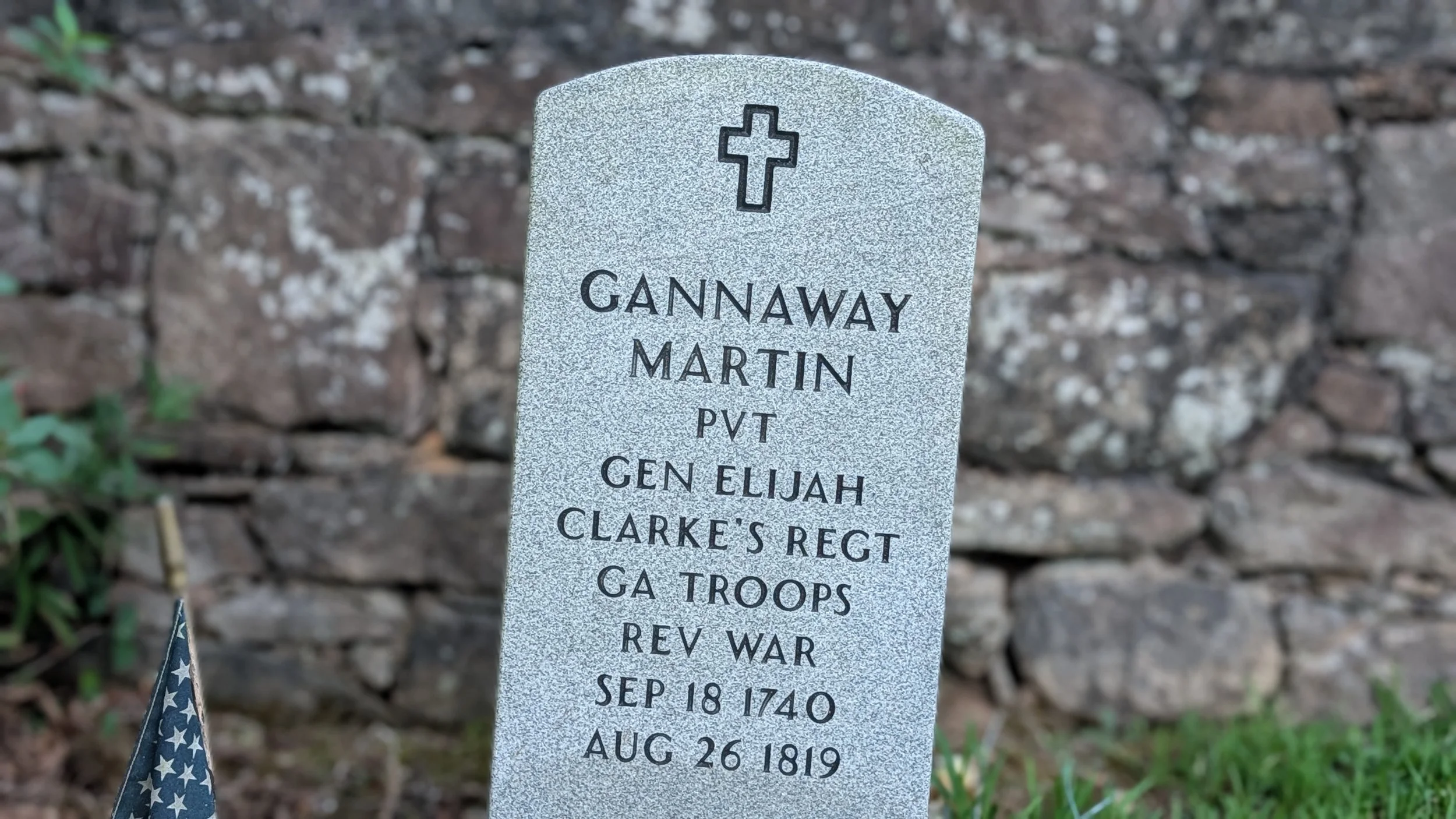
Gannaway Martin (1740-1819)
Buried at Smyrna Church | Wilkes County, Georgia
I visited this grave in August to pay my respects- which is an awful time to be outside in Georgia. Alas, my schedule didn’t align with good weather, so into the old graveyard I went. Buried here among at least five other veterans from the American Revolution, Gannaway Martin rests somewhere in the Smyrna Church Cemetery, near an old rock wall that outlines the oldest section of this cemetery, which dates back to the 1790s. But Gannaway, like most of the other American Revolution veterans buried here, didn’t have a grave marker- or at least not one that carried his name. So, on October 30, 2021, members of the Washington-Wilkes Chapter of the Sons of the American Revolution gathered in this graveyard outside Washington, Georgia, to do something that was, in a way, two centuries overdue: formally marking the grave of a private named Gannaway Martin.
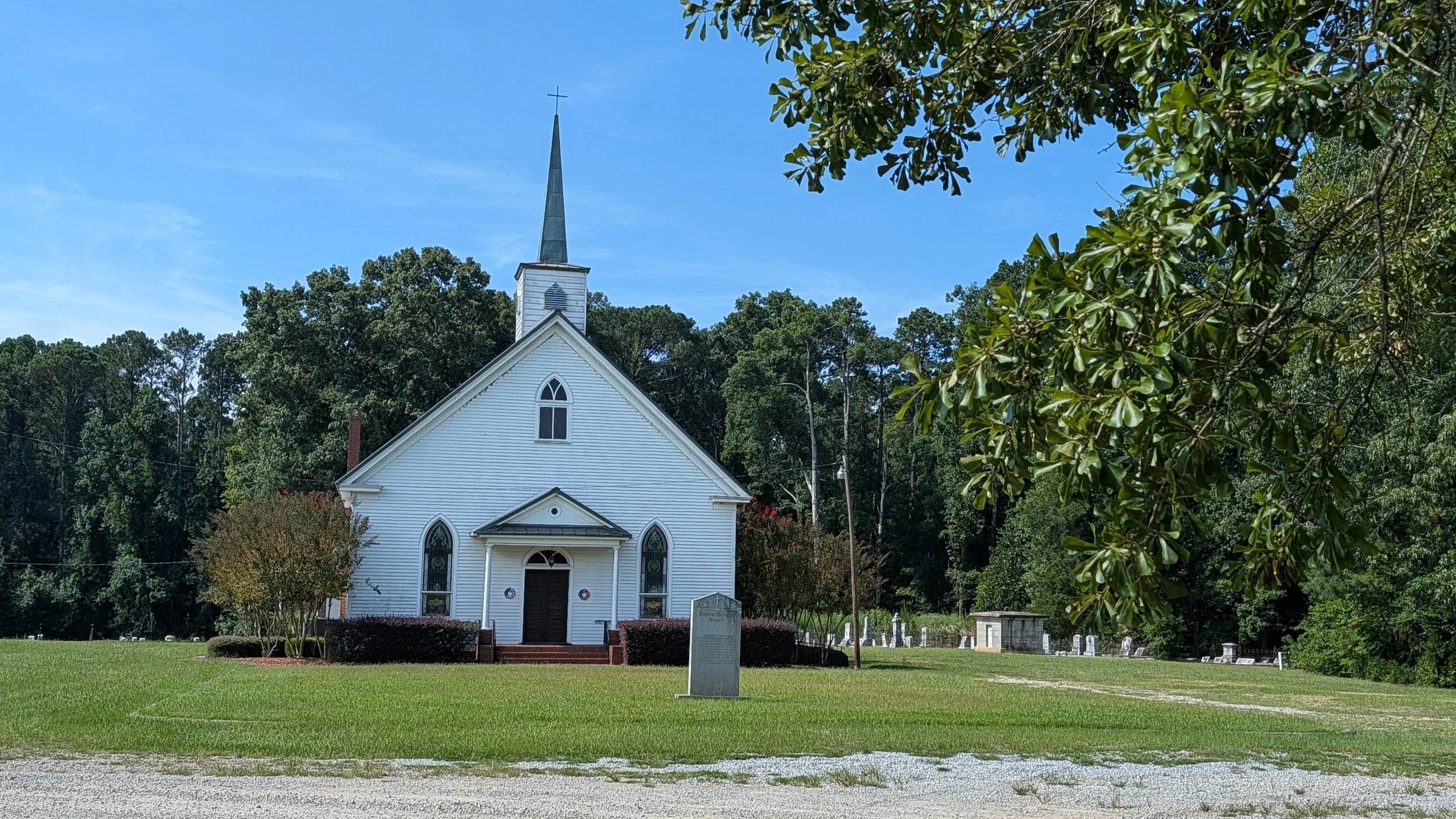
Smyrna Church, Wilkes County, Georgia
Early Life in Virginia
Gannaway Martin was born September 18, 1740, in Goochland County, Virginia, the son of Orson Martin and Susanna Gannaway Martin, who had married around 1733 in St. Peter's Parish, Virginia. Susanna was the daughter of a John Gannaway, which is where her son's unique first name came from.
By his early twenties, Gannaway had moved, following a well-worn migration corridor that carried thousands of Virginia and North Carolina Piedmont families south and west in search of better land. Around 1763, he appears in Orange County, North Carolina, records, where he married Ann Martin, (born June 27, 1741). The couple would go on to raise at least 10 children together.
The Martins in Wilkes County, Georgia
By the time the Revolution broke out, Gannaway and Ann Martin had settled in Wilkes County, Georgia, which was established in 1777 as Georgia's first county and, almost immediately, one of the most fiercely contested pieces of ground in the entire war. Wilkes County was not a place where the Revolution arrived as a distant headline. It was fought farm by farm, neighbor against neighbor, in the kind of vicious Patriot-Loyalist civil conflict that defined the backcountry South far more than the war's better-known northern battles ever did.
Service Under Elijah Clarke, and the Refugees of Wilkes County
Gannaway Martin served as a private in the Georgia Troops under General Elijah Clarke, according to his Georgia Sons of the American Revolution Patriot record (#P-242093).
The fuller story, according to the Washington-Wilkes Chapter of Georgia SAR research, is that in early 1780, Martin was attached to the command of then-Lieutenant Colonel Elijah Clarke. When Charleston fell to the British that May, most of the Patriot militia serving under Colonels Dooly and Pickens were captured, and many signed an oath of allegiance to the Crown in order to win their release. Not everyone signed. The Wilkes County men who refused, who kept their arms and kept fighting, earned themselves a moniker: the Refugees.
After Colonel Dooly was murdered by Tories at his home in 1780, the Refugees reorganized under Col. Elijah Clarke and kept up the fight, at the Battle of Musgrove's Mill and in the Siege of Augusta, among other actions. But by October 1780, they could no longer hold Wilkes County against combined Loyalist and British pressure. So they did something remarkable. They gathered up somewhere between 600 and 700 women and children, (essentially the entire Patriot civilian population of the county) and marched them to safety in the Watauga settlements, in what is now Tennessee. The men who made that march continued serving as the Refugee Militia, some fighting on through the Carolinas before finally making their way home to Wilkes County.
A Revolutionary War bounty land grant dated February 25, 1785, lists Gannaway Martin by name and specifically identifies him as a Refugee, highlighting Martin's own service and sacrifice, but also, very possibly, his own family's flight to Watauga.
The Family Bible
Some of the richest detail on this family comes from an old Bible that was transcribed in 1936 from a worn bible that was deteriorating. Back then, the "Gannaway and Ann Martin Bible" was reportedly still in family hands, but in poor condition, so it was transcribed by Estelle Pye to capture the information written inside. The original Bible itself no longer survives, which makes that transcription, fragile as it is, irreplaceable.
That Bible records at least 10 children born to Gannaway and Ann, including Sarah, Elizabeth, William, Frances, Ann, James, Rebecca, Henry, Susannah, and Austin.
A Soldier's Reward, Late and Uncertain
Georgia rewarded its Revolutionary veterans mostly with land rather than pensions, and Gannaway's story shows this. In 1784, he appears on a list of bounty land vouchers, which were signed personally by Colonel Elijah Clarke, entry number 393, for 250 acres "taken up by" a local surveyor named Sanders Walker. The following February, that same 250 acres shows up again in a formal Bounty Land Grant record, the one that names him as a Refugee. It is likely these two records describe the same tract of land at two different bureaucratic stages, though that has not been fully confirmed.
Decades later, in 1819, his name turns up once more, this time on a list identifying him as one of the "Revolutionary Soldiers of Wilkes County" in connection with that year's state land lottery process, with two draws credited to his name, an allowance the state extended to its aging veterans. Unfortunately for him, this formal recognition arrived the same year he died.
No federal pension file for Gannaway Martin has turned up, which makes sense because Georgia militia service (as opposed to service in the Continental Line) generally did not qualify a veteran for the federal pension act passed in 1818. By the time a broader pension act opened the door to militia veterans in 1832, Martin had already been gone for well over a decade.
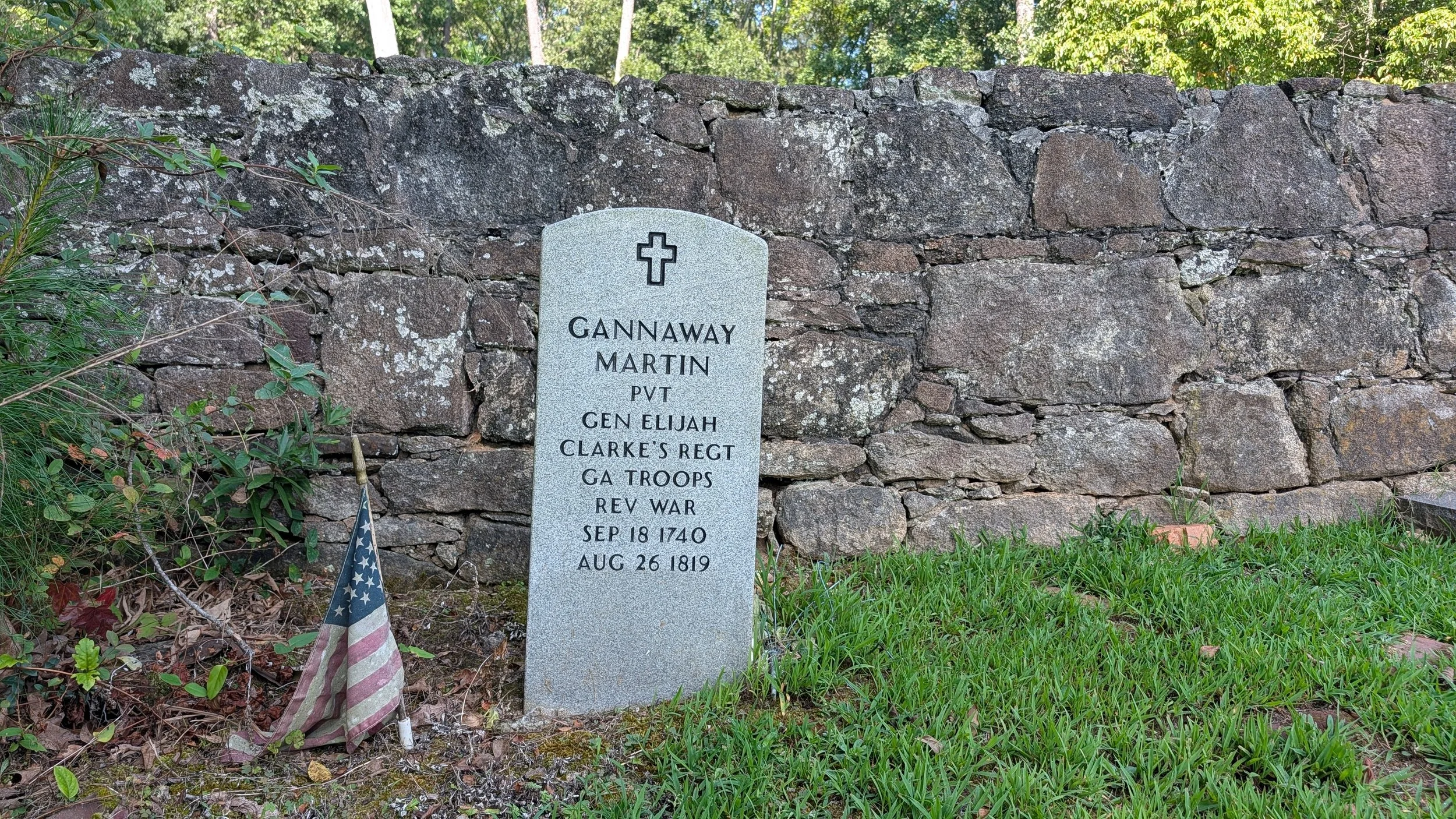
According to a transcription from the family bible, Gannaway Martin died August 26, 1819, in Wilkes County, at age 78. He was buried at Smyrna Church Cemetery in Washington, Wilkes County, where a government-issued veteran's marker was installed in October 2021. It was placed to recognize his service, but likely doesn’t mark the precise location of his grave in the cemetery.
His wife Ann lived on until November 28, 1825, dying in Upson County, Georgia, likely having moved to be near family after Gannaway's death. It is believed that she is buried at Martin Methodist Cemetery in Upson County.
A Private's Story
Gannaway Martin was never a general or a governor. He was a private, a farmer, a father of at least 10 children, and, for a hard stretch of 1780, one of the Wilkes County men who chose to keep fighting rather than sign away his allegiance, even when it meant marching hundreds of women and children to safety in the mountains rather than staying to lose everything.
His is exactly the kind of story that 250 Graves exists to tell: not just the names on monuments in state capitals, but the private soldiers whose stories of service are preserved (if we are lucky) in land vouchers and torn family Bibles.
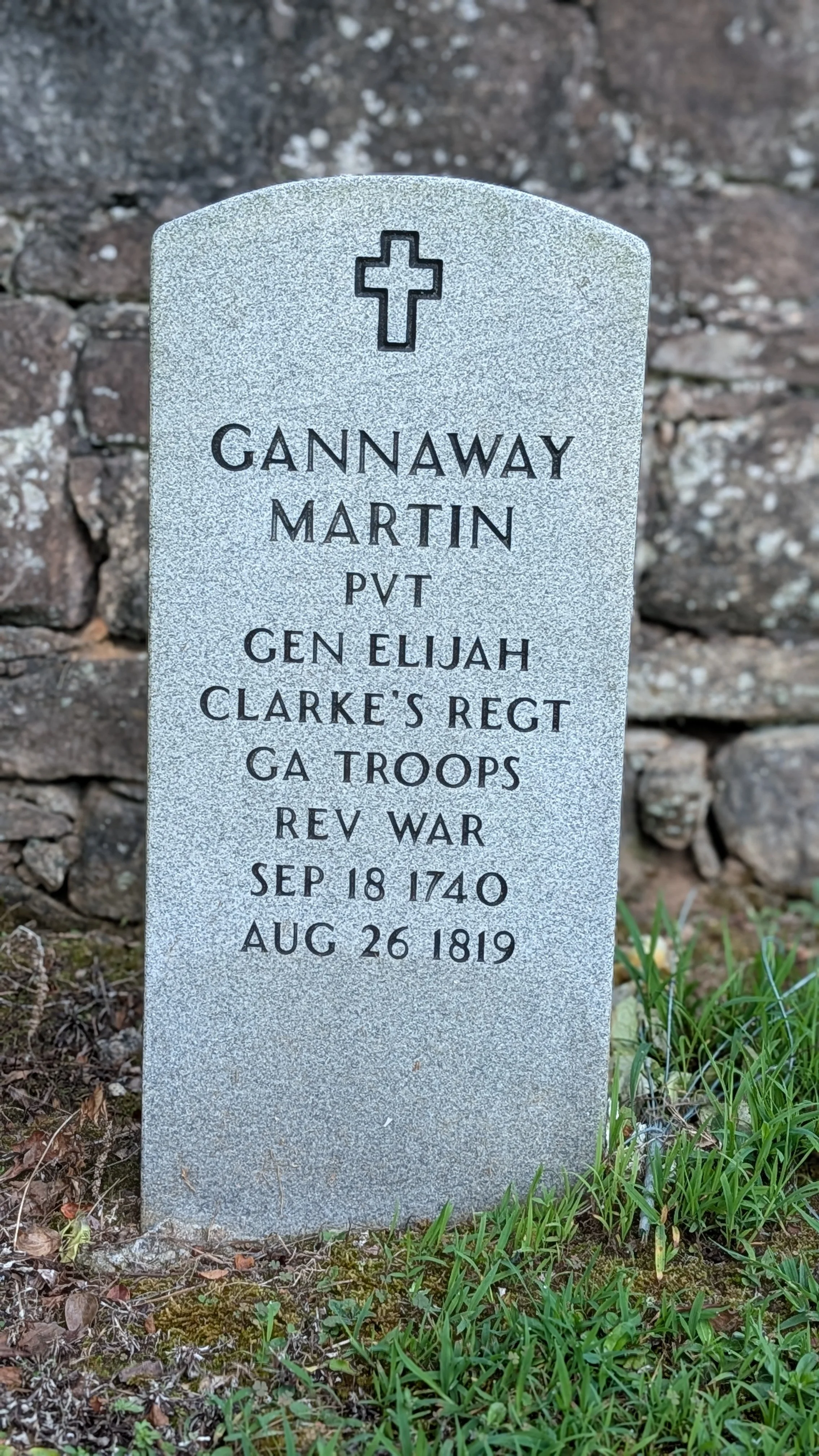
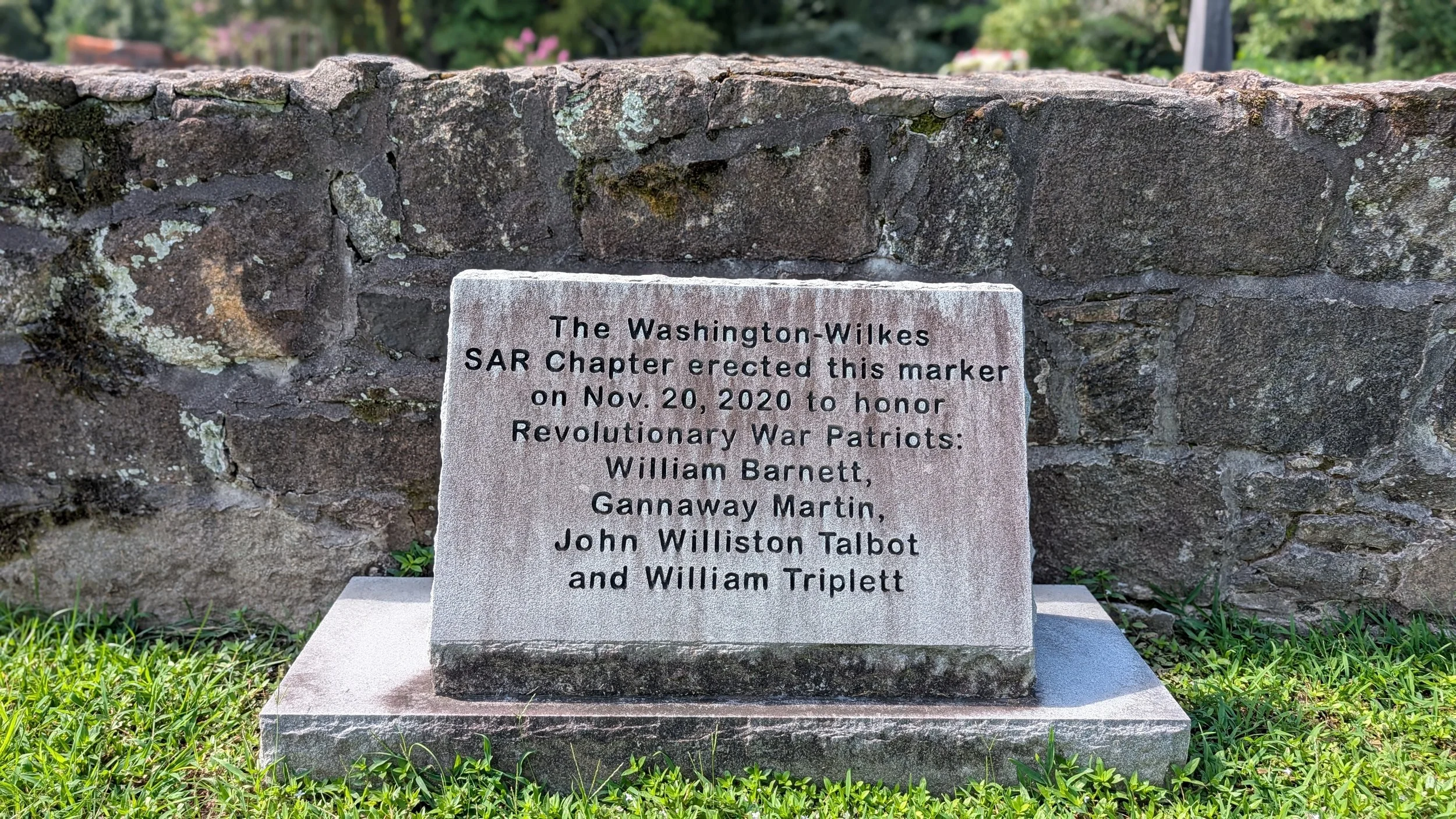
There are at least 6 known burials of Patriots from the American Revolution at Smyrna Church. Not all of their graves are marked, but the known names are: William Barnett, David Creswell, Gannaway Martin, John Williston Talbot, William Triplett.
This project is made possible by readers like you.
Your support helps to pay for website costs, gas to travel to these sites, and cleaning supplies for the veteran stones that I’m working to restore.
If you believe this work is important, your support is so appreciated!
Citations
Michal Martin Farmer, The Genealogy of the Webster, Martin, Dozier, Staples and Starke Families of Wilkes County, Georgia (Farmer Genealogy Co., 1994), p. 374.
Georgia SAR Patriot record, No. P-242093, Washington-Wilkes Chapter
FamilySearch military records (1784 voucher no. 393; 1819 land lottery record)
"Ganaway and Ann Martin" family Bible transcription, via Find a Grave (Austin Martin memorial, no. 72465397)
Find a Grave, same memorial, for Ann Martin's Upson County death and burial
Vanishing Georgia (Brian Brown), Wilkes County cemetery documentation