Francis Bradley [31/250]
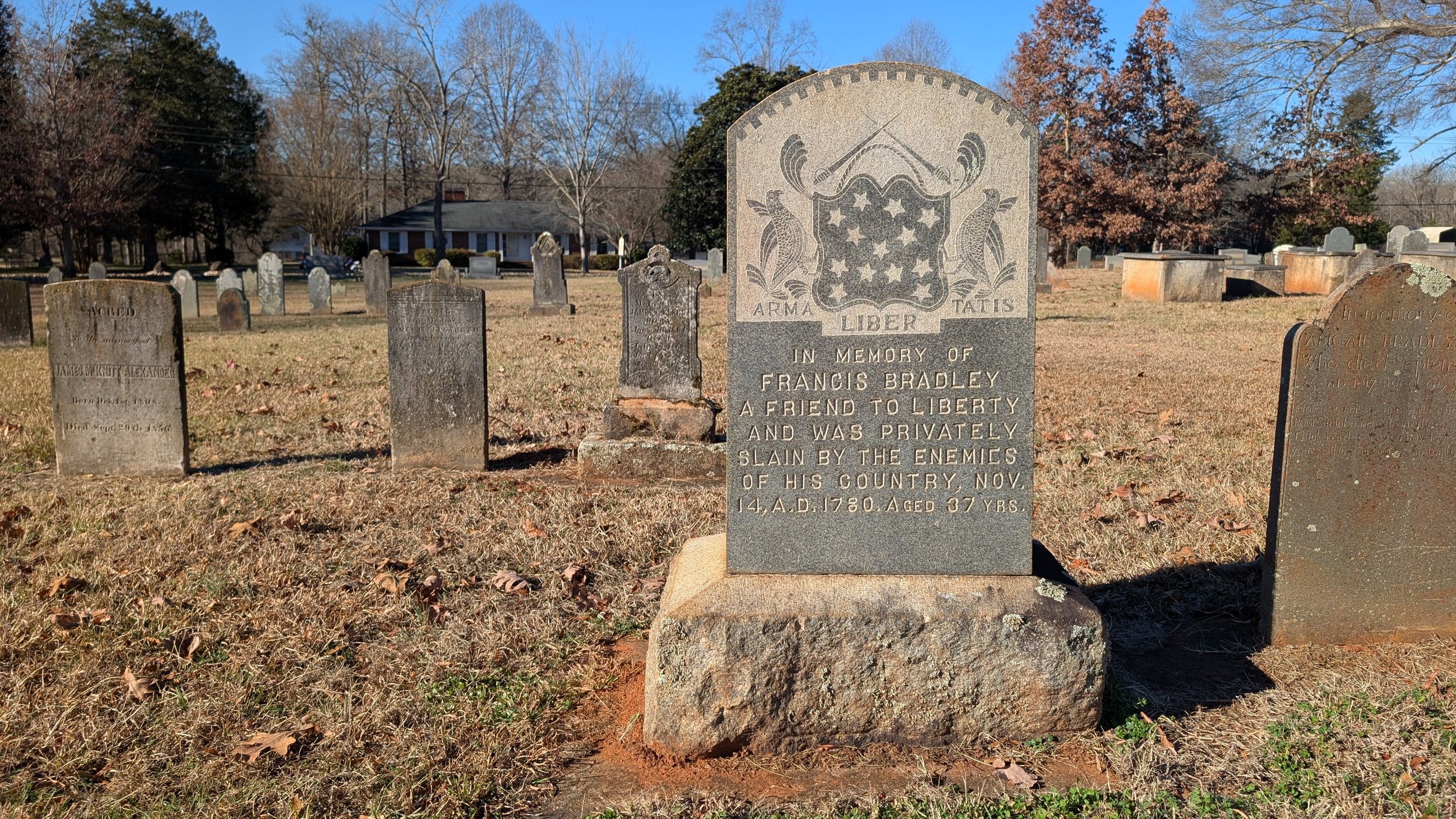
Francis Bradley (1743-1780)
Buried at Hopewell Presbyterian Church | Mecklenburg County, NC
The stone marking Captain Francis Bradley's grave at Hopewell Presbyterian Church isn't the one his family first placed there. It's a replacement, set in 1915 by three of his grandchildren, B.G. Bradley, F.W. Bradley, and McKee Bradley, all of Gastonia. The original stone, worn down after a century and a half in the Mecklenburg County weather, is kept inside the church today rather than out among the graves. It's a small detail, but it's the kind of thing I love finding in these cemeteries: proof that people have been coming back to this one grave, generation after generation, for 245 years.
That's worth sitting with for a second, because Francis Bradley's story only makes sense once you understand just how contested this particular patch of North Carolina was during the Revolution.
A Neighborhood at War With Itself
Learning about the American Revolution as a student in a classroom, you probably pictured colonists versus redcoats: a clean line between "American" and "British." But in the North Carolina backcountry, it rarely worked that way. This was civil war territory, neighbor against neighbor, where a Patriot family and a Loyalist family might live within sight of each other's front doors. Mecklenburg County, where Bradley lived, farmed, and eventually died, was one of the hottest pockets of that conflict in the entire South during this era, and Bradley's own household sat at the center of some of the county's most famous, and most disputed, Revolutionary lore.
The Mecklenburg Declaration
Bradley's wife, Abigail Alexander, was the sister of John McKnitt Alexander, a name you'll see all over Mecklenburg County if you spend any time researching this time period here. On May 20, 1775, more than a year before the Continental Congress signed the Declaration of Independence in Philadelphia, local tradition holds that a group of Mecklenburg citizens met in Charlotte and declared themselves free of British rule on their own, making North Carolina, not Massachusetts or Virginia, the first colony to formally break away. John McKnitt Alexander is remembered as the secretary who kept the minutes of that meeting.
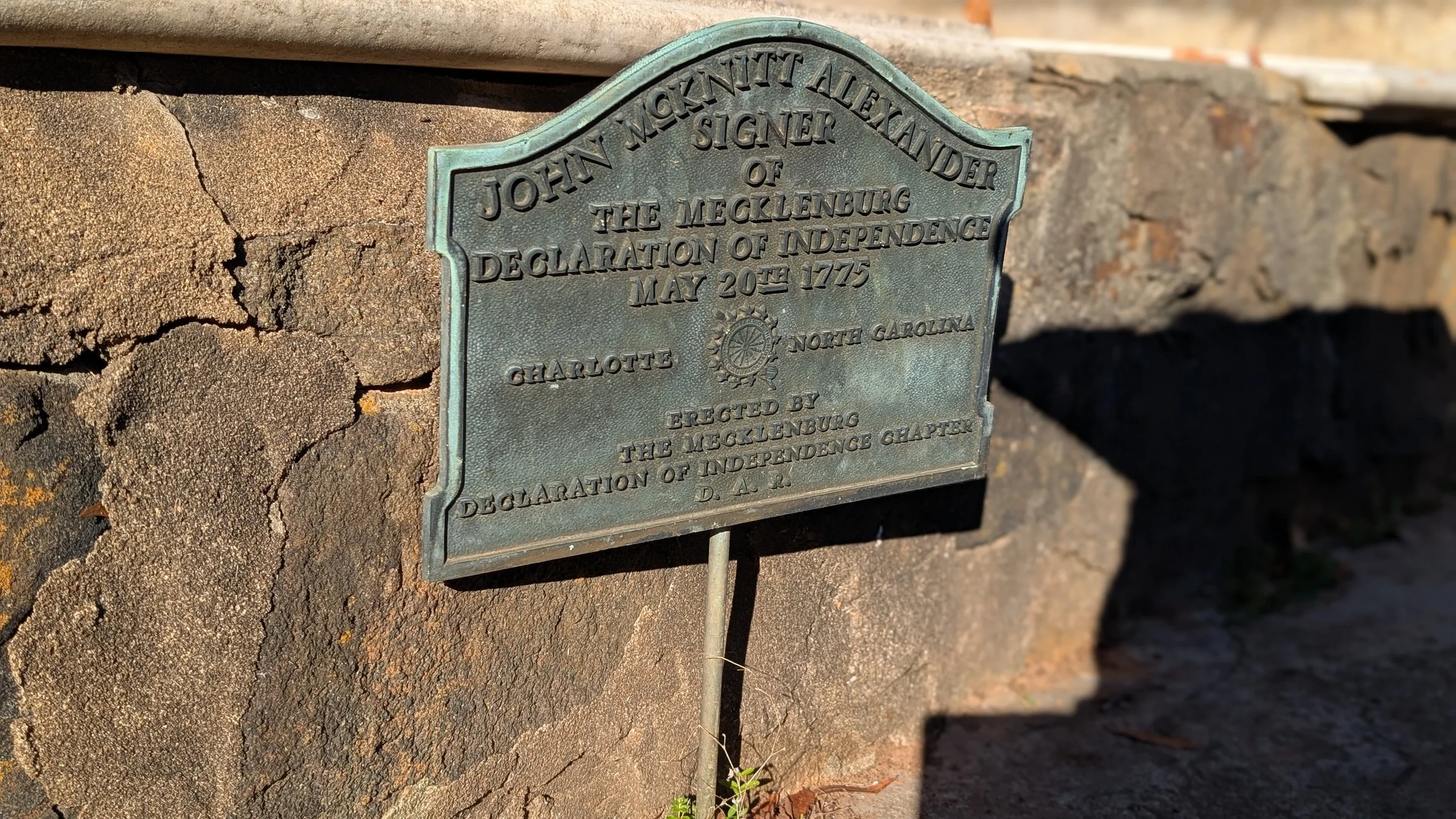
Grave of John McKnitt Alexander, brother in law of Francis Bradley, also buried at Hopewell Presbyterian Church,
Here's the catch: historians have argued about whether that meeting produced an actual declaration of independence for roughly two centuries now. What's well documented is a related set of resolutions from May 31, 1775, the Mecklenburg Resolves, which asserted a right to self-government but stopped short of a full declaration. The alleged May 20 document itself was reportedly destroyed in a fire, so no contemporary copy has ever surfaced, and what survives is mostly later recollection.
We won’t be settling that debate today, but I bring it up because it tells you something important about the world Francis Bradley actually lived in: this was a household, and a community, that believed itself to be at the leading edge of American independence a full year before it was fashionable, or safe, to say so out loud. Whatever you make of the disputed document, that conviction was real, and it shaped everything Bradley did next.
Tax Collector in a War Zone
By 1777, two years after that contested meeting, Mecklenburg's Patriots had organized their first military district, with John McKnitt Alexander in command. Francis Bradley served as the district's tax collector that year, then as tax assessor in 1778. In a county crawling with Loyalist sympathizers, funding the Patriot war effort was itself a dangerous job, and tax collectors were targets.
Bradley, by most accounts, was built for the role in more ways than one. Local histories describe him as an enormous man, "a match in bodily strength for three or four ordinary men," and a marksman good enough that his neighbors called him the Mecklenburg Marksman. He'd need both the strength and the aim before the war was through with him.
The Hornets' Nest
On October 3, 1780, Lord Cornwallis, who had occupied Charlotte just days earlier, sent Major John Doyle out with roughly 500 British troops, 60 cavalry, and 40 wagons to forage the countryside for supplies. A local boy spotted them coming and warned the Patriot militia. Fourteen men, including Francis Bradley, set up an ambush at a farm owned by the McIntyre family, north of Charlotte.
As the British loaded their wagons, someone knocked over a row of beehives, and in the chaos that followed, the Patriots opened fire from under cover, and moved their position after each volley so they appeared to be a much bigger force than they actually were. Doyle, convinced he was facing an army, ordered a retreat, leaving eight dead and 12 wounded behind and abandoning most of his wagonloads of supplies. Cornwallis and his officers came away from Charlotte calling the whole area a "hornets' nest," a nickname the city still wears proudly. Francis Bradley helped earn that nickname.
A Sudden Death
But Francis wouldn’t live to see the war's end. Six weeks after the ambush at McIntyre's farm, on November 14, 1780, Bradley walked out from his home to round up some cattle. He came across four Loyalist men hiding in the woods nearby, apparently deserters from a Tory regiment under Colonel Samuel Bryan. He confronted two of them and wrestled both to the ground. But two more had been lying out of sight, and they came up behind him. One grabbed Bradley's own gun, which he'd set down in the struggle, and shot him dead.
Depositions taken years later in an unrelated estate dispute name the men involved: Godfrey Ridge and two brothers, Abraham and Jeremiah Combs.
A Dark Legend of Retribution
From there, this story takes an even darker turn; however, this is all legend with no verifiable documentation that I have found so far.
The story goes that Bradley's rifle, made for him by his brother-in-law Isaac Price, a gunsmith who later served as an armorer under General Thomas Sumter, had Bradley's name engraved on the barrel. That rifle was stolen the day of the murder. According to the family account, Price himself hunted down the last of the four killers years after the war had ended, tracking him to the mountains of Burke County and identifying him by that very rifle.
What happened next, in the version passed down through the family, was not a trial, but an act of vengeance, carried out quietly, by Price and a handful of trusted friends. According to the story, they buried the body face down so that "digging would only take him deeper into the earth."
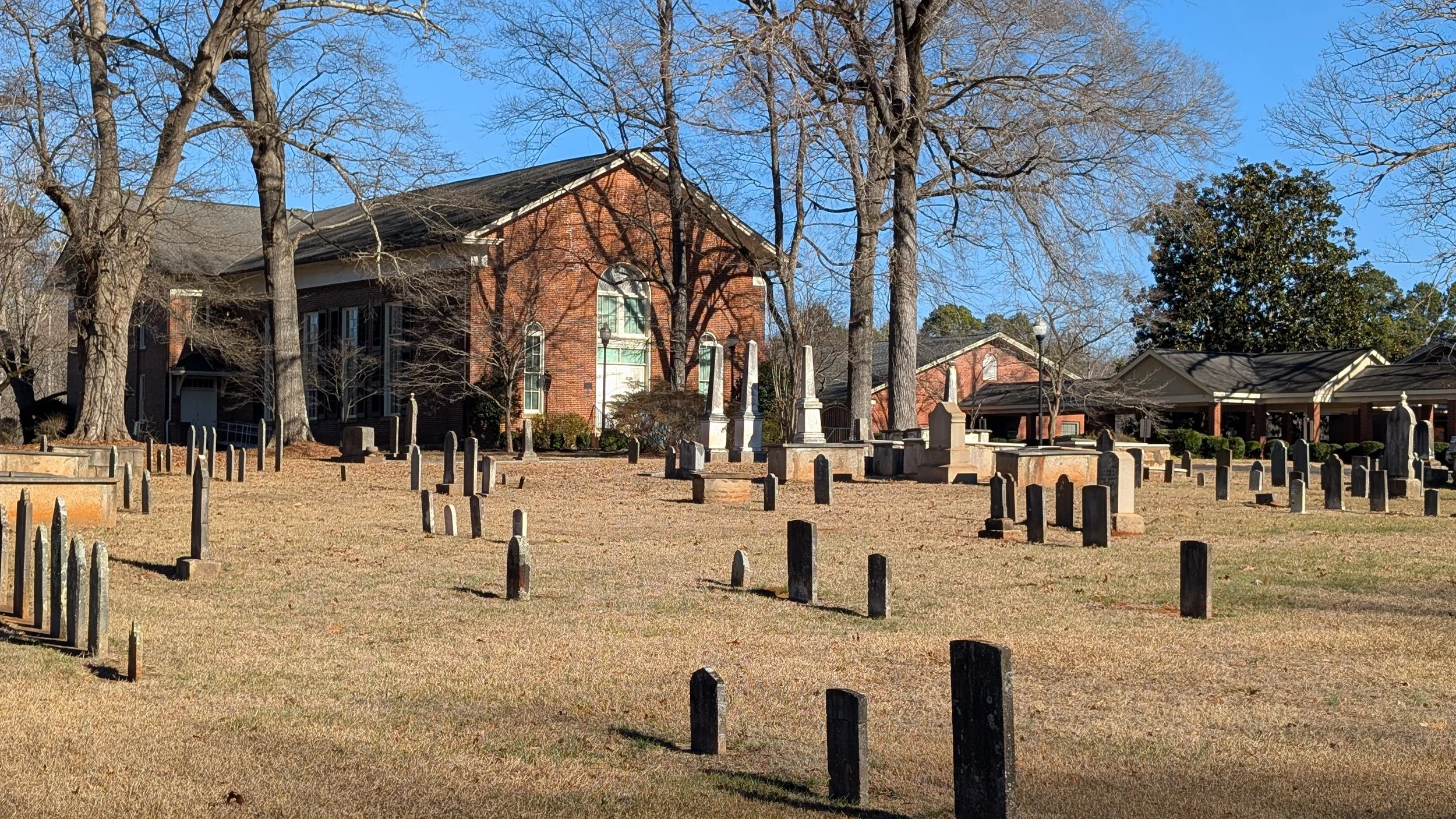
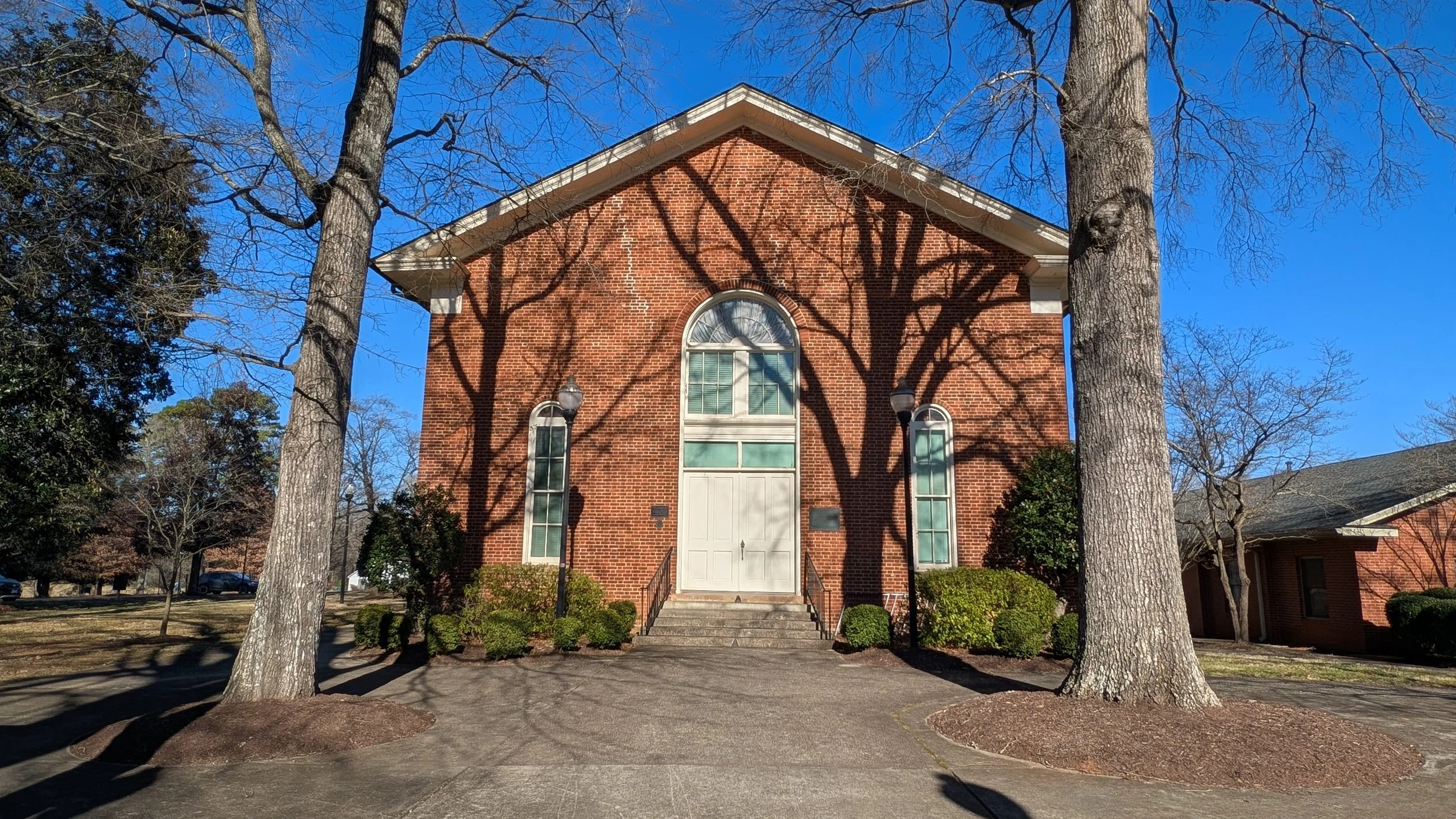
Hopewell Presbyterian Church, Huntersville, North Carolina
A Cemetery Full of Patriots
Which brings us back to where we started: Hopewell Presbyterian Church itself. Bradley isn't the only Revolutionary figure resting here. The church's own 2017 war memorial names 10 Patriots connected to this single congregation, including Brigadier General William Lee Davidson, who was killed a few months after Bradley at the Battle of Cowan's Ford, and Bradley's own brother-in-law, John McKnitt Alexander.
That concentration of Patriots buried here reminds us that the Revolution didn’t just happen in famous places like Lexington, Yorktown, and Valley Forge. But in communities like this, where the war showed up in the churchyard, on the farms, and at the front door of the people who sat in the pews together every Sunday.
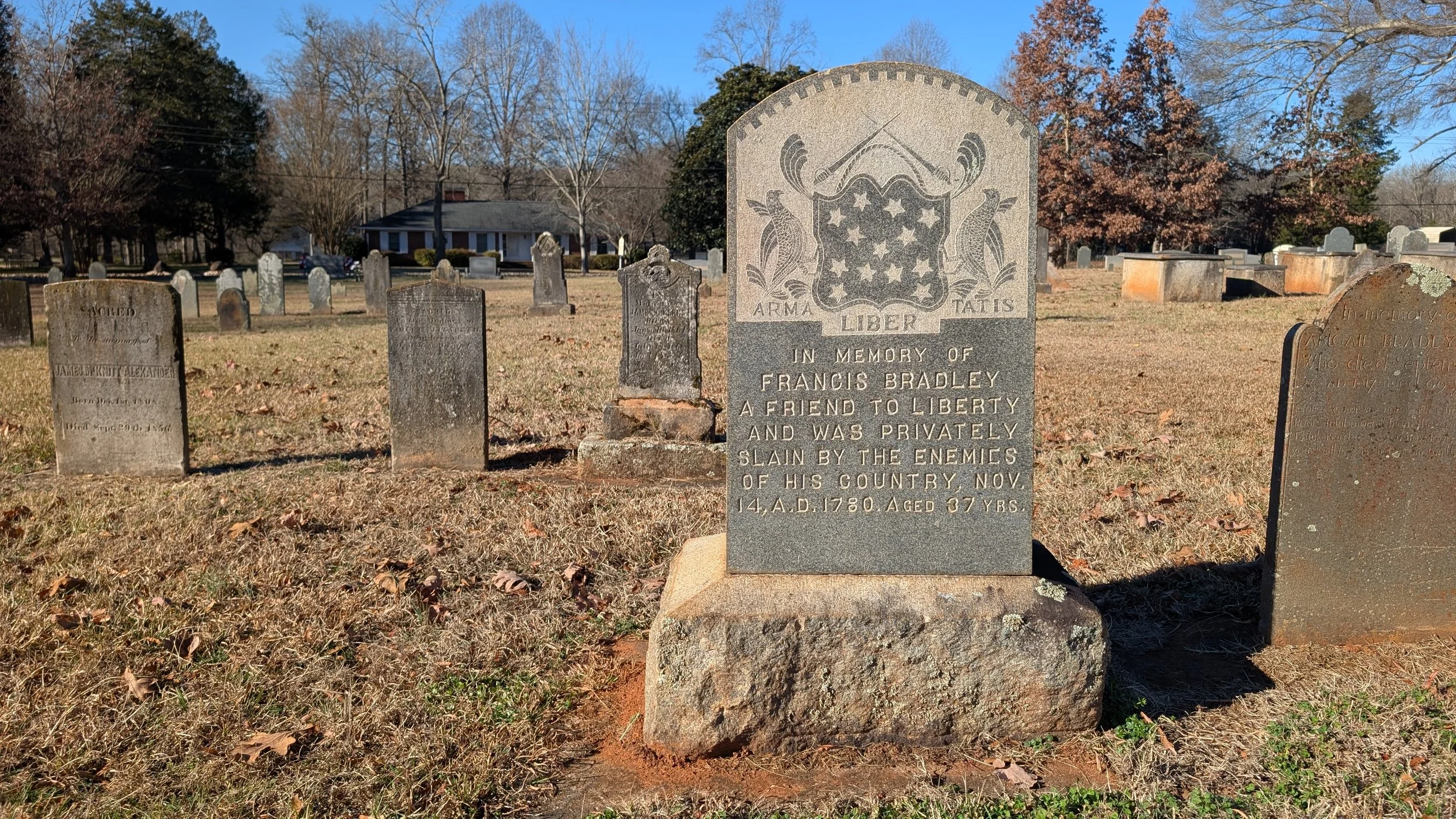
Francis Bradley’s replacement stone, erected in 1915 but his grandchildren to replace his original stone.
A Grave That Isn't Quite What It Seems
The stone marking Captain Francis Bradley's grave at Hopewell Presbyterian Church isn't the one his family first placed there. It's a replacement, set in 1915 by three of his grandchildren, B.G. Bradley, F.W. Bradley, and McKee Bradley, all of Gastonia. The original stone, worn down after a century and a half, is kept inside the church today rather than out among the graves.
This project is made possible by readers like you.
Your support helps to pay for website costs, gas to travel to these sites, and cleaning supplies for the veteran stones that I’m working to restore.
If you believe this work is important, your support is so appreciated!
Citations
Hershel Parker, "Avenging Francis Bradley, the Mecklenburg Marksman: A Family Story," Journal of the American Revolution, June 26, 2017.
Hershel Parker, "The 'Battle at McIntire's Farm': Joseph Graham as Historian of the Revolution," Journal of the American Revolution, May 11, 2017.
Charles William Sommerville, The History of Hopewell Presbyterian Church (Charlotte: Hopewell Presbyterian Church, 1939).
Cyrus L. Hunter, Sketches of Western North Carolina (Raleigh, 1877).
SAR Patriot Database, Record P-119636, Francis Bradley.
Find a Grave Memorial #5026589, Captain Francis Bradley.
Charlotte-Mecklenburg Historic Landmarks Commission, survey report, Hopewell Presbyterian Church.