Capt. Bernard Hooe, Sr. [7/250]
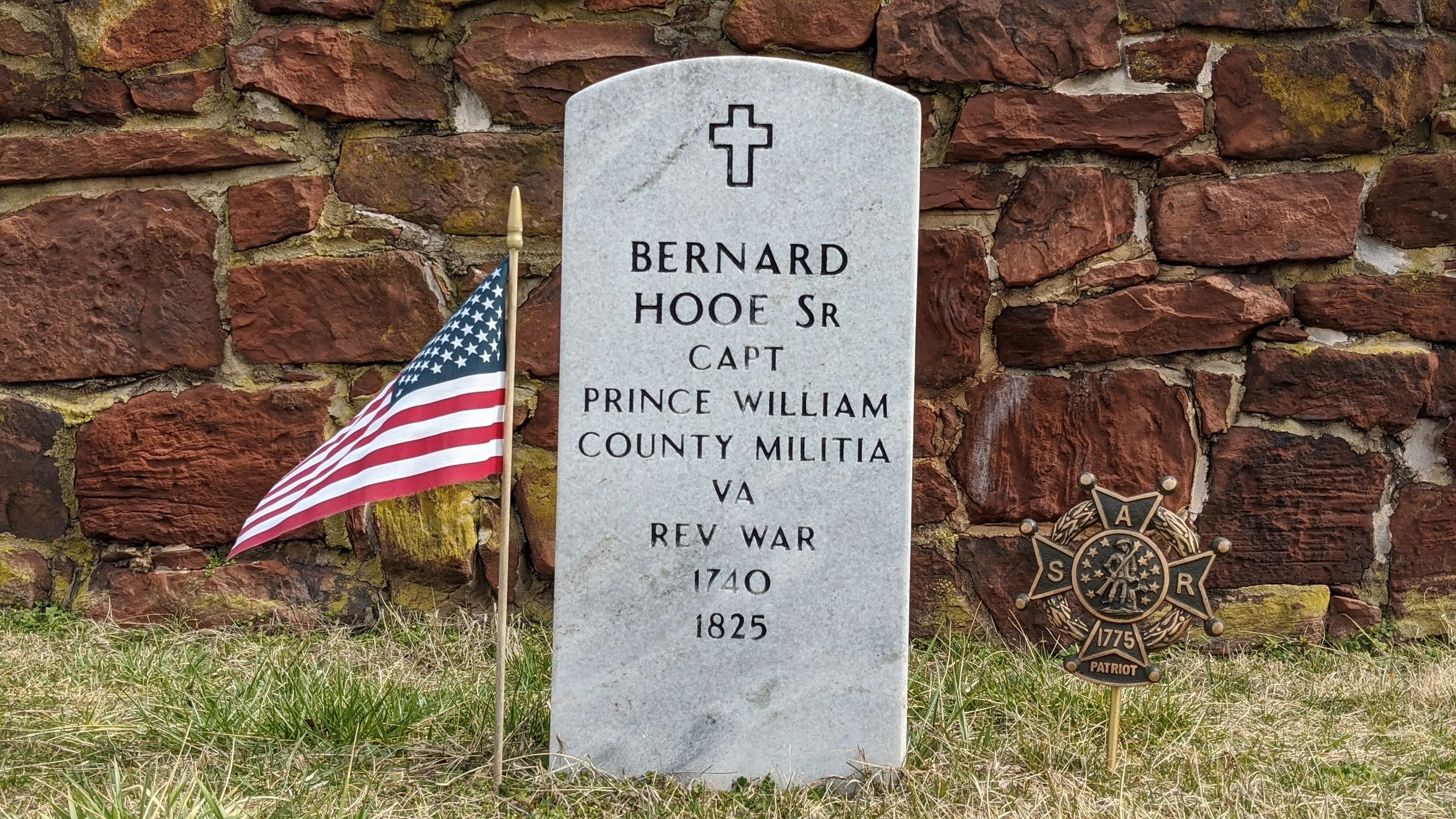
Capt. Bernard Hooe, Sr. 1740-1825
Buried at Chinn Ridge- Manassas Battlefield, Prince William County, Virginia
Situated along a ridge amid the historic battlefields of Manassas, Virginia, lies the grave of Capt. Bernard Hooe, Sr. This is the seventh grave featured in the 250 Graves project, which shares the stories of 250 individual lives connected to the American Revolution in recognition of America’s 250th birthday.
The Hooe family cemetery at Chinn Ridge, where he is buried, is a quiet place now, but that has not always been the case. During the Civil War, this land sat at the center of the First and Second Battles of Manassas. Long before that, however, it was the plantation home of Bernard Hooe, Sr., a veteran of the American Revolutionary War and one of the most prominent figures in this part of Virginia during the Revolutionary era and early Republic.
Early Life
Bernard Hooe was born in October 1740 in Stafford County, Virginia, the son of Howson Hooe and Anne Francis Harris. His family’s connection to this land predates the American Revolution by decades. Anne Harris was the daughter of Nathaniel Harris, who obtained the original tract in 1717. In time, Howson and Anne deeded the property to their son Bernard, establishing the foundation for what would become one of the most prominent plantations in this part of Prince William County, Virginia.
The Hooe family was also politically engaged before open rebellion against Britain. In 1776, Howson Hooe served on the Committee of Correspondence and Safety, a revolutionary body tasked with enforcing resistance to British authority and coordinating Patriot activity at the local level. Bernard came of age in this politically charged environment, watching as his father and family grappled with the questions of the era. He went on to become a planter, lawyer, and militia officer.
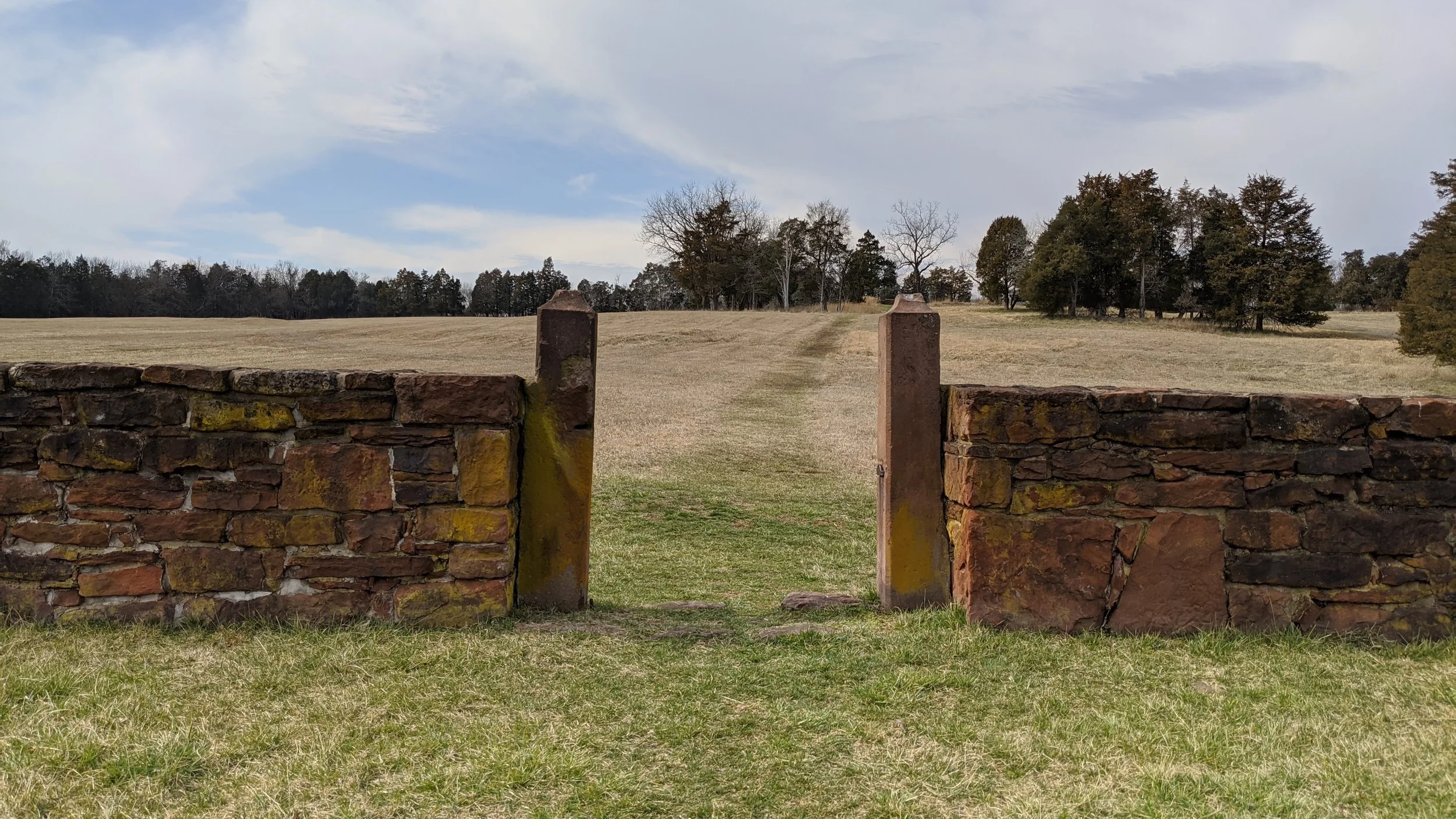
The view from the Hooe Family Cemetery towards the land where their family plantation house, called Mayfield, stood.
Revolutionary Service and Public Life
During the American Revolutionary War, Bernard Hooe served as a captain in the Virginia militia under Col. William Grayson. His role placed him among the local leaders who supported the Patriot cause and helped maintain defense and order in northern Virginia during a turbulent period.
After the war, Hooe emerged as one of Prince William County’s most influential citizens. By the late 18th century, he served as a justice of the peace, overseer of the poor in Dettingen Parish, trustee of the town of Haymarket, and later as county sheriff. These offices placed him at the center of legal, civic, and social governance in the county.
He was also a family man, raising children with his wife, Margaret Pratt Hooe, whom he married in 1771. Together, they had at least four children: Thomas, Lucy, Eliza, and Bernard Jr.
Mayfield Plantation
In 1809, Bernard Hooe built a substantial two-story plantation house on the land deeded to him by his parents. He called the estate Mayfield. The house was large and imposing, reflecting both his wealth and status. At its height, Mayfield stood at the center of an extensive agricultural operation and, like many plantations in early Virginia, was sustained by enslaved labor. Records indicate that dozens of enslaved men, women, and children were held by Bernard Hooe and forced to labor across thousands of acres that he had acquired by this point.
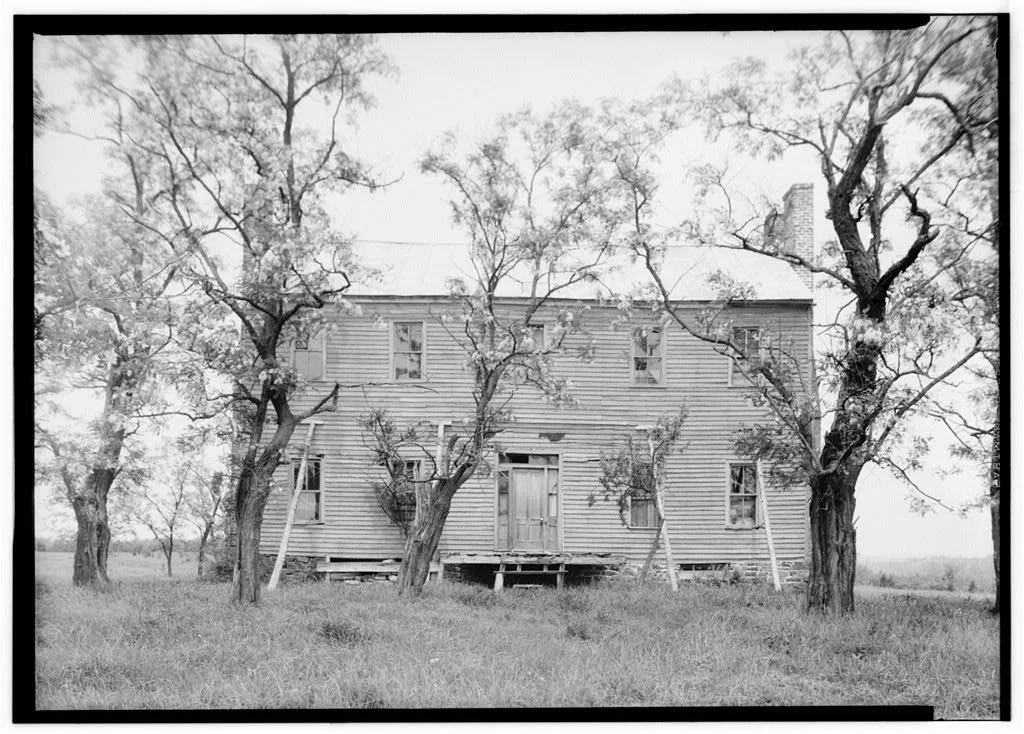
Mayfield Plantation, later called Hazel Plain, as it looked in the 1930s. Photo courtesy of the Library of Congress.
Mayfield Gets a New Name
By the early 1820s, many of the enslaved people formerly associated with the estate were transferred to another plantation owned by Hooe’s son-in-law, and dependency sites at Hazel Plain were abandoned. Large-scale plantation operations began to decline following Bernard Hooe’s death, though agriculture continued on a reduced scale.
Bernard Hooe died in 1825, leaving more than 8,000 acres to his wife, Margaret Pratt Hooe, and to his daughters, Elizabeth Thacker Hooe and Lucy Hooe Buckner. In 1828, the plantation passed fully to his daughter, at which point the estate became known as Hazel Plain. This change in name marked a generational transition, though the land remained productive.
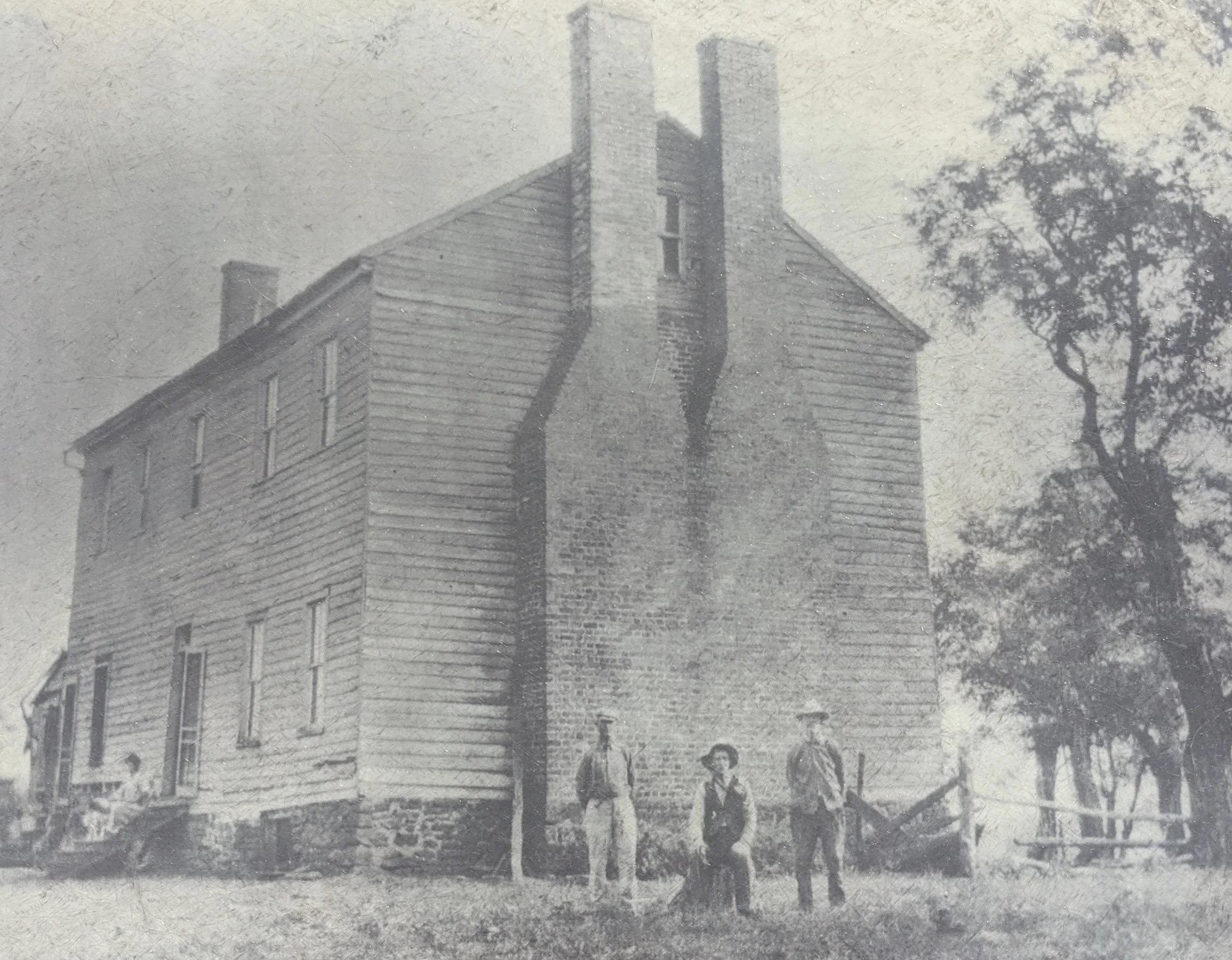
Hazel Plain Plantation (formerly Mayfield) as it looked in the 1890s.
Hazel Plain Plantation
By the 1850s, the plantation house was once again occupied. In 1853, a Hooe descendant, William T. Downman, sold Hazel Plain to Benjamin Chinn. By that time, the property had been reduced to roughly 550 acres, still substantial, but only a fraction of its former size.
When fighting reached this property during the Civil War, Hazel Plain Plantation lay at the center of the First and Second Battles of Manassas. Many of the outbuildings were destroyed, and the plantation house was damaged but initially survived. When the property was acquired by the federal government in the 1930s to create Manassas Battlefield Park, there were plans to restore the plantation. Those plans were halted when World War II broke out. The house fell into a deteriorated condition, and in the 1950s it was decided to raze the structure, as it was too far gone to be saved.
Two chimneys and the stone foundation were left standing at the site. When one of the chimneys later collapsed during high winds, the remaining chimney was dismantled for safety. Today, all that remains of Bernard Hooe’s Mayfield Plantation, later known as Hazel Plain, are the stones that once formed the foundation of the home.
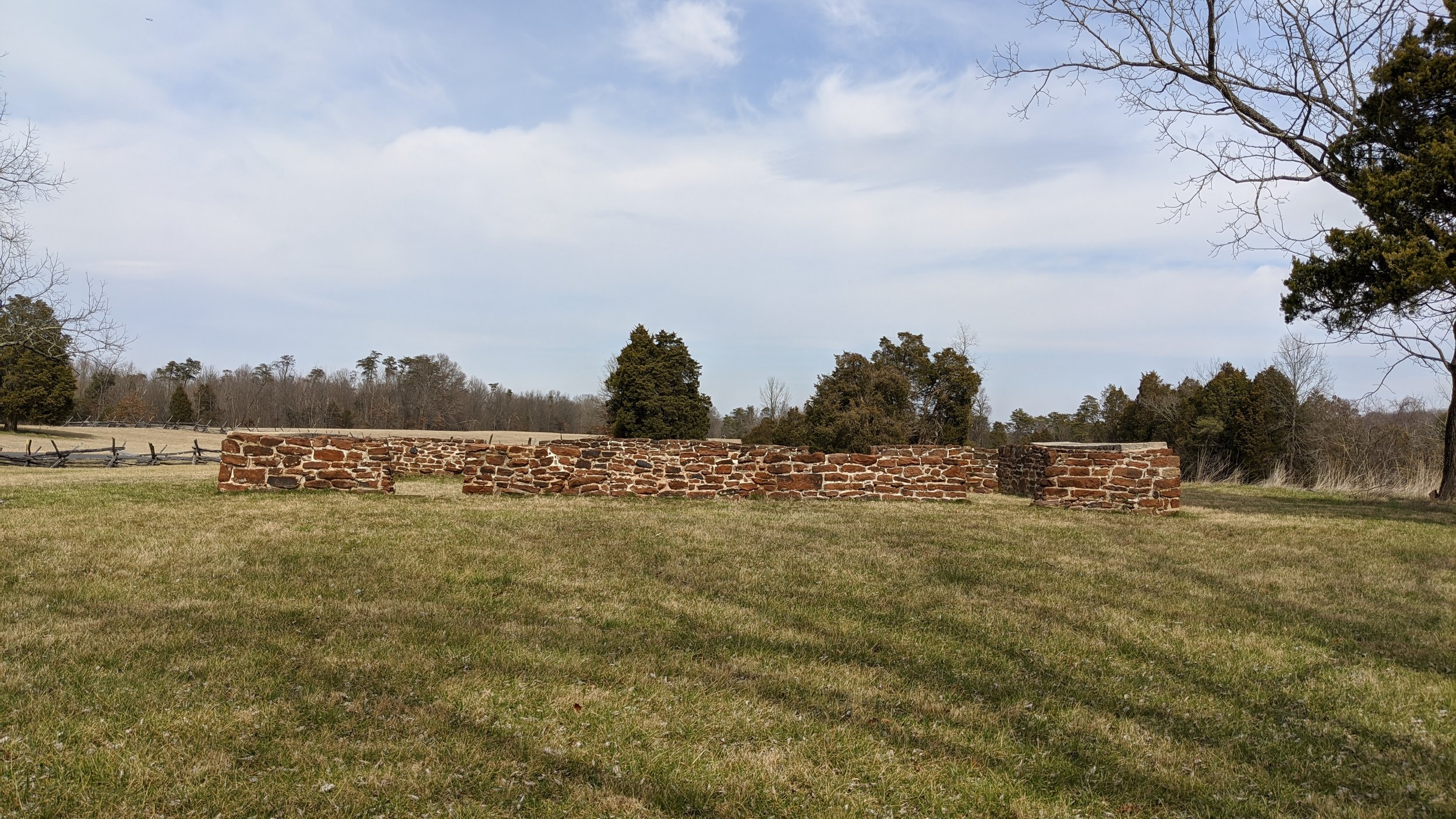
The stone foundation is all that remains of Hazel Plain Plantation.
Remembering Bernard Hooe, Sr.
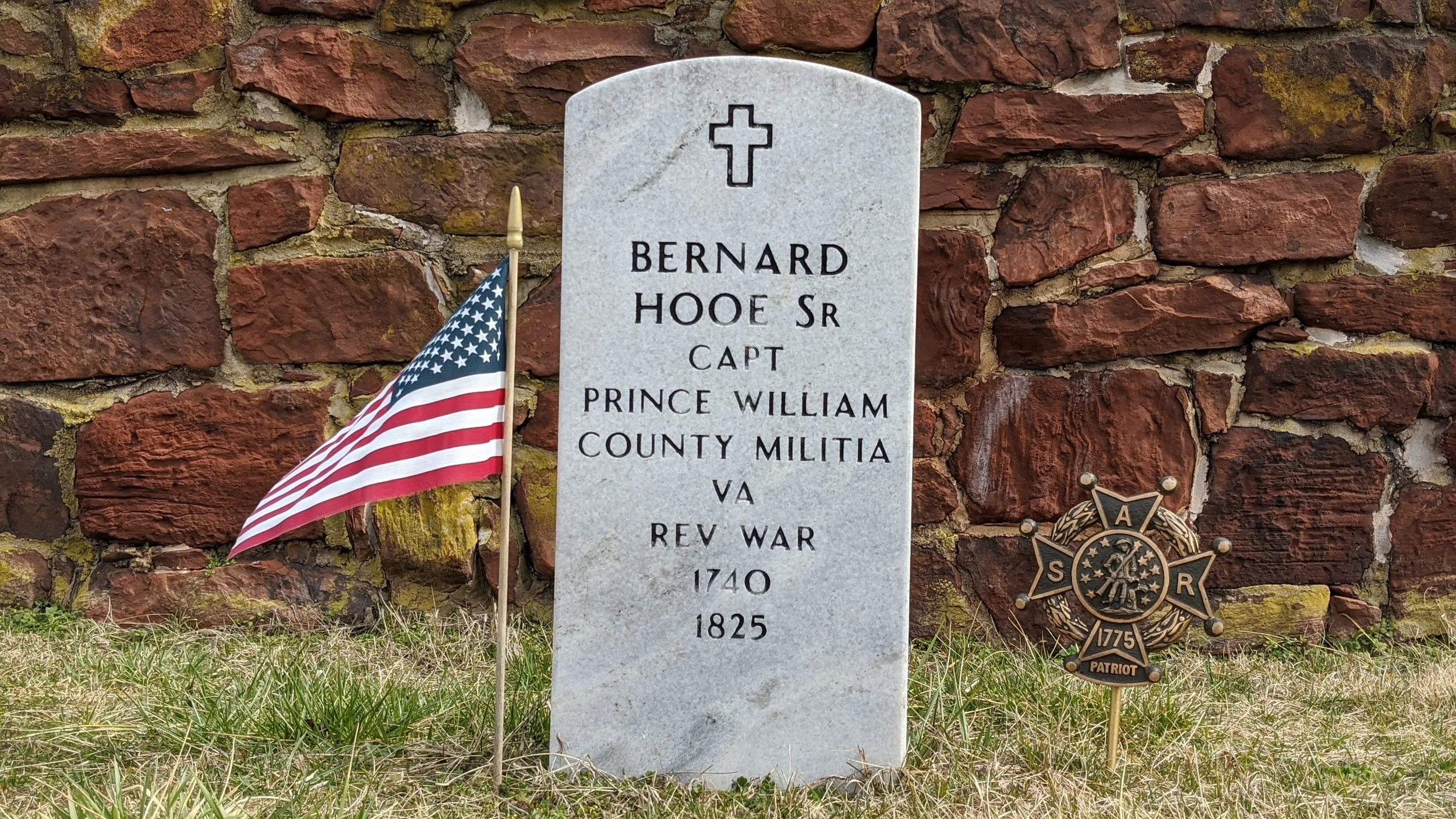
Nearby, Bernard Hooe, Sr., rests on the land that shaped his life, preserved today within Manassas National Battlefield Park at Chinn Ridge. His story is layered and complex, reflecting the service, as well as the contradictions of the Revolutionary generation.
This project is made possible by readers like you. Please consider contributing if you’re able!
This project is made possible by readers like you.
Your support helps to pay for website costs, gas to travel to these sites, and cleaning supplies for the veteran stones that I’m working to restore.
If you believe this work is important, your support is so appreciated!
Citations
National Park Service (Manassas National Battlefield Park). “Archeological Overview of Manassas National Battlefield Park.” NPS (webpage).
Prince William County, Historic Site Documentation. Chinn Home Site (76-209) Survey (PDF).
Prince William County, Historic Site Documentation. Hazel Plain (76-0209) Property History (PDF).
Virginia Department of Historic Resources / National Register of Historic Places. Manassas Battlefield Historic District Nomination (PDF).
U.S. Government Publishing Office, Coming to Manassas (PDF). Published November 12, 2025.
University of Pennsylvania Libraries, Kislak Center for Special Collections. “Hooe Family Papers” (Context for the Hooe family’s Hazel Plain plantation and documentation relating to enslaved African Americans connected to the family in the 19th century.)
Historic Prince William (HistoricPrinceWilliam.org). Government, 1779–1863 (Committee of Safety reference) (Provides documentary context for Prince William’s revolutionary-era local governance and names listed in committee material.)
Library of Virginia. “A Guide to the Records of the Committee of Safety, 1774–1776”