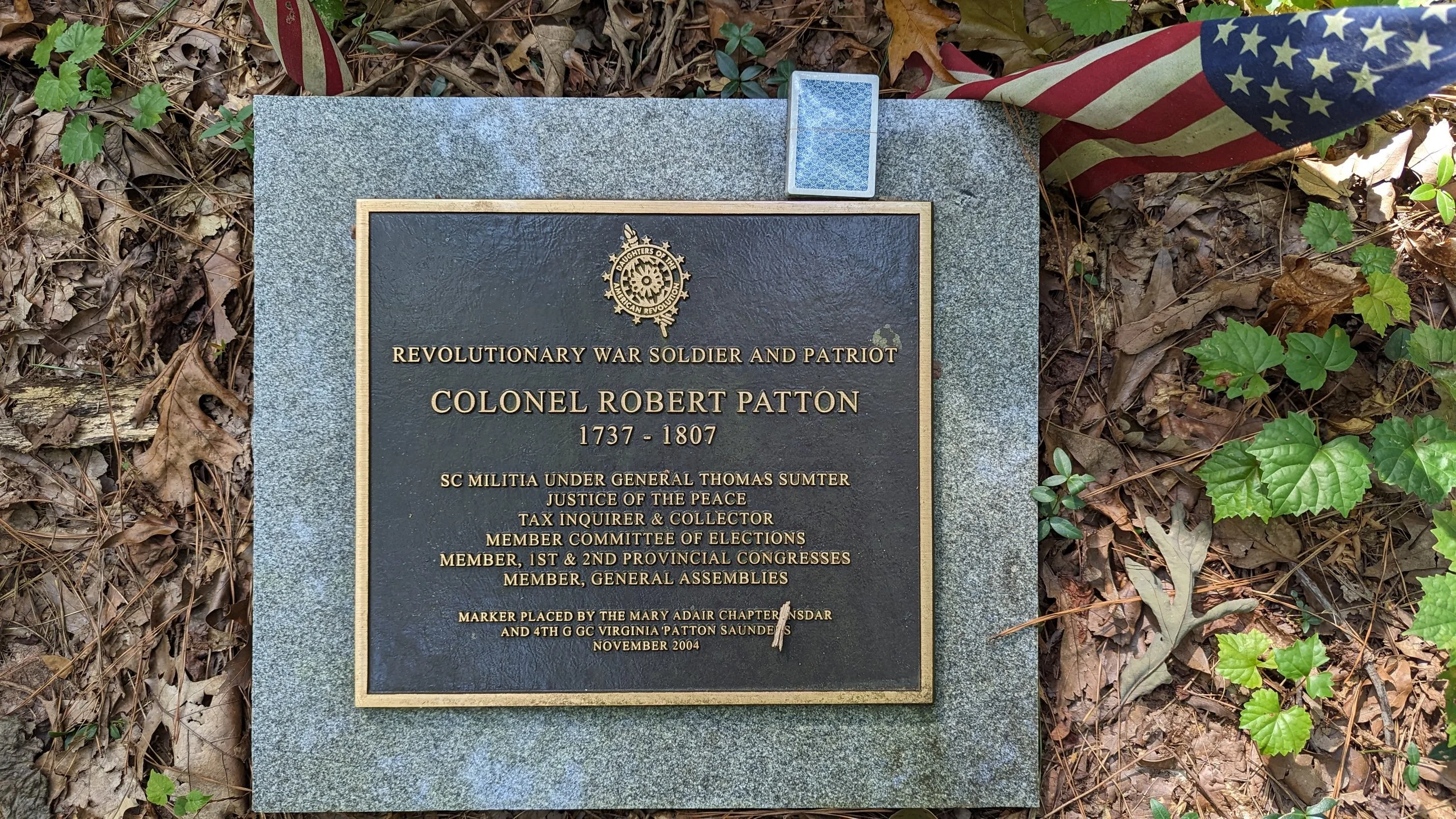
Robert Patton (1737-1807) & Sarah Farris Patton (1744-1829)
Old Stone Cemetery | Chester County, South Carolina
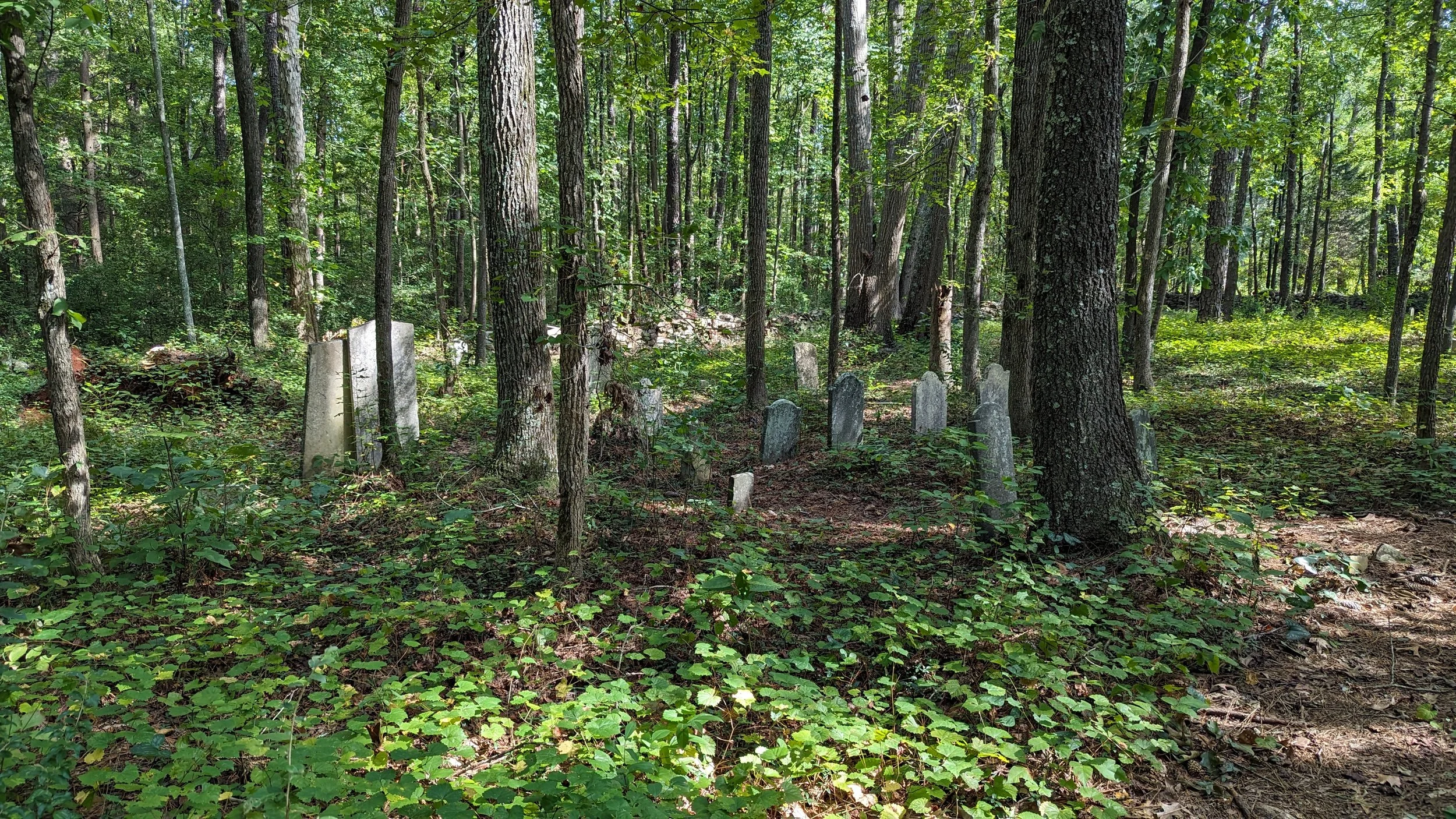
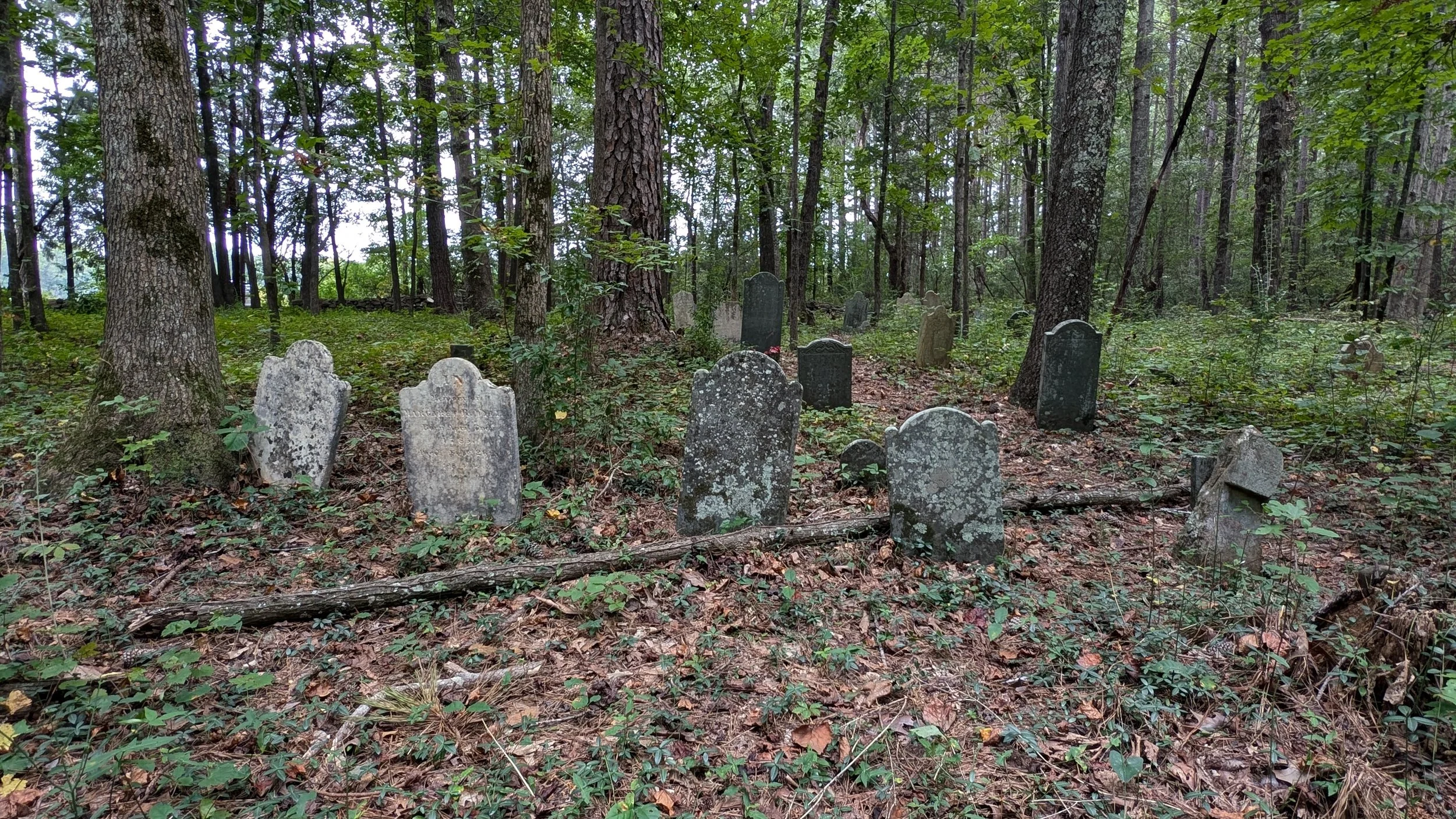
There is a small, quiet cemetery tucked into the woods along the Catawba River near Landsford, South Carolina, enclosed by an old stone wall that adds to an almost ancient ambience. The trees have all but taken over the burying ground, and periwinkle blankets nearly every inch of earth, while brambles and vines seem to conspire to conceal the history that lies underneath. Today, this place is known as the Old Stone Cemetery, but for generations before that, neighbors knew it as the Patton Graveyard, named for the man buried inside its walls: Colonel Robert Patton, a Patriot who served the cause of American independence.
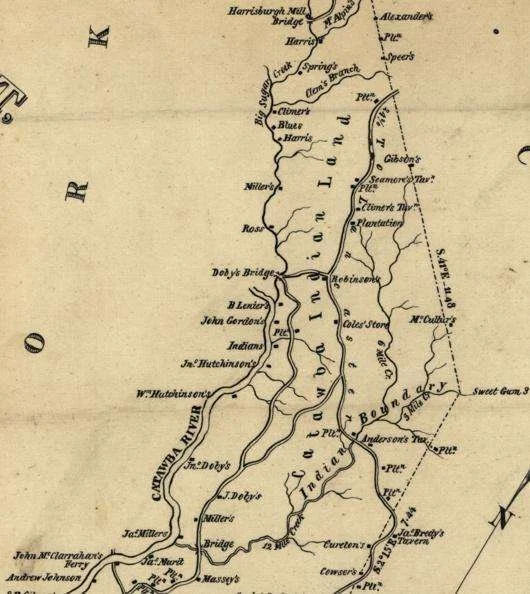
Detail from Lancaster District, South Carolina Map showing the Catawba River
Courtesy of the Library of Congress
Life on the Catawba River
Robert Patton was born on October 21, 1737, in Pennsylvania, the son of Matthew Patton. Like many Scotch-Irish families, the Pattons came to America by way of Ulster, Ireland, arriving in Pennsylvania, where they lived for a time, before following many of their kinsmen down the Great Wagon Road, from Pennsylvania to the Virginia valley, and finally to the Carolina backcountry. Robert’s father, Matthew, had settled in the Landsford area by the early 1750s, when North Carolina still claimed the territory, and his land grants were for property then considered part of Anson County, North Carolina. By the time the American Revolution showed up in the backyard, the Patton name was already established on the land along this stretch of the Catawba River.
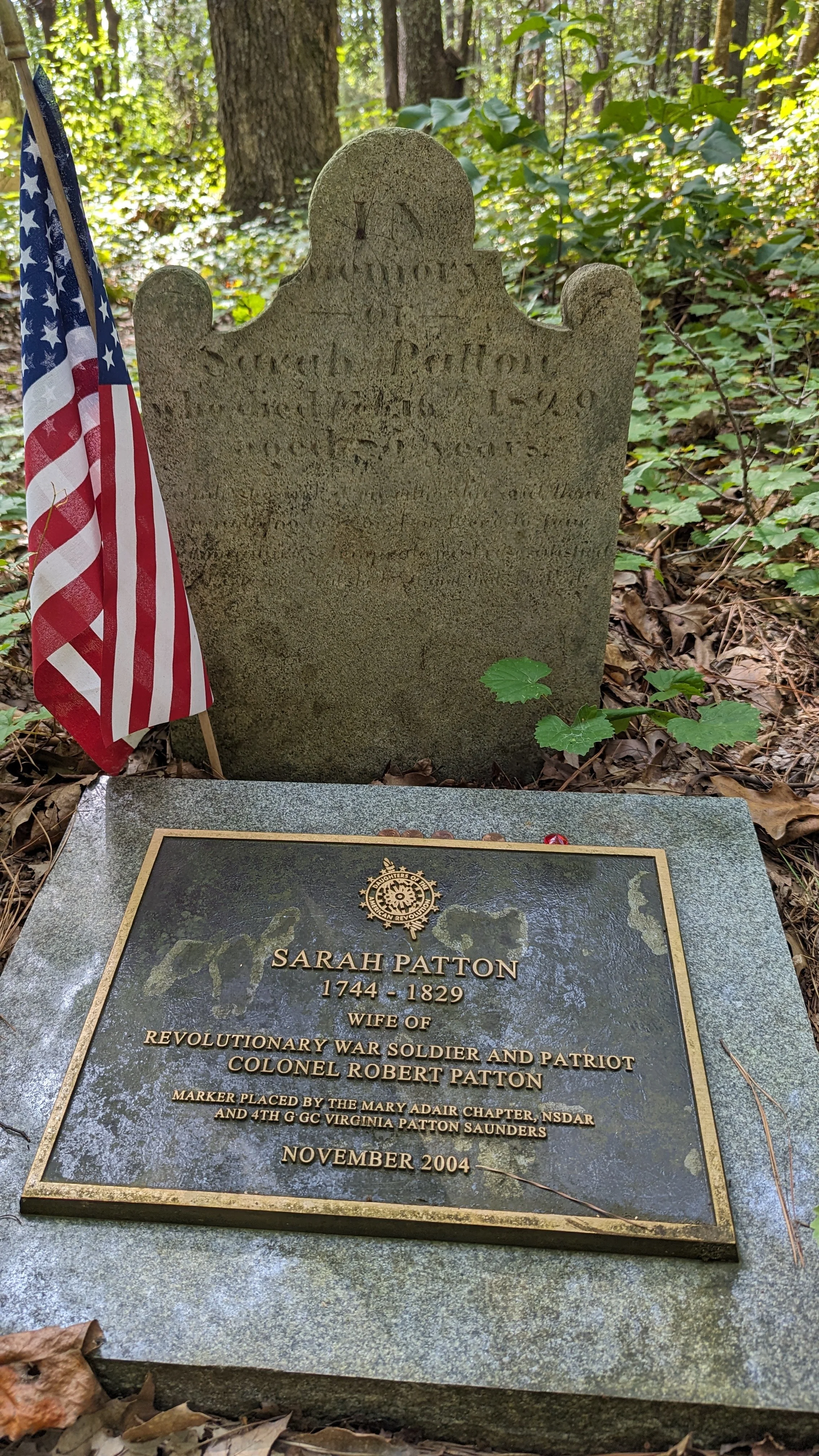
Robert Patton married a woman named Sarah Farris* (1744-1829), and the next generation of Pattons began here. Robert and his wife, Sarah, raised their family along the same stretch of river.
Patton family genealogies name nine children: Thomas, James, Jane, John, Joseph, Margaret, Elizabeth, Agness, and David.
*Sarah’s maiden name is uncertain. Some online family trees say Farris, while one family history suggests it might be “Strain” but adds a question mark. If you can clarify this, please email me at kelly@theforgottensouth.com.
The Revolution Comes to the Backcountry
In the Carolina backcountry, the Revolution was also a civil war, and Robert Patton was in the thick of it. A pension deposition from fellow Patriot Jacob Patton places Colonel Robert Patton on the road in June of 1780, traveling with Captain John Walker to join the American army. By the time they reached Mecklenburg County, North Carolina, roughly 400 men had gathered, and they marched under General Thomas Sumter toward Ramsour’s Mill, arriving after the fighting was over. At Ramsour’s Mill, near present-day Lincolnton, North Carolina, Patriot militia had defeated a larger Loyalist force on June 20, 1780, in a battle that pitted neighbors against neighbors.
The marker at his grave adds more to the story of Robert Patton’s service during the campaign for American independence, listing the roles he held: militia service under Sumter, justice of the peace, tax collector, and service in South Carolina’s early provincial congresses and general assemblies.
The Lives Behind the Land
Landsford, where the Pattons owned large tracts of land, takes its name from a ford: a rocky shoal where the Catawba River was shallow enough to cross. Native people used the crossing long before settlers came, and it became an important crossing for the Scotch-Irish families who traveled by wagon from Pennsylvania and settled in this part of Chester County in the 1750s and 1760s. But the same rocks that made the river passable made it hard for boats, so getting crops and goods downstate meant rough wagon roads. During the Revolution, both Patriot and British armies used the ford. The solution to the shoals came after Robert’s death: a canal around the rapids, designed by Robert Mills and built from 1820 to 1823 by enslaved laborers and skilled stonemasons. It was never a success, and by about 1840 its traffic had stopped. Sarah, who died in 1829, lived to see it open.
Land on that scale took labor, and the 1790 census appears to list Robert Patton’s household in York County with 15 enslaved people. He died in late 1807 or early 1808 (sources disagree), and his will was probated on January 9, 1808. It left Sarah the plantation for her lifetime and named ten enslaved people: Jame, Ben, Tom, Luce, Betty, Mary, Serah, Tilda, Fanney and Catto (spellings as transcribed; I’m confirming them against the original will).
The Patton Family Cemetery
When Robert Patton died, he was buried at Landsford in the burying ground that came to be known as the Patton Graveyard, in tribute to him. Sarah is buried there too. She died in 1829, some 21 years after him. In 2004, the South Carolina Sons of the American Revolution placed dedication plaques at both of their markers, and the Mary Adair Chapter of the Daughters of the American Revolution, with a Patton descendant, erected a marker honoring his service.
The cemetery sits within Landsford Canal State Park, managed by the South Carolina Department of Natural Resources. There are more than 80 markers on site, including Revolutionary War veterans and several Confederate soldiers, though many of the stones are broken or displaced. I haven’t yet been able to identify where the people enslaved by the Pattons were buried. It’s possible they rest just outside the stone wall, since enslaved burial grounds were often separate and unmarked.
I’m not sure when the name was changed, but today, the cemetery is known as the Old Stone Cemetery, for the historic stone wall that surrounds the burial grounds.
Patriots in the Graveyard
If you go searching for the oldest graveyards along the North and South Carolina state line, you will find countless stories of Patriots like Robert, waiting to be found. But these stories, just like Patton’s, don’t fit neatly on the marker at his grave, which is why I’m glad to have this space to share more about his life and contributions to the cause of American independence.
This project is made possible by readers like you.
Your support helps pay for website costs, gas to travel to these sites, and cleaning supplies for the veteran stones that I’m working to restore.
If you believe this work is important, your support is so appreciated!
Can’t give right now? Sign up for the newsletter and share these stories with a friend.
Sources
Jacob Patton, pension application S17618, Southern Campaigns American Revolution Pension Statements, revwarapps.org.
William Boyce White Jr., "A Genealogical Outline of the Patton Family of York, Chester, and Lancaster Counties, South Carolina," Bulletin of the Chester District Genealogical Society, vol. 14, no. 2 (June 1991).
Historical Marker Database, "Colonel Robert Patton," hmdb.org, marker 13767.
R. P. Stephen Davis Jr. and Brett H. Riggs, "Finding Tivoli: An Archaeological Search for William Richardson Davie's Home at Land's Ford, Chester County, South Carolina" (UNC Research Laboratories of Archaeology, 2004).
Find a Grave, memorial 5597483, Col. Robert Patton, Old Stone Cemetery, Fort Lawn, South Carolina.
SC Picture Project, "Old Stone Cemetery," Chester County, scpictureproject.org.
1790 U.S. Census, York District, South Carolina, and will of Robert Patton, probated January 9, 1808 (as transcribed in WikiTree, Patton-654; original not yet pulled)