Peter Francisco [26/250]
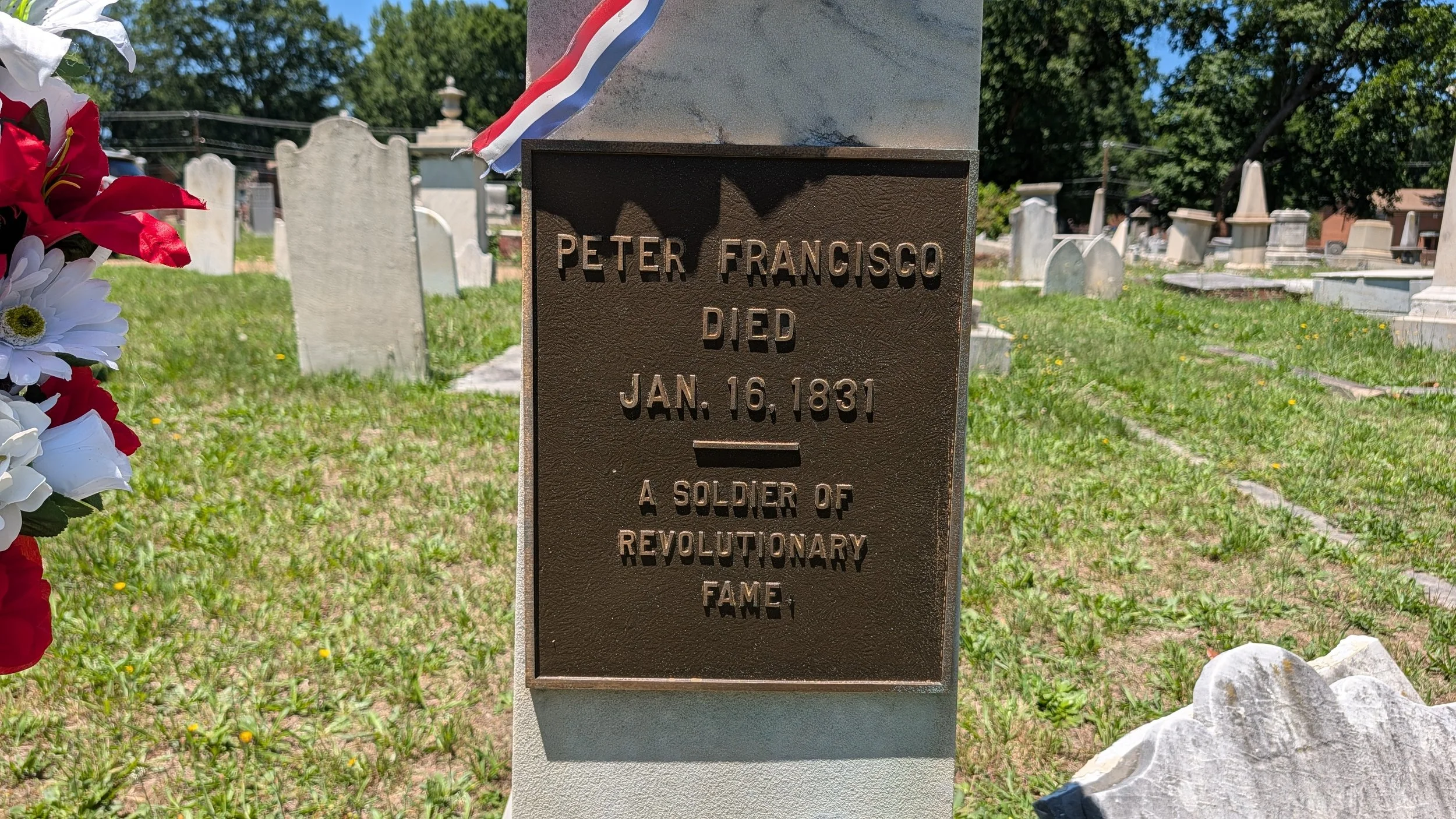
Peter Francisco (1760-1831)
Buried at Shockoe Hill Cemetery, Richmond, Virginia
I had read his name mentioned here and there, the "Virginia Giant" Peter Francisco, but I had no idea just how interesting his story was until I visited his grave in Richmond for this project and started to unravel the documentation on his life. His story might be the most fascinating one I've come across yet.
The documentation tells us that this towering figure was present at some of the most important battles of the American Revolution: the Battle of Brandywine, the Battle of Germantown, fought at Valley Forge with George Washington, the Battle of Monmouth, the Battle of Camden, and the Battle of Guilford Courthouse. (I'm tired just typing all of those out. Can you imagine how tired he must've been from riding all over the colonies?)
His military service is well documented, but other parts of his legendary life are more mysterious. In fact, no one, not even Peter Francisco himself, ever fully solved the puzzle of who he was or where he came from.
A Boy Left on a Wharf: Castaway, Orphan, Abductee, or Refugee?
Peter’s story in America began on the morning of June 23, 1765, when a ship dropped anchor in the James River at City Point, Virginia (now the city of Hopewell). A longboat was lowered, two sailors rowed it to the wharf, and a small boy was set down on the dock. The sailors rowed back to the ship, lifted the anchor, and sailed away, never to be seen or identified again. There is no confirmation of what happened to Peter before that day in June, or what had brought him to the shores of America, but as the story is usually told, he appeared to be about five years old, though large for his age. Curiously, he was dressed in fine clothing, disheveled from the voyage, and his shoes had silver buckles engraved with the initials "P.F." He did not speak English, but when asked his name, he kept repeating something that sounded like "Pedro Francisco," which is how locals came to call him Peter Francisco. Whoever he was, the people of City Point believed he had probably come from money, possibly even nobility, based on his fine clothes.
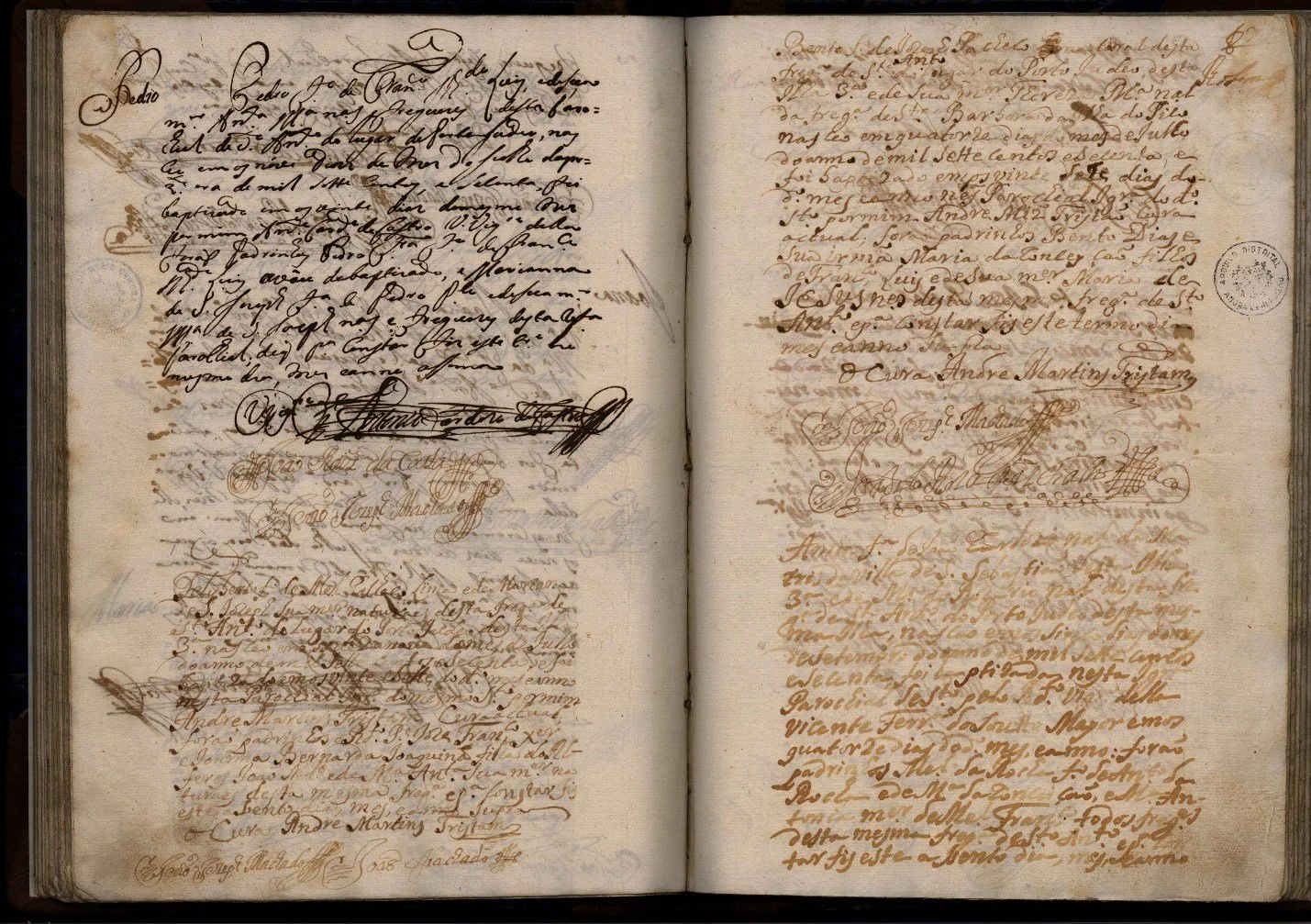
Peter (Pedro) Francisco, born July 9, 1760. Birth certificate from the church at the town of Porto Judeu, Terceira Island, Azores, Portugal.
His early story remained a mystery until the 1970s when researcher John E. Manahan suggested that the boy must have been Pedro Francisco, born July 9, 1760, at Porto Judeu on Terceira Island in the Portuguese Azores, to a family of some wealth. This theory remains the most widely accepted explanation of where Peter came from, although there are many tales that have emerged over the years about why he left the Azores.
One story holds that sailors kidnapped the boy, meaning to sell him into indentured servitude in the colonies, but lost their nerve or changed their plans. Another, more romantic version of the story, which is popular in Azorean tradition, holds that his own family staged the abduction to get him out of the country ahead of political enemies who meant him harm. There is also a competing legend, now mostly dismissed as fictional, claiming that Francisco was first taken to Ireland and indentured to a sea captain before eventually landing in Virginia. That version doesn't line up with the accepted birth year, and most researchers treat it as folklore rather than fact. Although none of these stories have any documentary proof that I’ve found, they build on the mystery of this man who became a legend in America.
Orphan to Blacksmith
Whatever his origin story, the unclaimed child didn’t remain that way for long. As word of the mysterious boy spread through the community, Judge Anthony Winston, a prominent planter from Buckingham County and an uncle of the orator Patrick Henry, took an interest in young Peter. Winston brought the boy home to his plantation, which was called Hunting Tower, and raised him there.
As Peter grew, it became obvious he was going to be an unusually large man, and by the time he was fifteen years old, he was already six feet, six inches tall and weighed around 260 pounds, which was a startling size at a time when the average man was closer to five and a half feet. Given his size and strength, he apprenticed as a blacksmith, a trade that suited his build well and gave him a practical skill he'd put to good use throughout his life.
When the war came to the colonies, Peter Francisco, a towering figure, was well-positioned and ready to answer the call.
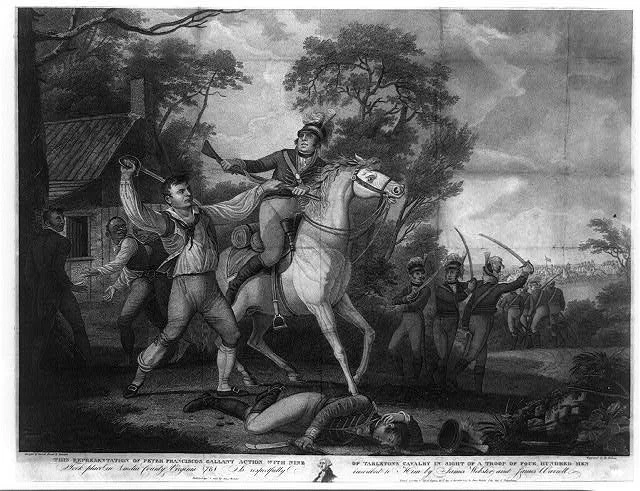
Painting depicting Peter Francisco disarming a mounted British cavalryman- 1814 engraving by David Edwin. Courtesy of the Library of Congress.
A Soldier in Nearly Every Theater of the War
Francisco enlisted in the 10th Virginia Regiment in late 1776, and luckily, what follows next is well documented. A lot of what we know about his service comes directly from his own pension applications, which were filed decades later, and from the sworn affidavits of officers who served alongside him. First, I want to go through the documented record, because it is genuinely remarkable on its own, and then I will get into the legends that grew up around his service.
Peter fought at the Battle of Brandywine in September 1777, and at the Battle of Germantown the following month. He was present at the siege of Fort Mifflin on Mud Island that November, and he wintered with the rest of Washington's army at Valley Forge in the brutal winter of 1777 and 1778. At the Battle of Monmouth in June 1778, he was wounded by a musket ball through the right thigh, an injury that would trouble him for the rest of his life.
The following year, he was chosen for one of the most dangerous assignments of the entire war: the storming of Stony Point in July 1779, as part of General Anthony Wayne's Corps of Light Infantry. He suffered a nine-inch bayonet gash to the abdomen in that assault. He later claimed, in a petition written in 1820, that he was "the second man who scaled the walls." When that enlistment ended, he returned home to Virginia for the winter, but he was soon back in uniform, this time serving in militia cavalry.
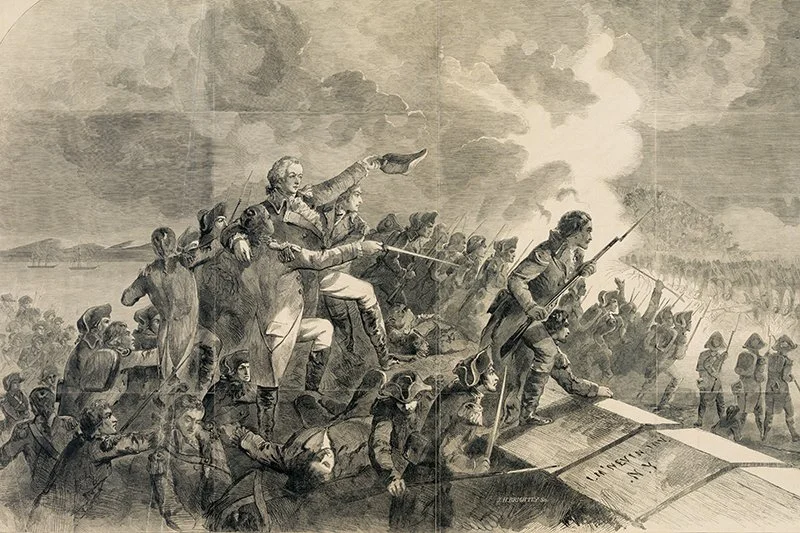
Painting of the Battle of Stony Point, courtesy of the Library of Congress.
He fought at the Battle of Camden in August 1780 under Colonel William Mayo, and by his own account, he shot a British soldier who was about to bayonet the colonel, saving Mayo's life. He was at the Battle of Guilford Courthouse in North Carolina in March 1781, attached to Colonel William Washington's Continental cavalry, where he suffered another serious bayonet wound to the thigh.
And even after Guilford Courthouse, his war wasn't quite over. Riding home through Amelia County, Virginia, he ran into a patrol from Lieutenant Colonel Banastre Tarleton's British Legion at a tavern. Armed only with a sword he'd managed to seize, Francisco reportedly killed or wounded several of the dragoons and made off with their horses. He later called it "the last favor I ever did the British."
Francisco’s service record is genuinely extraordinary: four documented wounds, service in both the northern and southern theaters of the war, and a presence at nearly every major engagement of the Revolution's northern and southern theaters from 1776 through 1781
Legend vs. Reality
Francisco's true, documented service during the Revolution was impressive enough on its own, and yet within his own lifetime, the stories about him had already grown well past what actually happened. A contemporary historian named Alexander Garden wrote in 1828 that he had "scarcely ever met a man in Virginia who had not some miraculous tale to tell of Peter Francisco." That tells you just how fast, and how far, the mythology spread even before he had died.
The most famous legend, the one that ended up on a 1975 U.S. postage stamp, depicts Francisco single-handedly hoisting a 1,100-pound cannon barrel onto his shoulder at the Battle of Camden to keep it out of British hands. But historians who have looked closely at the type of gun likely in use at Camden believe the actual barrel weighed closer to 200 or 300 pounds, still an enormous feat of strength for one man, but a good deal short of the legend.
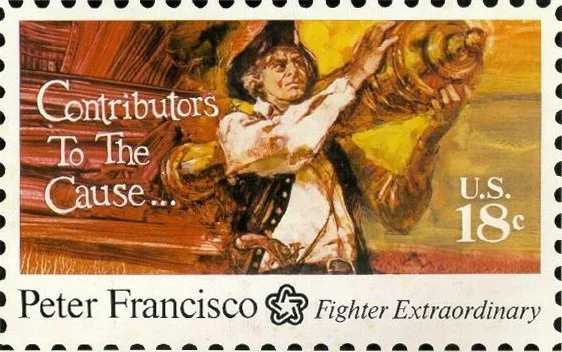
1975 postage stamp depicting Peter Francisco lifting a large cannon over his shoulder during the American Revolution.
Another legend attached to Francisco's story holds that he personally killed eleven men in a single charge at Guilford Courthouse, but this tale is challenged by his own 1820 petition, where Francisco said only that he "was seen to kill two men, besides making many other passes." A later petition in 1829 increased that number to four men killed by Francisco himself, but he never claimed to have led any charge at all.
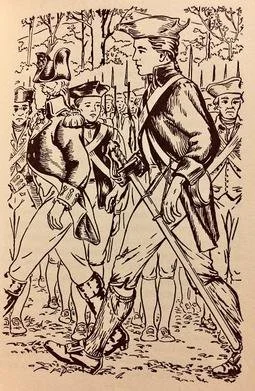
And one of the most beloved stories of the ‘Virginia Giant’ holds that George Washington personally commissioned a custom, six-foot broadsword, built to match Francisco's size, and supposedly declared that "without him we would have lost two crucial battles, perhaps the war." However, this tale has no documentary backing and is likely just part of his folklore.
Of course, none of this is meant to diminish the man, as if you could, but instead, to point out that his documented service record didn't need the tall tales to be impressive. The documented Peter Francisco, the one who shows up in pension files and sworn affidavits rather than folk tales, was already one of the most remarkable common soldiers of the entire Revolution. He didn't need the exaggerations. They just came anyway, the way they tend to for anyone who cuts an unusually large figure in a world that was hungry for heroes.
Life After the War
After the war, Francisco went back to school, sitting alongside young children who were reportedly fascinated by his war stories. He married three times over the course of his life: first to Susannah Anderson in 1784, who died of dysentery in 1790 and with whom he had two children, then to Catherine Fauntleroy Brooke in 1794, who died in 1821 and with whom he had four more children; and finally to Mary Grymes West in 1823.
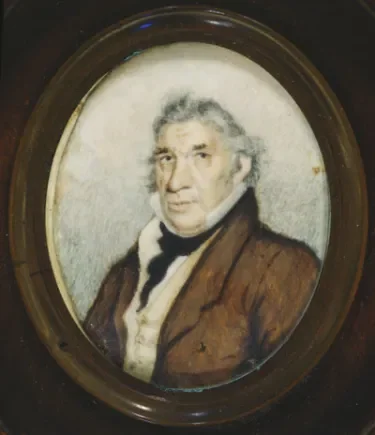
For most of his postwar life, Francisco lived at a farm called Locust Grove, in Buckingham County, Virginia, from 1794 until the mid-1820s. The house still stands today and is listed on the National Register of Historic Places.
An 1815 personal property tax record for Locust Grove shows that Francisco enslaved seven people over the age of twelve, along with one child between the ages of nine and twelve. The same record reflects a comfortable but modest household by comparison to some other war heroes: he had no wagon, no clock, and no mahogany furniture, but he did have a gilt-framed mirror, cut glass goblets, and framed pictures on the walls.
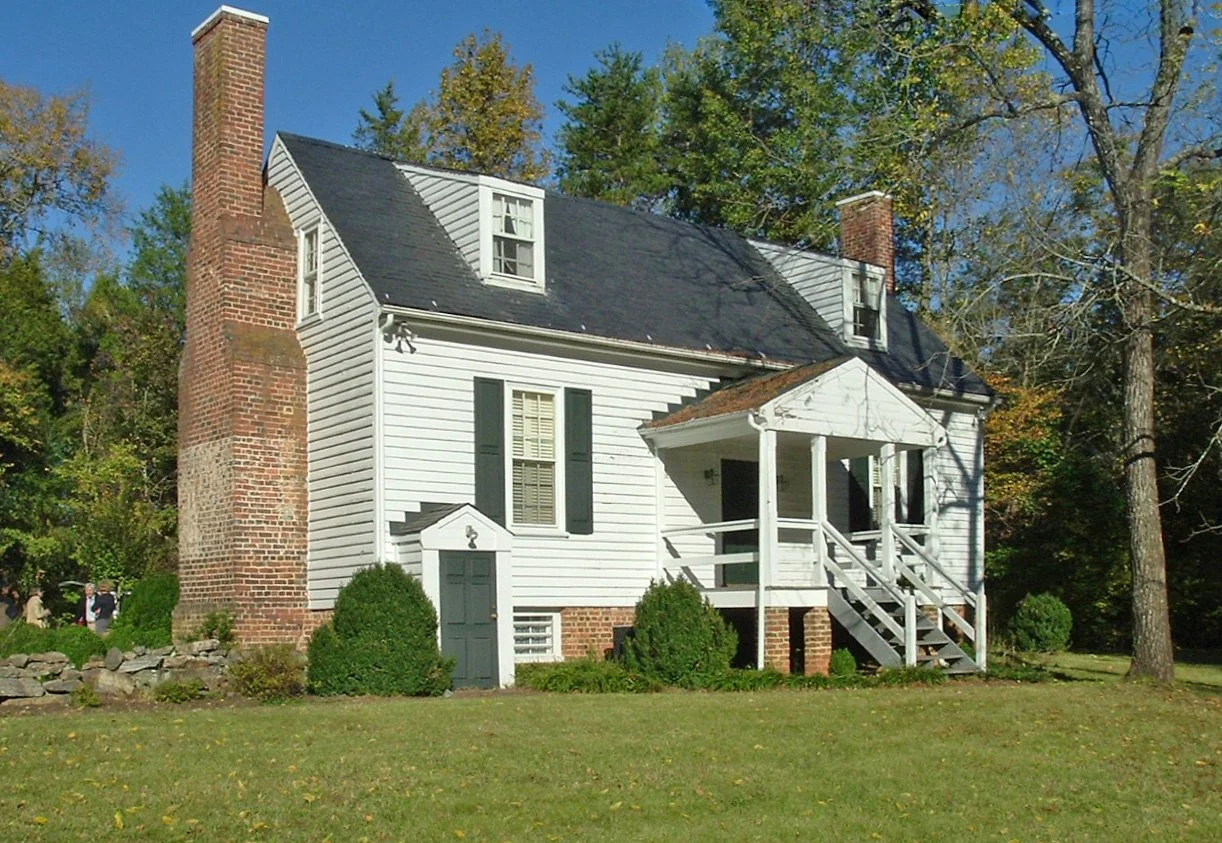
Peter Francisco’s Locust Grove Plantation, located in Buckingham County, Virginia. Photo courtesy of John Duke.
In his later years, Francisco struggled financially. He petitioned both the Virginia legislature and the United States Congress repeatedly for pension relief, citing his old war wounds and his declining ability to do physical labor. He spent his final years serving as Sergeant at Arms to the Virginia State Senate in Richmond. He died there on January 16, 1831, apparently of appendicitis, at around seventy years old. He was given a full state funeral with military honors, and the Virginia legislature adjourned for the day so its members could attend.
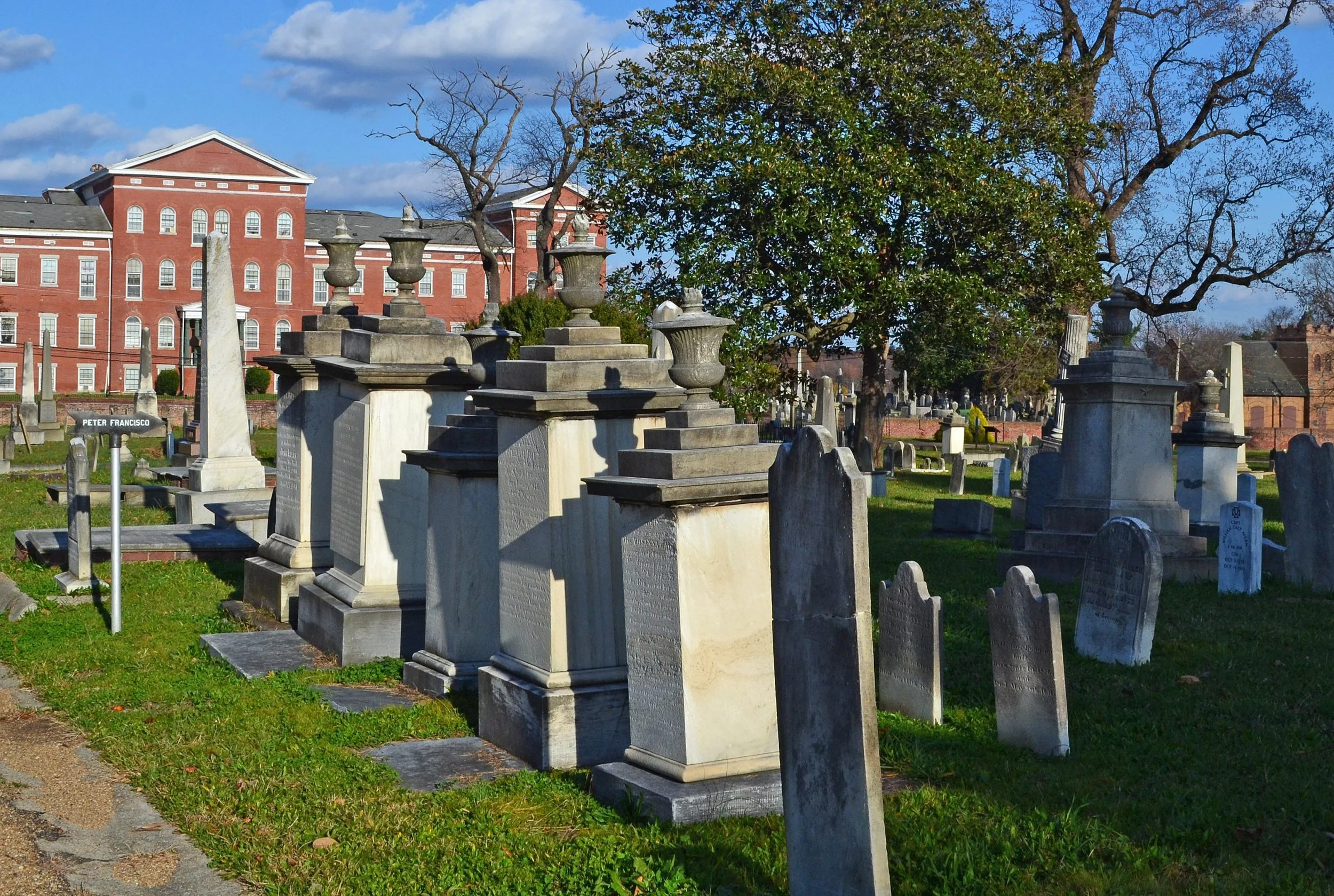
Shockoe Hill Cemetery in Richmond, Virginia. Photo courtesy of Calder Loth.
Shockoe Hill Cemetery
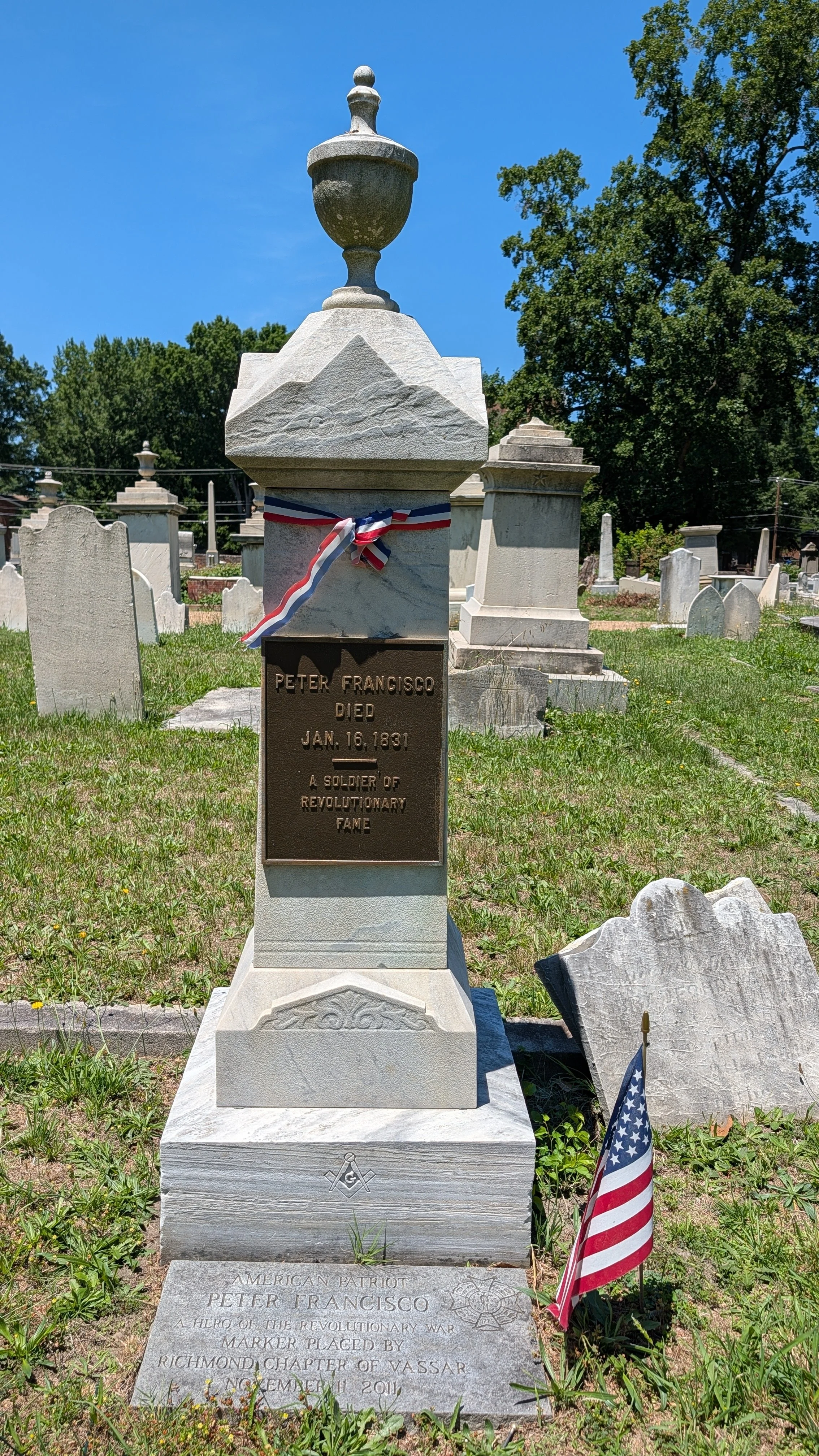
He was laid to rest at Shockoe Hill Cemetery, which had opened as Richmond's first municipal burying ground just a few years earlier, in 1822. He rests there today among a genuinely remarkable set of neighbors: Chief Justice John Marshall, Union spy Elizabeth Van Lew, Virginia Governor William H. Cabell, and more than twenty other Revolutionary War veterans, including Anselmn Bailey, who was previously featured in this project.
One more thread worth pulling, for anyone following along with this whole project: in January 1830, just a year before his own death, Francisco gave a sworn affidavit supporting the pension application of a fellow soldier named Anselm Bailey, testifying that Bailey had served as his "left hand man" during the Forlorn Hope at Stony Point, and that the two had also fought together at Monmouth and Fort Mifflin. Two Revolutionary soldiers, bound together by shared combat half a century earlier, both now resting not far from one another on the same Richmond hillside.
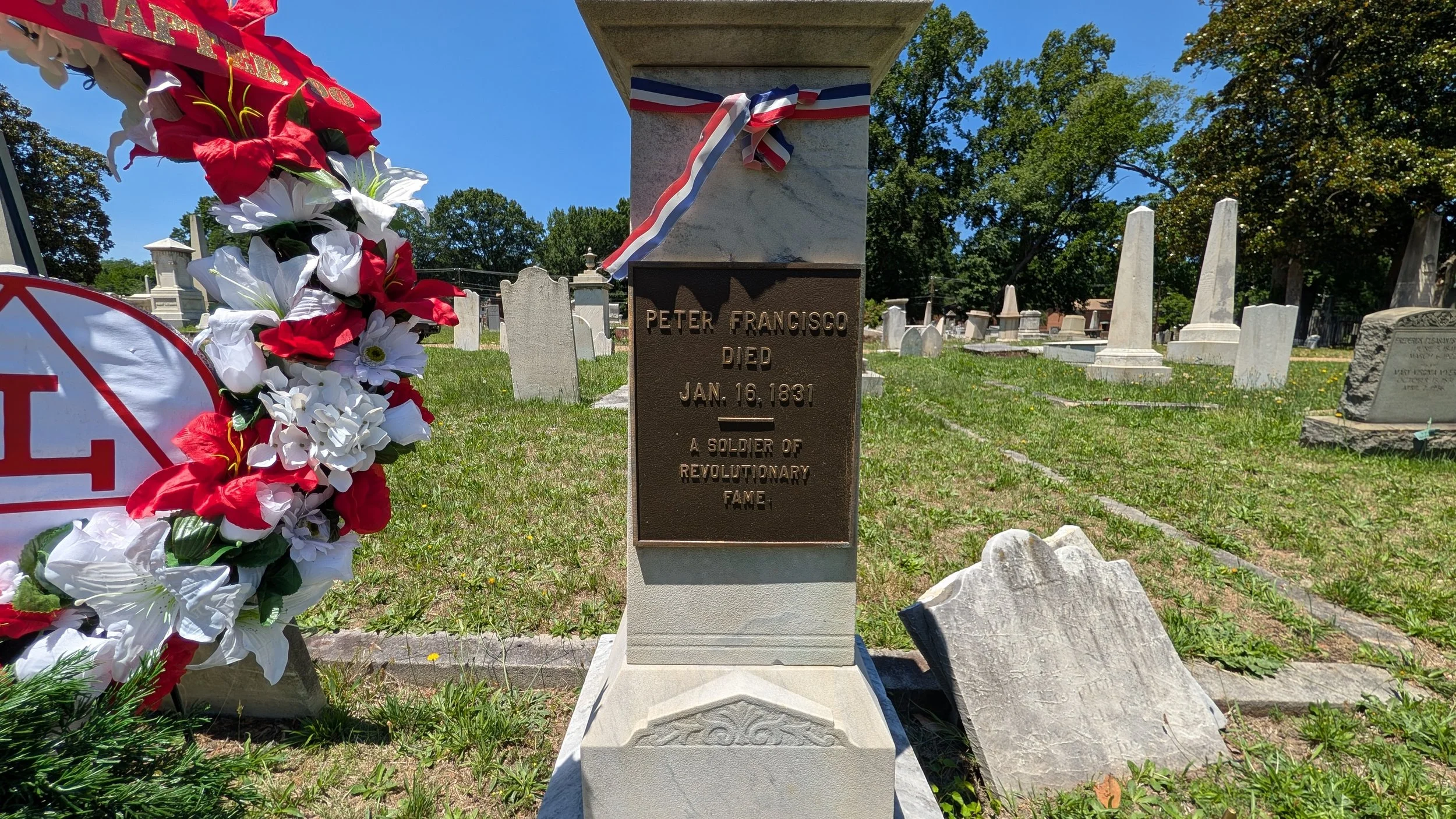
Peter Francisco’s grave at Shockoe Hill Cemetery in Richmond, VA, decorated for America’s 250th Anniversary.
Standing at His Grave
Peter Francisco's life is part mystery, part folklore, and part truly documented heroism, and that's exactly what makes him worth writing about. He was an abandoned child whose true origins were never fully solved. He was a genuine war hero whose four documented wounds and presence at nearly every major engagement of the Revolution's northern and southern theaters would be extraordinary on their own, without a single exaggeration attached to them. He was also, within his own lifetime, already becoming a legend so exaggerated that even his contemporaries couldn't keep the myth and the man straight.
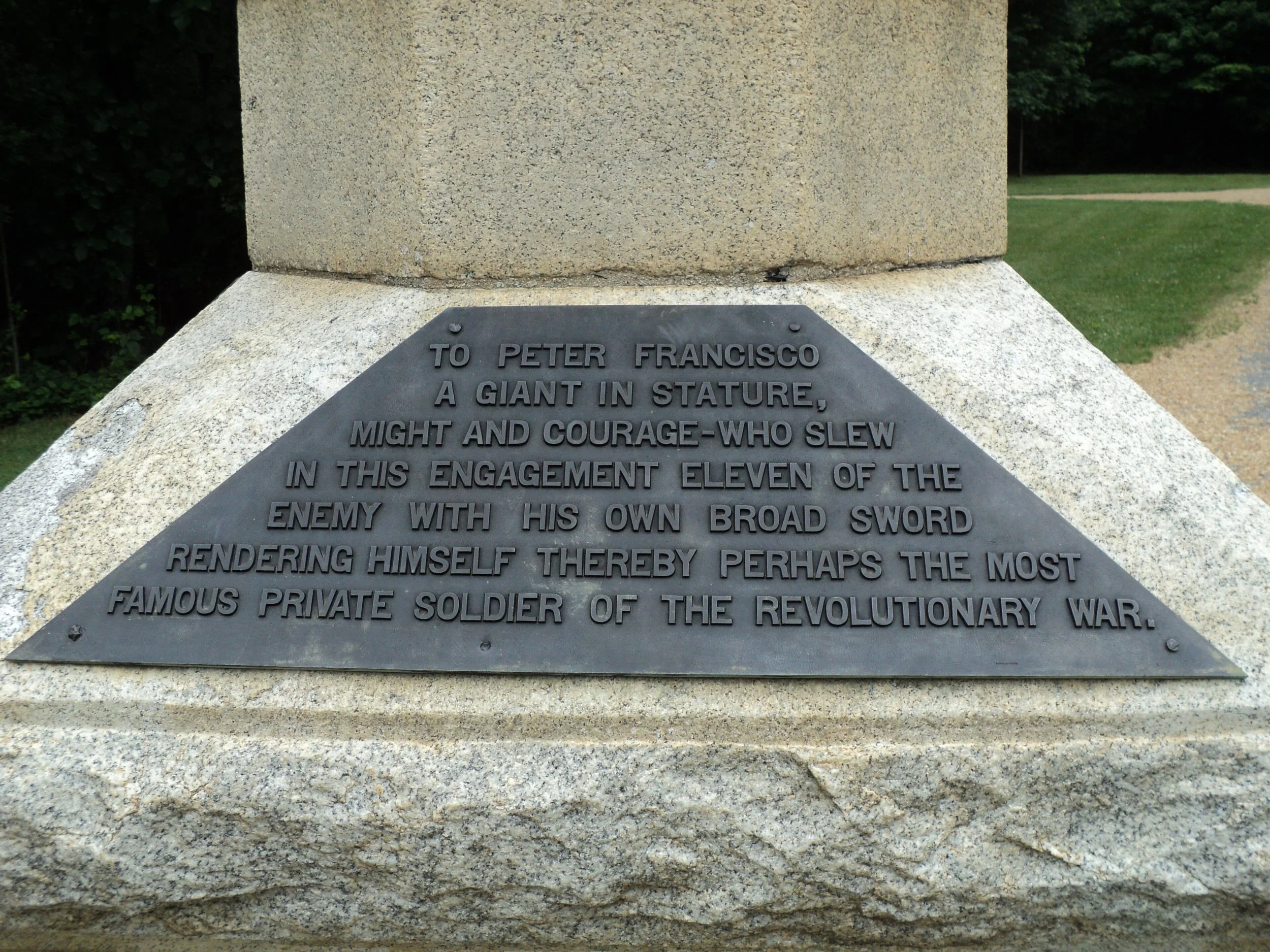
Monument to Peter Francisco at the Guilford Courthouse Battlefield Park in Greensboro, North Carolina. Photo courtesy of M. Percy.
This project is made possible by readers like you.
Your support helps to pay for website costs, gas to travel to these sites, and cleaning supplies for the veteran stones that I’m working to restore.
If you believe this work is important, your support is so appreciated!
Citations
Harris, C. Leon, transcriber. "Pension Application of Peter Francisco, W11021." Southern Campaigns Revolutionary War Pension Statements & Rosters. Accessed 2026. http://www.revwarapps.org/w11021.pdf.
"Letter of Peter Francisco to the General Assembly." William and Mary College Quarterly Historical Magazine 13, no. 4 (April 1905): 217-219.
Virginia documents pertaining to John Gregory, VAS3768, Southern Campaigns American Revolution Pension Statements and Rosters, transcribed and annotated by C. Leon Harris. Accessed at revwarapps.org/VAS3768.pdf. [Contains an 1830 affidavit of Peter Francisco]
Genealogical, Burial, and Service Data for Revolutionary War Patriots Buried in Virginia, 2nd ed. (Virginia Society, Sons of the American Revolution, September 2022). Entry for Peter Francisco. virginiasar.org
Virginia Department of Historic Resources. "Locust Grove (Dillwyn, Virginia), National Register of Historic Places Nomination Form." Includes 1815 personal property tax inventory. Richmond: Virginia Department of Historic Resources, 1972.
Schellhammer, Michael. "Peter Francisco: Fact or Fiction." Journal of the American Revolution, July 23, 2013. https://allthingsliberty.com/2013/07/peter-francisco-fact-or-fiction/
Elsea, Karl G. "Peter Carried a Cannon, The Real Story." Emerging Revolutionary War Era, August 15, 2021. https://emergingrevolutionarywar.org/2021/08/15/peter-carried-a-cannon-the-real-story/.